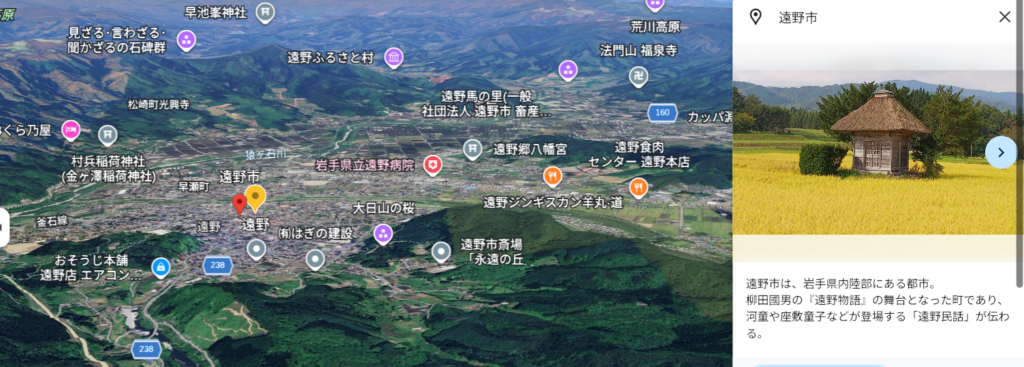
岩手県遠野市。この地は、日本の歴史において「中心」と「境界」が激しく交錯する特異な場所です。江戸時代、この地は南部藩の統治下で、厳格な武家社会の秩序が敷かれていました。しかし、その行政的な「中央集権」の網目の下には、山々に囲まれた閉鎖的な地形が生んだ、全く別の時間の流れが存在していました。本稿では、武家社会の合理主義と、そこに息づく土着の民俗学がいかにして衝突し、そして共存したのか。柳田國男の『遠野物語』を鍵として、その精神的な深層を探ります。
権力によって「堆積」された表層の理(ことわり)に対し、山人の気配や神隠しといった異界の翳りは、深い谷底から湧き出す水のように、冷たく静かに日常の隙間を「侵食」し続けていました。近代化という名の日差しが村々を均質に照らし出そうとも、遠野の土に染み込んだ畏れと祈りの記憶は決して干上がることなく、今も濃密な霧となって盆地を覆います。目に見える統治の地層と、目に見えない霊性の水脈が幾重にも交わるこの大地に立つとき、私たちは自らの足元に静かに脈打つ、もうひとつの「日本の原風景」に出会うのです。
■ English Version
Footsteps from the Otherworld at the Border of Samurai Society: The Depths of Tono Monogatari and Indigenous Beliefs
The city of Tono in Iwate Prefecture is a unique place where the concepts of “center” and “periphery” have historically intersected with great intensity. During the Edo period, while the strict social order of the samurai class was enforced under the rule of the Nambu clan, a distinct flow of time existed beneath this centralized network, born from the isolated geography of the basin surrounded by mountains. In this article, we explore how the rationalism of samurai society collided and eventually coexisted with the deep-rooted indigenous folklore of the region, using Kunio Yanagita’s The Tales of Tono as a key to unlock these profound spiritual depths.
Against the superficial logic “deposited” by the ruling power, the shadows of the Otherworld—the lingering presence of mountain dwellers and tales of spiriting away—continued to coldly and quietly “erode” the crevices of daily life, much like spring water welling up from the bottom of a deep ravine. Even as the sunlight of modernization sought to uniformly illuminate the villages, the memories of awe and prayer absorbed into the soil of Tono have never dried up; instead, they continue to shroud the basin as a thick, enigmatic mist. When we stand upon this earth, where the visible strata of governance and the invisible veins of spirituality intertwine, we encounter another primordial landscape of Japan, quietly pulsating right beneath our very feet.
■ WordPress設定データ
カテゴリー: 県南 Southern Iwate
タグ: 遠野, 遠野物語, 柳田國男, 民俗学, 異界
アクセスポイント(座標): 39.3312, 141.5323 (※遠野駅付近の座標)