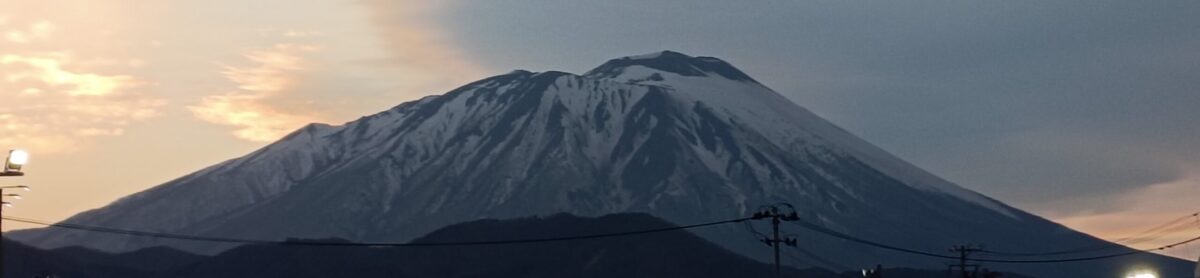
森の静寂を震わせる黒鉄の祈り / A Prayer of Black Iron Trembling the Forest’s Silence

千年の業火が鍛え上げた、森と人を繋ぐ澄明なる残響

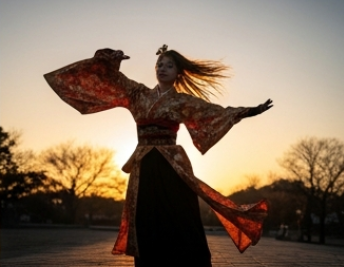
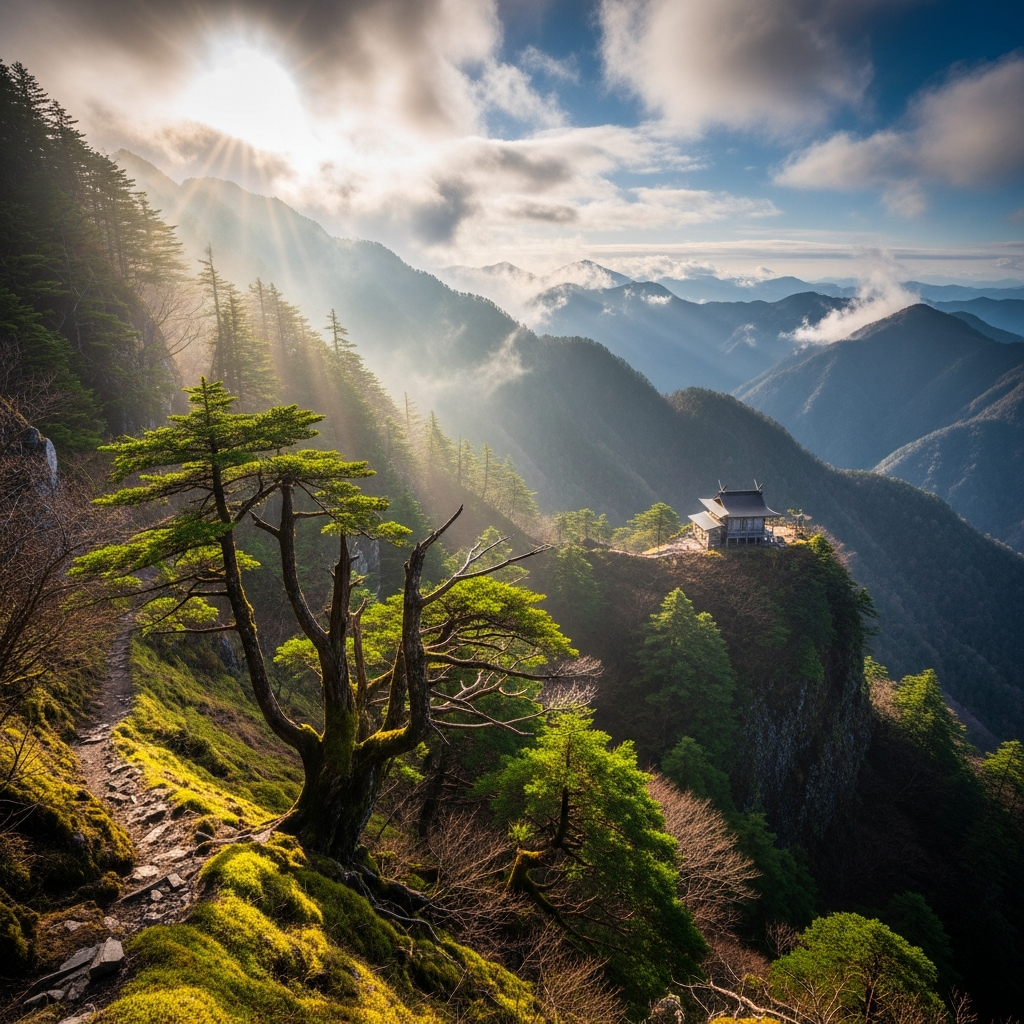
 東北の山深く、朝露に濡れたブナの原生林に足を踏み入れるとき、腰に下げた真っ黒な鉄の鈴が「ちりぃん」と高く澄んだ音を立てる。その音色は、単なる金属の衝突音ではない。木々の隙間を縫い、苔生した岩肌を滑り、底知れぬ谷の奥底までも染み渡るような、透明な余韻を持っている。岩手の森を歩く者にとって、この「熊よけの鈴」は単なる安全装備ではなく、大自然という神域へ足を踏み入れる際の、畏敬を込めたご挨拶なのだ。「私というちっぽけな人間が、今からあなたの領域にお邪魔しますよ」。森の主であるヒグマやツキノワグマに対する、謙虚なる境界の鐘。その神秘的な音色を生み出しているのが、岩手県が世界に誇る「南部鉄器」の鋳造技術である。

 南部鉄器と一口に言うが、その水脈には、奥州市(旧水沢市)と盛岡市という二つの異なる歴史の源流があることをご存知だろうか。奥州市の鉄器の歴史は古い。平安時代後期、奥州藤原氏の初代・清衡が、中尊寺建立のために近江国から鋳物師を招いたのが始まりとされる。彼らは鍋や釜、あるいは武具といった「日々の命を支えるための鉄」を泥臭く、しかし途方もなく頑丈に鋳造し続けた。一方、盛岡市の鉄器は江戸時代、茶の湯を愛した南部藩主が京都や甲州から釜師を呼び寄せ、芸術品としての「茶釜」を作らせたことに端を発する。言わば、奥州の「土着と実用」と、盛岡の「洗練と美学」——この全く出自の異なる二つの川が、昭和の時代に「南部鉄器」という一つの大河へと合流したのである。全く異なるルーツを持つ職人たちが、同じ鉄という物質に向き合い、互いの技を昇華させてきた奇跡がここにある。

 しかし、なぜ岩手の地でこれほどまでに鉄の技術が花開いたのか。そこには、地質学的な大地の采配がある。日本最古の地層を抱く北上山地は、古くから良質な砂鉄と鉄鉱石の宝庫であった。そして、鉄を溶かす1000度を超える業火を生み出すのは、北上山地を覆う広葉樹林から作られる上質な木炭である。さらに、鋳型を作るためには北上川が運ぶきめ細やかな川砂と粘土が不可欠であった。つまり南部鉄器とは、岩手の「鉱」「木」「水」「土」という四大要素が、職人の手を通じて黒光りする小宇宙へと凝縮されたものなのだ。

 熊よけの鈴の製造工程を見ると、その小宇宙の誕生に息を呑む。職人は、砂と粘土を精緻に突き固めて鈴の鋳型を造る。そこへ、真っ赤に煮えたぎる湯(溶解した鉄)を一気に流し込む。このとき、わずかな温度の変化や砂の湿度が、完成した鈴の「音色」を決定づけてしまう。冷え固まった鋳型を割り、中から現れるのは、無骨でありながらえも言われぬ品格を漂わせる漆黒の鈴。最後に表面に焼き付けられる漆と鉄漿(おはぐろ)が、鉄を錆から守ると同時に、あの吸い込まれるような深い黒「南部黒」を生み出す。

 千度の炎と土から生まれた鉄が、森の木々が化けた炭によって鍛えられ、再び森の獣たちに語りかけるための鈴となる。岩手の森で南部鉄器の鈴を鳴らすとき、私たちは無意識のうちに、大地の循環という壮大な輪廻のなかに組み込まれている。硬質で冷たいはずの鉄片から放たれる音が、なぜこれほどまでに人の心を揺さぶり、森の静寂に美しく溶け込むのか。それは、この黒鉄の中に、岩手の風土そのものが封じ込められているからに他ならない。

The Clear Reverberation Forged by a Millennium of Fire: Bridging Man and Forest

The Clear Reverberation Forged by a Millennium of Fire: Bridging Man and Forest

Deep in the mountains of Tohoku, as you step into a primeval beech forest damp with morning dew, a pitch-black iron bell hung at your waist lets out a high, clear chiriin. This sound is no mere metallic clatter. It possesses a penetrating resonance—a transparent reverberation that weaves through the canopy, glides over moss-covered boulders, and seeps into the very bottom of the abyssal valleys. For those walking the forests of Iwate, this “bear warning bell” is not simply a piece of safety gear; it is an act of profound reverence, a greeting upon entering the sacred sanctuary of nature. “I, a mere human, am humbly encroaching upon your domain.” It is a bell of boundaries, offering humble respect to the masters of the forest, the bears. The source of this mystical timbre lies in the casting techniques of “Nanbu Tekki” (Nanbu ironware), a craft that Iwate Prefecture proudly presents to the world.

Though collectively known as Nanbu Tekki, you may not know that its lineage flows from two distinct historical springs: Oshu City (formerly Mizusawa) and Morioka City. The ironware of Oshu traces its roots back to the late Heian period, when Fujiwara no Kiyohira, the first lord of the Oshu Fujiwara clan, summoned casters from Omi Province to aid in the construction of Chuson-ji Temple. There, they forged cauldrons, pots, and weaponry—the “iron of daily survival”—with a rugged, earthy, and extraordinarily durable constitution. Conversely, Morioka’s ironware originated in the Edo period, born from the refined aesthetics of the Nanbu domain lords who adored the tea ceremony. They invited master kettle makers from Kyoto and Koshu to craft exquisite chagama (iron tea kettles) as works of art. The “indigenous practicality” of Oshu and the “aristocratic refinement” of Morioka—two entirely different rivers of tradition—eventually merged into the great confluence known as Nanbu Tekki in the Showa era. It is a historical miracle that artisans with such disparate roots confronted the same elemental iron, ultimately sublimating each other’s techniques.

But why did the art of iron flourish so magnificently in Iwate? The answer lies in the profound providence of geology. The Kitakami Mountains, harboring some of Japan’s oldest geological formations, have long been a treasure trove of high-quality iron sand and iron ore. To melt this iron, artisans required infernos exceeding 1,000 degrees Celsius, fueled by premium charcoal produced from the vast broadleaf forests blanketing those very mountains. Furthermore, the creation of the intricate casting molds demanded the fine river sand and clay carried by the Kitakami River. Thus, Nanbu Tekki is the ultimate condensation of Iwate’s four great elements—ore, wood, water, and earth—forged into a gleaming black microcosm by the hands of master craftsmen.

To witness the creation of a bear bell is to watch the birth of this microcosm. Artisans meticulously tamp sand and clay to form the mold, into which they pour a torrent of molten, crimson iron. In that fleeting moment, the slightest fluctuation in temperature or the humidity of the sand dictates the final “voice” of the bell. When the cooled mold is broken apart, a pitch-black bell emerges—rugged, yet exuding an indescribable elegance. The final application of urushi (lacquer) and ohaguro (iron rust and tea solution) baked onto the surface protects the iron from corrosion while giving birth to that captivating, deep Nanbu black. This profound black transcends the mere realm of color; it is the accumulated memory of the earth across millennia, the testament to life absorbed by the trees of the Kitakami Mountains, and countless prayers offered by nameless artisans who continually confronted iron. The chiriin sound emitted by a Nanbu Tekki bell therefore possesses a primordial resonance, echoing from a distant past. It is the sound of Iwate’s soul, where humans and nature coexist, living with mutual reverence. When one touches this jet-black mass and listens to its timbre, one cannot help but feel the grand narrative unfolding beneath their feet and the invisible connections of “life.” Within it resides the very breath of Iwate itself, transcending a mere tool.


■ WordPress設定データ

カテゴリー: 県央 Central Iwate
タグ: 南部鉄器, 熊よけの鈴, 伝統工芸, 北上山地, 岩手
アクセスポイント(座標): 39.7027, 141.1394

雪嶺の彼方、山の神と契る民——西和賀に息づくマタギの魂 / Beyond the Snow-Capped Peaks: The Matagi Soul and the Vow to the Mountain Gods in Nishiwaga

白銀の帳に響く、生命と畏敬の交響曲

西和賀町。岩手県西部に位置し、奥羽山脈の襞深くに抱かれたこの地は、本州屈指の豪雪地帯として知られる。空から降り注ぐ雪はすべての音を吸い込み、世界を白銀の帳で包み込む。この凍てつく静寂の森、見上げるほどのブナの巨木が立ち並ぶ雪の回廊こそが、古より「マタギ」と呼ばれる狩猟民たちの聖域であった。

現代を生きる我々は、「自然共生」という言葉をどこか牧歌的で甘美な概念として捉えがちである。しかし、西和賀に息づくそれは、血の温もりと雪の冷たさが交錯する、命のやり取りという厳粛な契約に他ならない。マタギにとって、山は人間が支配する資源の宝庫ではない。そこは気まぐれで嫉妬深い女神である「山の神」が統べる異界である。彼らの最大の獲物であるツキノワグマは単なる獣ではなく、山の神が彼らに授けた「授かりもの」であり、森の化身そのものなのだ。

ここに、彼らの精神世界を垣間見る興味深い伝承がある。山の神はひどく嫉妬深い醜女とされており、マタギたちは山に入る際、神を喜ばせ機嫌をとるために、自らより醜いとされる「オコゼ(海魚)」の干物を懐に忍ばせた。また、狩りの場である山への女性の立ち入りを厳しく禁じたのも、女神の嫉妬を避けるためである。さらに、仕留めた熊の魂を天へと還す「ケボカイ(毛坊主)」と呼ばれる儀式では、獲物への深い哀悼と感謝の念が捧げられる。肉は集落の者たちで平等に分配され、毛皮や胆(くまのい)は余すところなく命の糧となった。無益な殺生を固く禁じ、必要な分だけを山から頂く彼らの掟は、何百年も前からブナ林の豊かな生態系を維持するための「究極のサステナビリティ」であったと言えよう。

豪雪という圧倒的な自然の猛威に抗うのではなく、その懐深くに入り込み、畏れをもって命をいただく。西和賀の森に足を踏み入れると、今もなお、ふんわりと積もった新雪の下で脈打つ大地のリズムを感じずにはいられない。冷たい風に混じる微かな獣の気配と、生命の循環に寄り添い続けたマタギたちの足跡が、この雪深い町で永遠の歴史として息づいているのである。

A Symphony of Life and Reverence Echoing Through the Silvery Veil

A Symphony of Life and Reverence Echoing Through the Silvery Veil

Nishiwaga Town. Nestled deep within the folds of the Ou Mountains in western Iwate Prefecture, this land is known as one of Honshu’s most unforgiving heavy-snow regions. The snow cascading from the heavens absorbs all sound, enveloping the world in a silvery veil of absolute stillness. These freezing, silent forests—snow-covered corridors lined with towering beech trees—have long been the sacred domain of the traditional hunters known as the “Matagi.”

We, living in the modern age, tend to perceive “harmony with nature” as a somewhat idyllic, sweet concept. However, the harmony that breathes in Nishiwaga is nothing less than a solemn covenant forged in the exchange of lives, where the warmth of blood and the biting cold of the snow intersect. To the Matagi, the mountain is not a repository of resources for human domination. It is the Otherworld, ruled by the “Yama-no-Kami” (Mountain Goddess), a whimsical and profoundly jealous deity. The Asiatic black bear, their primary quarry, is not merely a beast. It is a divine gift bestowed by the Mountain Goddess, an incarnation of the forest itself.

There is a fascinating piece of folklore hidden within their traditions that offers a glimpse into their spiritual worldview. The Mountain Goddess is said to be notoriously jealous and self-conscious of her unsightly appearance. To appease and delight her, the Matagi would secretly carry the dried bodies of the “okoze” (stonefish)—a marine creature deemed even more grotesque than the goddess—in their breast pockets when entering the mountains. The strict taboos placed on women entering the hunting grounds were also born from a desire to avoid incurring the goddess’s jealousy. Furthermore, the ritual known as “Kebokai” (hair priest)—a ceremony to return the soul of the slain bear to the heavens—is conducted with profound mourning and gratitude toward the prey. The meat was shared equally among the villagers, while the fur and gall bladder were fully utilized as vital sustenance. Their strict code, prohibiting senseless killing and taking only what is necessary from the mountains, can be seen as the “ultimate sustainability” that has maintained the rich ecosystem of the beech forests for centuries.

Instead of defying the overwhelming ferocity of the heavy snow, they embraced its depths and respectfully received life. Stepping into the forests of Nishiwaga, one cannot help but feel the rhythm of the earth pulsing beneath the softly accumulated fresh snow. Here lies a profound intersection: the endless “accumulation” of snow that attempts to blanket all things in white, and the “erosion” carved by the Matagi’s living testament—their souls traversing the mountains to sustain life and ingrain nature’s logic. Within this forest where such opposing forces intertwine, there exists the ultimate contrast between the absolute stillness of silver and the vivid red of flowing blood. The faint scent of beasts mingling with the freezing wind, alongside the enduring footprints of those who closely shadowed the cycle of life, will never be erased by the ever-falling snow. Instead, they continue to resonate through this snow-deep town as an eternal symphony.


■ WordPress設定データ

カテゴリー: 県南 Southern Iwate
タグ: 西和賀町, マタギ, 自然共生, ツキノワグマ, 究極のサステナビリティ
アクセスポイント(座標): 39.3151, 140.7756

岩手の地層が語る悠久の記憶:北上の里芋から久慈の琥珀へ / The Eternal Memory of Iwate’s Strata: From Kitakami’s Taro to Kuji’s Amber

岩手の土壌が内包する二つの時間軸

岩手という土地は、単なる地理的な広がりではない。それは数十億年にわたる地球の記憶が重なり合った、巨大な地質学的な図書館である。北上盆地の肥沃な土壌が育む食文化と、久慈の地層に眠る白亜紀の遺産。これらは一見無関係に見えて、実は「岩手の土」という同じ文脈で結ばれている。我々が享受する現在の恵みと、地層深くで静止した太古の記憶。これら二つの視点を行き来することは、岩手の本質的な豊かさを理解するための鍵となる。

Two Timelines Encapsulated in Iwate’s Soil

Iwate is more than just a geographical location; it is a colossal geological library where memories of the Earth, spanning billions of years, are layered upon one another. The culinary culture nurtured by the fertile soil of the Kitakami Basin and the Cretaceous legacy sleeping within the strata of Kuji may seem unrelated at first glance, yet they are intrinsically linked by the very context of “Iwate’s soil.” Moving between these two perspectives—the bounty we enjoy today and the ancient memories frozen deep within the strata—is the key to understanding the essential richness of Iwate.

北上の恵み:二子さといもが繋ぐ農耕の歴史

北上川の恩恵を受ける北上市二子町は、古くから「二子さといも」の産地として知られている。この里芋は、単なる農作物ではない。その粘り気と独特の風味は、この地特有の土壌と気候が長い年月をかけて作り上げた「地質の恵み」である。地域ブランドとして確立された「北上コロッケ」の主役として、この里芋は現代の食卓に彩りを与えるが、その根底には、北上川が運んできた堆積物と、先人たちが守り続けてきた農耕の歴史という、地表の記憶が刻まれている。土壌の質が作物の個性を決定づけるという事実は、我々が大地と共に生きていることの証明に他ならない。

The Bounty of Kitakami: The Agricultural History Linked by “Futago Satoimo”

Futago-machi in Kitakami City, blessed by the Kitakami River, has long been renowned for the “Futago Satoimo” (taro). This taro is far more than a mere agricultural product. Its characteristic stickiness and unique flavor are a “blessing of the geology,” crafted over eons by the specific soil and climate of this region. As the centerpiece of the regional brand “Kitakami Croquette,” this taro brightens modern dining tables. Yet, at its core, it embodies the memory of the surface: the sediments carried by the Kitakami River and the history of cultivation preserved by generations of ancestors. The fact that the quality of the soil determines the character of the crops is nothing less than proof that we live in harmony with the land.

久慈の琥珀:白亜紀から届いた静止した時間

一方、県北の久慈市に目を向けると、そこには時間軸を大きく遡った「土中の宝」が存在する。約8500万年前の白亜紀、この地は恐竜たちが闊歩する緑豊かな森であった。久慈の地層から発見される琥珀は、当時の植物の樹脂が長い年月を経て宝石へと昇華したものであり、その中には太古の昆虫が閉じ込められていることもある。さらに、この地層からは恐竜の化石も発掘されており、岩手の土は、私たちが食べる作物だけでなく、地球の創生期の記憶をも抱き続けているのである。久慈の琥珀は、いわば地球の呼吸が止まった瞬間の「静止した時間」そのものである。

Kuji Amber: Frozen Time Arriving from the Cretaceous Period

Turning our gaze to Kuji City in the north, we encounter “treasures in the earth” that reach back to a vastly different timeline. Roughly 85 million years ago, during the Cretaceous period, this land was a lush forest where dinosaurs roamed. The amber discovered in Kuji’s strata is the result of ancient plant resin transforming into gemstones over vast eras, sometimes trapping prehistoric insects within. Furthermore, dinosaur fossils unearthed from these same strata reveal that Iwate’s soil holds not only the food we consume today but also the memories of our planet’s genesis. Kuji’s amber is, in a sense, “frozen time”—capturing the very moment the Earth’s breath paused.

土壌が描く岩手の輪郭

北上の里芋が現在の生命を養う「生きた土」であるならば、久慈の琥珀は遠い過去を語る「記憶の土」である。岩手という土地を歩くことは、この豊かな土層を横断する旅に他ならない。私たちは、日々の糧を享受する時、足元の土壌が持つ二つの顔――恵みと記憶――に想いを馳せるべきではないだろうか。岩手の地層には、まだ解き明かされていない物語が幾重にも重なっている。それを紐解くことは、我々自身のルーツを知る行為に繋がるのである。

The Silhouette of Iwate Drawn by the Soil

If the taro of Kitakami is “living soil” that sustains current life, then the amber of Kuji is “memory soil” that speaks of the distant past. Walking through the land of Iwate is nothing less than a journey across these rich strata. As we enjoy our daily sustenance, perhaps we should reflect upon the two faces of the soil beneath our feet: that of bounty and that of memory. Within the strata of Iwate, countless untold stories are layered upon one another. Unraveling them is an act that leads us to understand our own roots.

📍 アクセス / Access

日本語:
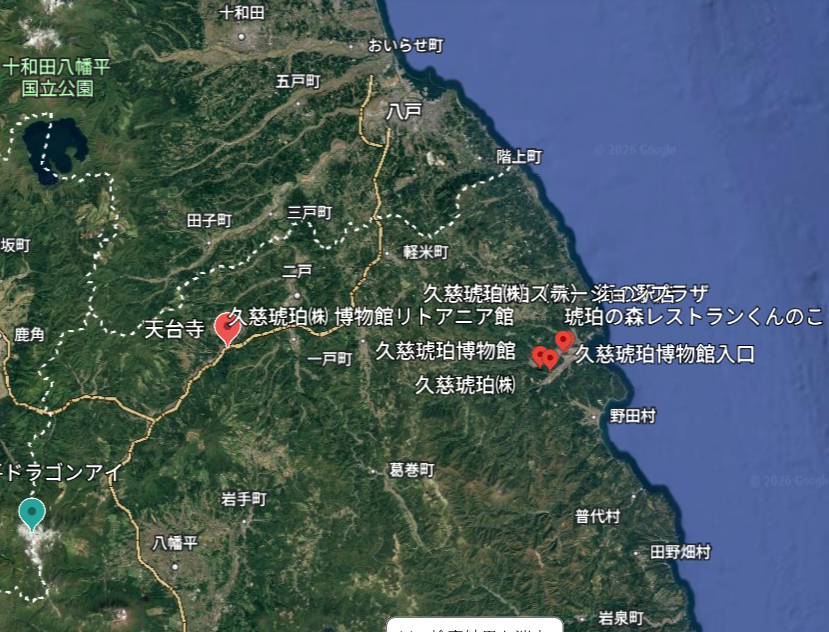
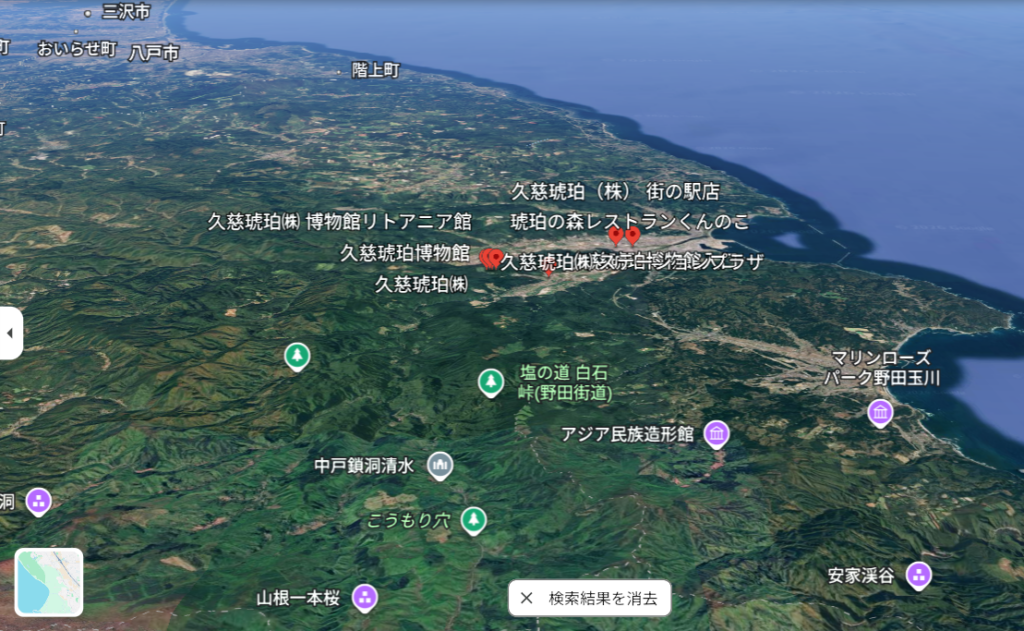
【電車・バス】JR八戸線・三陸鉄道リアス線「久慈駅」から岩手県北バス「琥珀博物館」行きで約10分、「琥珀博物館」下車すぐ。
【車】八戸自動車道「九戸IC」から国道340号経由で約40分。

English:
By Train/Bus: From Kuji Station (JR Hachinohe Line / Sanriku Railway Rias Line), take an Iwate Kenpoku Bus bound for “Kohaku Hakubutsukan (Amber Museum)” for about 10 minutes, then get off at “Kohaku Hakubutsukan” and it is just a short walk.
By Car: About 40 minutes from Kunohe IC on the Hachinohe Expressway via National Route 340.

カテゴリー: 【県北 Northern Iwate】
タグ: [久慈, 琥珀, 白亜紀, 堆積と侵食, タイムカプセル]
アクセスポイント(座標): 39.1764, 141.7611


北上川の生命の循環と宮古の海:瓶ドンが体現する岩手の食の哲学 / The Vital Cycle of the Kitakami River and the Sea of Miyako: The Culinary Philosophy of “Bin-don”

北上川から太平洋へ:生命を繋ぐ水脈の物語

岩手県を貫く北上川は、単なる河川ではありません。それは山々の養分を海へと運び、鮭という生命の循環を運ぶ動脈です。かつて南部藩の時代、鮭は冬を越すための貴重なタンパク源であり、川沿いの民と深い絆で結ばれていました。この「川の恵み」への敬意は、やがて河口の先にある太平洋、そして三陸海岸の漁業へと、その精神的支柱を移していきます。山から海へと流れる水脈は、岩手の食文化を形作る根源的なテーマなのです。

森の奥深くで静かに「堆積」した枯れ葉の記憶は、雪解け水とともに大地を「侵食」し、川底の石をひそやかに磨きながら海へと向かいます。そして三陸の荒波が削り出すリアス式海岸の険しさの中で、豊穣の海産物として再び命を宿すのです。連綿と繰り返されるこの堆積と侵食の壮大なドラマ。私たちは力強く川を遡上する鮭の姿に、過去から未来へと還流する生命のきらめきを見出し、岩手の風土という名のキャンバスに刻み込まれた、永遠の詩を深く味わうのです。

■ English Version

From the Kitakami River to the Pacific: A Tale of Vital Waterways

The Kitakami River, which traverses Iwate Prefecture, is more than just a waterway. It is an artery that carries nutrients from the mountains to the sea, facilitating the cycle of life embodied by the salmon. In the era of the Nanbu Clan, salmon were a precious source of protein for surviving the winters, forging a deep bond with the people living along the riverbanks. This reverence for the “bounty of the river” eventually shifted its spiritual foundation toward the Pacific Ocean beyond the river mouth, and into the fisheries of the Sanriku Coast. The water vein that flows from the mountains to the sea serves as the fundamental theme shaping Iwate’s profound food culture.

The memories of fallen leaves, quietly “accumulated” deep within the silent forests, gracefully “erode” the earth alongside melting snow, polishing the riverbed stones as they journey toward the ocean. Amidst the ruggedness of the rias coast, carved out by the erosive, crashing waves of Sanriku, these memories are reborn as the sea’s bountiful harvest. In this grand, unending drama of accumulation and erosion, we witness the brilliant spark of life cycling from the past to the future in the fierce upstream run of the salmon, savoring the eternal poem etched deeply into the canvas of Iwate’s majestic landscapes.


■ メタデータ

カテゴリー: 沿岸 Coastal Iwate
タグ: 北上川, 三陸海岸, 鮭, 生命の循環, 食文化

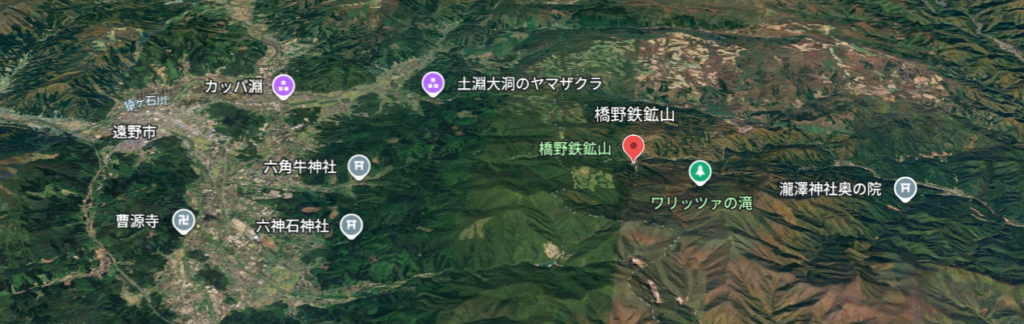
鉄の鼓動、歴史の転換点:橋野鉄鉱山と大島高任の夢 / The Pulse of Iron: Hashino Iron Mine and Takato Oshima’s Vision

盛岡の鉄の記憶と、釜石の近代製鉄への胎動

岩手県盛岡市を歩けば、街の随所に「南部鉄器」の重厚な息吹を感じることができます。江戸時代、南部藩主の庇護のもとで育まれた茶の湯の文化と、洗練された鋳造技術。この鉄の伝統は、単なる工芸の域を超え、岩手の精神的な支柱となってきました。しかし、この鉄の物語は盛岡の城下町だけで完結するものではありません。その系譜は、沿岸部の釜石へと流れ込み、日本が近代国家へと脱皮するための巨大なエネルギーへと変貌を遂げたのです。

The Memory of Iron in Morioka and the Birth of Modern Steel in Kamaishi

Walking through the streets of Morioka, one can feel the profound presence of “Nambu Tekki” (Nambu Ironware). Nurtured under the patronage of the Nambu lords during the Edo period, this tradition of tea ceremony culture and refined casting techniques has become more than just a craft; it is the spiritual pillar of Iwate. However, this story of iron does not end in the castle town of Morioka. Its lineage flowed into the coastal city of Kamaishi, transforming into the colossal energy that propelled Japan’s transition into a modern nation.

大島高任の挑戦と橋野鉄鉱山の高炉

幕末の激動期、鎖国から開国へと向かう日本の舵取りを担った人物の一人が、岩手が生んだ技術者・大島高任です。彼は西洋の科学技術をいち早く吸収し、安政4年(1857年)、釜石の地に日本初となる洋式高炉を建設しました。これが「橋野鉄鉱山」の始まりです。当時の日本において、砂鉄から鉄を取り出す伝統的な「たたら製鉄」から、西洋式の高炉製鉄への転換は、まさに国家の運命をかけた革命的な挑戦でした。大島が築いた高炉は、単なる機械ではなく、黒船来航の衝撃に揺れる日本が、自らの手で国を守るための「技術的自立」を象徴するモニュメントでした。

Takato Oshima’s Challenge and the Hashino Blast Furnace

During the turbulent end of the Edo period, as Japan pivoted from isolation to opening its doors to the world, Takato Oshima, an engineer born in Iwate, took the helm. He rapidly absorbed Western scientific knowledge and, in 1857, constructed Japan’s first Western-style blast furnace in Kamaishi. This was the beginning of the “Hashino Iron Mine.” For Japan at the time, shifting from the traditional “tatara” ironmaking—which extracted iron from iron sand—to Western-style blast furnaces was a revolutionary challenge on which the nation’s fate depended. The blast furnace built by Oshima was not merely a machine; it was a monument symbolizing the “technological independence” that a nation shaken by the arrival of the Black Ships desperately needed to defend itself.

世界遺産が語る産業革命の息吹

現在、橋野鉄鉱山は「明治日本の産業革命遺産」の一部として世界文化遺産に登録されています。森の中に静かに佇む石積みの遺構は、かつてここで轟々と燃え盛った火の熱量を、今もなお静かに物語っています。盛岡の南部鉄器が「美」を追求した鉄の歴史であるならば、釜石の橋野鉄鉱山は「力」を追求した鉄の歴史です。この二つの異なる鉄の物語が、岩手という土地で交差し、今日まで続く日本のものづくりの誇りを形成しています。先人たちが命を懸けて切り拓いたこの道は、今、訪れる人々に技術革新の重要性と、挑戦し続けることの崇高さを教えてくれます。

大地を削り、巨大な高炉を築き上げた人間の「侵食」の記憶は、長い歳月を経て木々の葉や柔らかな苔の「堆積」に覆われ、ふたたび森の静寂へと還っていきました。しかし、美を練り上げた盛岡の風と、力を燃やし尽くした釜石の熱は、今も岩手という広大な曼荼羅の中で響き合っています。木立の中に立ち、冷たい石積みにそっと手を触れるとき、私たちはただの遺跡ではなく、近代の夜明けを告げた人々の熱き鼓動と、すべてを包み込む自然の悠久を感じ取るのです。

■ English Version

The Breath of the Industrial Revolution in a World Heritage Site

Today, the Hashino Iron Mine is registered as a UNESCO World Cultural Heritage site as part of the “Sites of Japan’s Meiji Industrial Revolution.” The stone ruins, standing quietly in the forest, still speak volumes about the intense heat of the fires that once roared there. If the Nambu Tekki of Morioka represents a history of iron that pursued “beauty,” the Hashino Iron Mine in Kamaishi represents a history of iron that pursued “power.”

These two distinct narratives of iron intersect in the land of Iwate, forging the pride of Japanese craftsmanship that endures to this day. The path carved out by our predecessors, who staked their lives on this frontier, now teaches visitors the profound importance of technological innovation and the nobility of unyielding endeavor.

The memory of human “erosion”—carving out the earth to construct immense blast furnaces—has, over the long passage of time, been blanketed by an “accumulation” of fallen leaves and soft moss, returning once more to the profound silence of the forest. Yet, the wind of Morioka that refined aesthetic beauty, and the intense heat of Kamaishi that forged raw power, continue to resonate within the vast mandala of Iwate. Standing amid the trees and gently touching the cold, moss-draped stones, we perceive far more than mere ruins; we feel the fiery heartbeat of those who heralded the dawn of modernity, deeply embraced by the eternal profundity of nature.


■ WordPress設定データ

カテゴリー: 沿岸 Coastal Iwate
タグ: 橋野鉄鉱山, 世界文化遺産, 産業革命, 南部鉄器, 釜石
アクセスポイント(座標): 39.3298, 141.6703

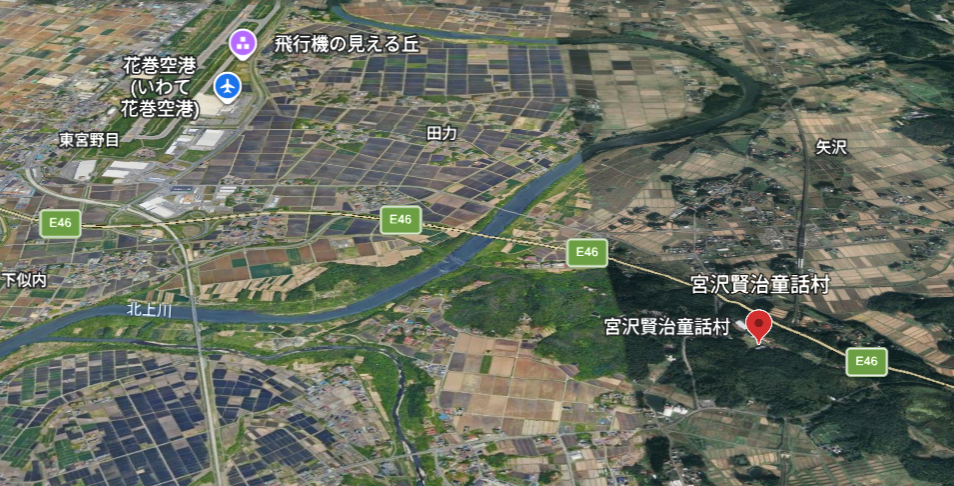
石川啄木の哀愁から、宮沢賢治の宇宙へ — 花巻「宮沢賢治童話村」が解き放つ想像力の系譜 / From the Pathos of Takuboku to the Cosmos of Kenji: The Genealogy of Imagination at Hanamaki’s “Kenji Miyazawa Fairy Tale Village”

岩手の文学が持つ二つの地平

岩手県という土地は、明治から大正にかけて、日本の近代文学における二つの極点を生み出した。石川啄木がその詩歌で表現した「ふるさと」への郷愁と、近代化の荒波の中で揺れ動く「個」の孤独。それは多くの日本人の心に深く刺さる普遍的な苦悩である。しかし、同じ岩手の地で、宮沢賢治はその「個」の閉塞感を、宇宙的な想像力によって鮮やかに突破した。啄木の文学が内面への沈潜であるならば、賢治の文学は、花巻の風景をキャンバスにして描かれた、銀河系規模の拡張である。

The Two Horizons of Iwate Literature

From the Meiji to the Taisho era, the land of Iwate produced two poles of modern Japanese literature. Ishikawa Takuboku expressed the nostalgia for “home” and the loneliness of the “individual” struggling amidst the waves of modernization. This remains a universal anguish that strikes deep into the hearts of many. Yet, in the same land, Kenji Miyazawa brilliantly broke through that individual isolation using cosmic imagination. If Takuboku’s literature was an immersion into the inner self, Kenji’s was an expansion on a galactic scale, painting the scenery of Hanamaki as his canvas.

童話村:イーハトーブという宇宙への入り口

花巻市にある「宮沢賢治童話村」は、単なる観光施設ではない。ここは、賢治が「イーハトーブ」と呼んだ理想郷の縮図である。園内に足を踏み入れると、そこは現実の物理法則から切り離された空間となる。「賢治の学校」の展示室は、彼の童話世界を空間芸術として再構築しており、訪れる者は「宇宙の部屋」「天空の部屋」といったエリアを通じて、彼の脳内で繰り広げられていた多重的な世界観を体感することになる。啄木の詩に見られる「個人の哀しみ」は、賢治の手にかかれば「宇宙的な連帯」へと昇華されるのだ。

Fairy Tale Village: The Gateway to the Cosmos of Ihatov

Hanamaki’s “Kenji Miyazawa Fairy Tale Village” is far more than a mere tourist attraction. It is a microcosm of the utopia Kenji called “Ihatov.” Stepping into the park, one leaves behind the laws of physical reality. The exhibition halls of the “Kenji School” reconstruct his fairy tales as spatial art; visitors traverse areas like the “Room of the Cosmos” and the “Room of the Sky,” experiencing the multi-layered worldview that unfolded within his mind. The “individual sorrow” found in Takuboku’s poetry is sublimated into “cosmic solidarity” in Kenji’s hands.

なぜ、花巻から「宇宙」が生まれたのか

賢治が描いたイーハトーブは、岩手の厳しい自然環境と、彼が抱いた熱烈な科学的探究心の化学反応によって生まれた。農学校の教師として土と向き合い、同時に星空を見上げては望遠鏡を覗いた賢治。彼にとって、農作業の泥と銀河の輝きは等価であった。童話村を歩くことは、この「地上の労働」と「天上の理想」を統合しようとした、一人の天才の格闘の痕跡をなぞることと同義である。私たちはここで、啄木的な「情念」から跳躍し、より高次の視座から世界を眺める賢治の哲学に触れることができる。

その眼差しは、何万年もの時をかけてイーハトーブの地層に「堆積」した土着の哀しみや祈りを、宇宙という無限のスケールで「侵食」し、普遍的な美へと昇華させる試みであった。花巻の風に吹かれながら耳を澄ませば、チェロの重低音のように響く大地の鼓動と、星々の瞬きにも似た風の囁きが交差するのを感じるだろう。泥にまみれた足で大地に深く根を張りながら、心は銀河の彼方へ飛翔する。この鮮やかなコントラストこそが、今なお色褪せない岩手の原風景として、私たちの魂を深く揺さぶり続けるのだ。

■ English Version

Why the “Cosmos” was Born in Hanamaki

The Ihatov depicted by Kenji was born from a chemical reaction between the harsh natural environment of Iwate and his fervent scientific curiosity. As a teacher at an agricultural school, he faced the soil, while simultaneously peering through a telescope at the starry sky. To him, the mud of farm work and the brilliance of the galaxy were equivalent. Walking through the Fairy Tale Village is synonymous with tracing the traces of a genius’s struggle to integrate “earthly labor” and “celestial ideals.” Here, we can leap from Takuboku-esque “passions” and touch Kenji’s philosophy, which views the world from a higher perspective.

His gaze was a profound attempt to let the infinite scale of the cosmos “erode” the indigenous sorrows and prayers that had “accumulated” in the geological layers of Ihatov over tens of thousands of years, sublimating them into universal beauty. If you listen closely while feeling the wind of Hanamaki, you will sense the intersection of the earth’s heartbeat, echoing like the deep resonance of a cello, and the whispers of the wind, akin to the twinkling of stars. Standing with mud-stained feet firmly rooted in the earth, the mind soars beyond the galaxy. This vivid contrast remains an unfading primeval landscape of Iwate, continuing to deeply shake our souls.


■ WordPress設定データ

カテゴリー: 県南 Southern Iwate
タグ: 宮沢賢治, 花巻, イーハトーブ, 宮沢賢治童話村, 宇宙
アクセスポイント(座標): 39.4005, 141.1706

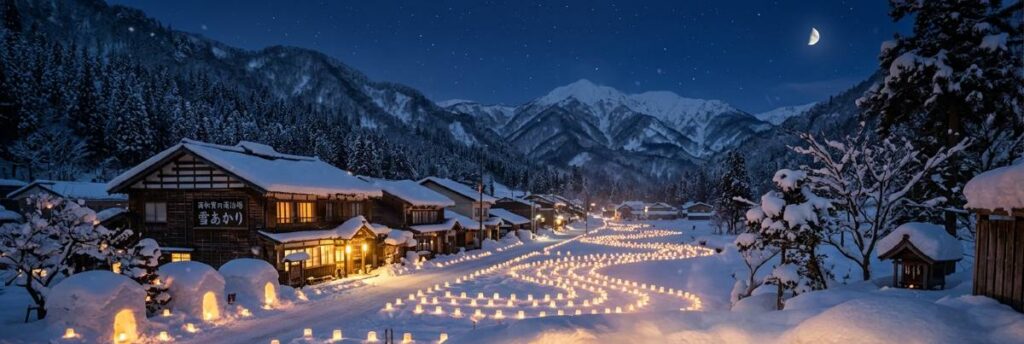
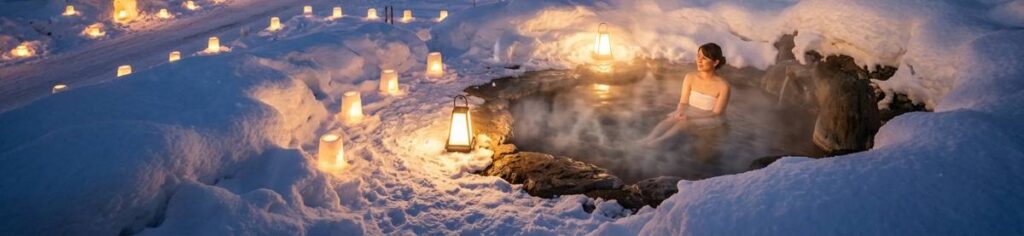
岩手の豪雪が紡ぐ光と癒やし:西和賀の雪あかりと湯治の原風景 / Light and Healing in Iwate’s Deep Snow: Nishiwaga’s Yuki-akari and the Primal Landscape of Toji

Experience the magic of Nishiwaga’s “Yuki-akari,” where candles glow amidst deep snow, reflecting the ancient spirit of hot spring healing. A winter journey into the heart of Iwate. #VisitIwate #Morioka

雪国における「光」の精神史

岩手県西和賀町。ここは日本有数の豪雪地帯であり、冬になれば世界は白一色に塗り替えられます。かつてこの地で行われていた農場の雪まつりは、単なる娯楽ではありませんでした。過酷な自然と対峙し、春を待ちわびる農民たちの、切実な共同体の祈りであり、生きるための儀式でもあったのです。この土着の祭りが現代の「雪あかり」へと昇華した過程には、厳しい冬を「敵」ではなく「共生すべき対象」として捉え直した、この地の人々の深い精神性が刻まれています。

A Spiritual History of Light in Snow Country

Nishiwaga, Iwate Prefecture, is one of Japan’s heaviest snowfall regions. When winter arrives, the world is painted in a single shade of white. The snow festivals once held on farms here were far from mere entertainment; they were earnest communal prayers and rituals for survival, born from farmers facing harsh nature while yearning for spring. The process by which this indigenous festival evolved into the modern “Yuki-akari” (snow lights) reflects the deep spirituality of the local people, who redefined the severe winter not as an “enemy,” but as something to coexist with.

雪あかり:凍てつく闇を切り裂く芸術

夜の帳が下りると、静寂に包まれた雪原に無数のキャンドルが灯されます。これが西和賀の「雪あかり」です。雪で作られた小さなドームの中に揺らめく炎は、単に美しいだけではありません。それは、凍てつく闇という巨大なキャンバスに描かれた、人間と自然の対話です。農場の雪まつりが持っていた「団結」の精神は、この光の連鎖へと引き継がれ、訪れる者の心を温かく照らし出します。この光景は、豪雪こそがこの地における最大の芸術素材であることを証明しているのです。

Yuki-akari: Art Piercing the Freezing Darkness

As night falls, countless candles are lit across the silent, snow-covered fields. This is Nishiwaga’s “Yuki-akari.” The flames flickering inside small snow domes are more than just beautiful; they are a dialogue between humanity and nature, painted on the massive canvas of freezing darkness. The spirit of “unity” inherent in the original farm festivals has been passed down to this chain of lights, warming the hearts of all who visit. This spectacle proves that deep snow is, in fact, the greatest artistic medium in this region.

湯治の原風景:雪に閉ざされた聖域

雪あかりの夜を過ごした後の締めくくりは、西和賀に脈々と息づく「湯治」の文化です。古くからこの地は、雪に閉ざされた心身を癒やす聖域として、多くの旅人を受け入れてきました。湯気立ち上る温泉に浸かり、窓の外に降り積もる雪を眺める時間は、現代の私たちが忘れてしまった「静寂との対峙」を呼び戻してくれます。豪雪地帯だからこそ実現する、この原始的で贅沢な癒やしの体験こそが、西和賀が世界に誇る文化遺産なのです。

しんしんと降り積もる雪が、風景の輪郭を分厚く覆い隠してゆく「堆積」の夜。それは同時に、私たちの内側にこびりついた日常の疲労や心のささくれを、柔らかな湯の温もりがゆっくりと溶かし、洗い流してゆく「侵食」の過程でもあります。厳冬の自然と共鳴し、凍てつく白銀の底で命の灯火を静かに燃やし続けること。西和賀の湯に身を委ね、ただ深く降りしきる雪の気配に耳を澄ませるとき、私たちは母なる大地へと還るような、確かな再生の息吹を感じるのです。

■ English Version

The Primal Landscape of Toji: A Sanctuary Closed by Snow

The conclusion to a night of Yuki-akari lies in the culture of “Toji” (hot spring healing), which pulses through Nishiwaga. For generations, this region has welcomed travelers as a sanctuary to heal minds and bodies confined by snow. The time spent soaking in steaming hot springs, watching snow pile up outside the window, calls back the experience of “confronting silence”—something many of us have forgotten in the modern age. This primitive yet luxurious healing experience, made possible only by the heavy snowfall, is the cultural heritage that Nishiwaga proudly shares with the world.

The night of “accumulation,” where the silently falling snow thickly cloaks and conceals the contours of the landscape, is simultaneously a process of “erosion.” The gentle warmth of the thermal waters slowly melts and washes away the accumulated fatigue and the splinters of the heart clinging to our inner selves. To resonate with the severe nature of midwinter, quietly keeping the flame of life burning in the depths of the freezing silver-white world—when we surrender ourselves to the waters of Nishiwaga and simply listen to the unseen presence of the deepening snow, we feel a profound breath of rebirth, as if returning to the womb of Mother Earth.


■ WordPress設定データ

カテゴリー: 県南 Southern Iwate
タグ: 西和賀, 湯治, 雪あかり, 豪雪, 静寂
アクセスポイント(座標): 39.3156, 140.7766 (※西和賀町の温泉文化を象徴する「ほっとゆだ駅」付近の座標)

鬼剣舞:蝦夷の記憶と荒ぶる魂の鎮魂 / Onikenbai: The Requiem of Ezo and the Wild Spirits

岩手の地層に刻まれた「鬼」という名の記憶

岩手県には古くから「鬼」にまつわる伝承が数多く残されています。盛岡の不来方(こずかた)城にある鬼の手形伝説は、悪鬼を退治し、その誓いを刻ませたという「征服」の物語として広く知られています。しかし、北上市に伝わる重要無形民俗文化財「鬼剣舞(おにけんばい)」は、その対極にある視点を私たちに突きつけます。ここでは鬼は退治される対象ではなく、鎮魂と崇拝の対象として、荒ぶる舞の中に息づいているのです。

The Memory of “Oni” Engraved in the Strata of Iwate

Iwate Prefecture has long been home to numerous legends surrounding the “Oni” (demons). The legend of the demon’s handprint at Kozukata Castle in Morioka is widely known as a story of “conquest,” where a demon was defeated and forced to leave its mark as a vow. However, the “Onikenbai” (Demon Sword Dance) of Kitakami City, a designated Important Intangible Folk Cultural Property, presents a perspective at the opposite end of the spectrum. Here, the Oni are not objects to be defeated, but subjects of requiem and reverence, living on within a wild, powerful dance.

蝦夷の誇りと神聖なる仮面

鬼剣舞の起源は、かつてこの地で朝廷軍と対峙した先住民「蝦夷(えみし)」の魂を弔うための念仏踊りにあると言われています。踊り手が装着する恐ろしげな仮面は、実は仏の化身を意味し、怒りの表情の裏には、非業の死を遂げた者たちへの深い哀悼が込められています。彼らが激しく剣を振りかざし、地面を力強く踏みしめる「跳躍」の所作は、単なるパフォーマンスではありません。それは、大地に眠る魂を揺り起こし、鎮め、そして彼らの誇りを現代へと繋ぎ止めるための、神聖な儀式なのです。

The Pride of Ezo and the Sacred Masks

The origins of Onikenbai are said to lie in the “Nembutsu Odori” (Buddhist prayer dance) intended to appease the spirits of the “Emishi,” the indigenous people who once confronted the Imperial court in this region. The fearsome masks worn by the dancers actually represent manifestations of Buddha; behind the expressions of rage lies a profound mourning for those who met untimely deaths. The “leaping” movements, where dancers brandish swords and stomp powerfully on the ground, are not merely a performance. It is a sacred ritual designed to awaken and soothe the spirits sleeping in the earth, anchoring their pride in the modern world.

「退治」から「共生」へ:歴史のパズルを埋める

不来方(こずかた)の伝説が「鬼を排除する」ことで秩序を守ろうとしたのに対し、鬼剣舞(おにけんばい)は「鬼を神として受け入れる」ことで調和を図ろうとしました。この二つの物語の対比は、北東北における歴史の複雑さを象徴しています。鬼剣舞の荒々しくも美しい舞を見ることは、単なる観光体験ではありません。それは、私たちが歴史の教科書では読み解けない、岩手の地底に眠る「敗者」たちの物語に耳を傾け、その魂と対話する知的な旅なのです。

歴史という時の大河が、表層の記憶を「侵食」し、勝者にとって都合の良い物語だけを地表に削り残してきたのだとすれば、鬼剣舞の力強い足踏みは、その足元に幾重にも「堆積」してきた名もなき者たちの祈りを大地から呼び覚ます行為と言えます。かがり火の中で乱舞する面(おもて)の奥に、かつてこの地を深く愛した蝦夷(えみし)たちの熱い息遣いを感じるとき、私たちは一つの真理にたどり着くでしょう。鬼とは、排除すべき恐ろしい他者ではなく、厳しい風土の中で自然の畏れと恵みを抱きしめ、共に生きた私たちの祖先の姿そのものなのだと。

■ English Version

From “Extermination” to “Coexistence”: Filling the Puzzle of History

While the Kozukata legend sought to maintain order by “excluding the Oni,” Onikenbai seeks harmony by “accepting the Oni as deities.” The contrast between these two narratives symbolizes the complexity of history in the Northern Tohoku region. Watching the wild yet beautiful dance of Onikenbai is not merely a sightseeing experience. It is an intellectual journey where we listen to the stories of the “defeated” sleeping deep beneath the earth of Iwate, conversing with their forgotten souls.

If the great river of time has “eroded” the surface memories, carving out and leaving behind only the convenient tales of the victors, then the powerful stomping of the Onikenbai is a profound act of awakening the prayers of the nameless that have “accumulated” layer upon layer beneath our feet. As we sense the fiery breath of the Emishi—who once deeply loved this land—behind the masks dancing wildly in the light of the bonfires, we arrive at a quiet truth. The Oni are not terrifying others to be eliminated; they are the very reflection of our ancestors, who embraced both the awe and the blessings of nature, living in enduring harmony with this harsh yet magnificent climate.


■ WordPress設定データ

カテゴリー: 県南 Southern Iwate
タグ: 鬼剣舞, 蝦夷(えみし), 不来方の伝説, 民俗芸能, 歴史の堆積と侵食
アクセスポイント(座標): 39.2811, 141.0428
(※鬼剣舞の歴史と文化を伝える北上市「鬼の館」付近の座標)

岩手の冬を纏う芸術:花巻から紡がれる「ホームスパン」の系譜 / Wearing the Art of Iwate’s Winter: The Lineage of Hanamaki Homespun

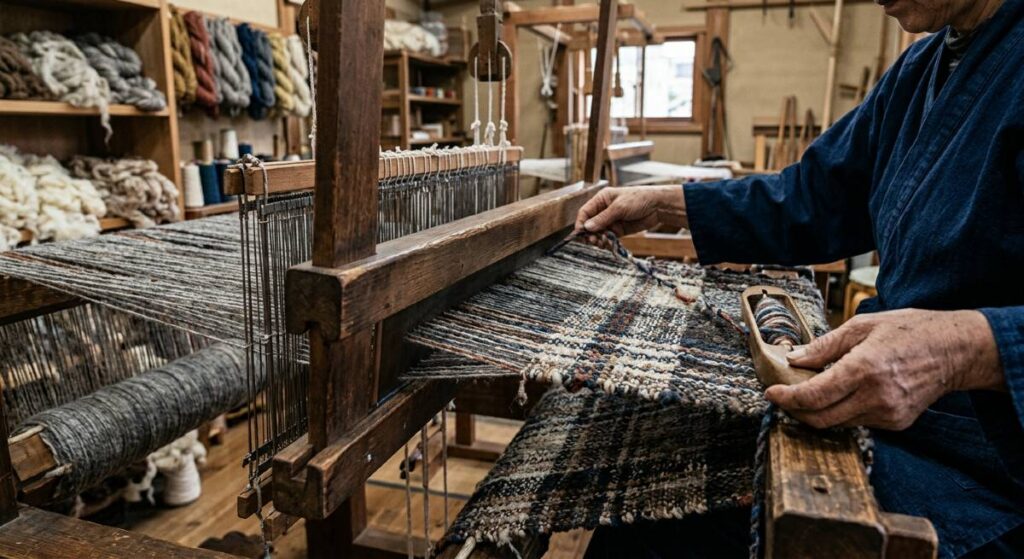
英国の技法と岩手の風土が融合した「ホームスパン」。花巻で脈々と受け継がれる手紡ぎ・手織りの温もりは、まさに着る歴史。この冬、岩手で本物の手仕事に触れてみませんか? #VisitIwate #Morioka #Homespun #Handmade #Craftsmanship

岩手の厳しい冬が育んだ、羊毛の温もり

岩手の厳しい冬は、ただ寒さを強いるだけではない。それは、人の手の温もりを求める「織物」という文化を育む土壌となった。明治時代、英国から伝わった羊の飼育と紡織の技術は、ここ花巻の地で独自の進化を遂げた。それが「ホームスパン」である。この織物は単なる防寒具ではなく、英国の伝統技法と岩手の風土が交差して生まれた、歴史の結晶といえる。

The Warmth of Wool Cultivated by Iwate’s Harsh Winters

The severe winters of Iwate do not merely impose cold; they serve as a foundation for a textile culture that yearns for the warmth of the human touch. During the Meiji era, the techniques of sheep farming and weaving introduced from Britain underwent a unique evolution in Hanamaki. This is “Homespun.” This fabric is not merely protective gear against the cold, but a crystallization of history, born from the intersection of British traditional techniques and the climate of Iwate.

英国からの伝播と、花巻での開花

ホームスパンの歴史は、明治期の殖産興業政策に遡る。当時、岩手の寒冷な気候は羊の飼育に適していると判断され、英国から技術者が招かれたり、現地の先駆者たちが渡英して技術を持ち帰ったりしたことで、この手仕事の文化が根付いた。特に花巻周辺では、農閑期の貴重な収入源として、また暮らしを豊かにする芸術として、手紡ぎ・手織りの技が磨かれた。機械による均一な製品とは異なり、糸の一本一本に作り手の息遣いが宿るこの織物は、まさに「人間によるものづくり」の原点である。

Transmission from Britain and Flowering in Hanamaki

The history of Homespun traces back to the industrial promotion policies of the Meiji era. At the time, it was recognized that Iwate’s cold climate was suitable for sheep farming. Technicians were invited from Britain, and local pioneers traveled abroad to bring back expertise, allowing this craft culture to take root. Particularly in the Hanamaki area, the skills of hand-spinning and hand-weaving were refined as a vital source of income during the agricultural off-season and as an art form to enrich daily life. Unlike mass-produced, machine-made goods, this fabric, which carries the breath of the maker in every single thread, is truly the origin of “craftsmanship by human hands.”

不揃いという名の美学

ホームスパンの最大の魅力は、その「不揃いさ」にある。手紡ぎ機で紡がれた羊毛の糸は、太さが一定ではない。しかし、その不均一さが織り上がった時に独特の凹凸を生み出し、空気をたっぷりと含ませることで、驚くほどの軽さと温かさを実現する。これは自然の素材を、人の感覚でコントロールする究極の調和である。岩手の山々を背景に、羊たちが草を食む風景から始まり、それが職人の手によって糸となり、布となる。この一連の物語が、一枚の生地の中に凝縮されているのだ。

The Aesthetics of Irregularity

The greatest appeal of Homespun lies in its “irregularity.” Wool yarn spun on a hand-spinning wheel is not uniform in thickness. However, this unevenness creates unique textures when woven, trapping air and achieving surprising lightness and warmth. This is the ultimate harmony of controlling natural materials through human intuition. It begins with the scenery of sheep grazing against the backdrop of Iwate’s mountains, continuing through the artisan’s hands as it becomes yarn and then fabric. This entire narrative is condensed into a single piece of cloth.

未来へ紡ぐ、岩手のアイデンティティ

現代において、ホームスパンは単なる伝統工芸の枠を超え、サステナブルなファッションのあり方を提示している。大量生産・大量消費の時代に、時間をかけて丁寧に作られたものは、時を経るごとに愛着が増す。花巻で紡がれるこの織物は、英国の伝統を岩手の魂で再解釈し、未来へと繋ぐ架け橋である。岩手を訪れることは、単なる観光ではない。この土地で紡がれてきた時間を纏う、あるいはその歴史に触れるという、知的な旅そのものなのである。

消費という名の「侵食」が、あらゆるものを瞬く間に均質化し、忘れ去らせていく現代。だからこそ、羊毛を手で染め、紡ぎ、手仕事で織り上げるホームスパンの営みは、この土地の記憶と人々の祈りの「堆積」として、静かな光を放っている。イーハトーブの冷涼な風が吹き抜ける花巻の工房から生まれる一枚の布。それは、決して削り取られることのない魂の地層を身に纏うことと同義だ。擦り切れるまで愛され、やがて土へと還るその日まで、織り込まれた時間は、あなたと共に豊かな風景を紡ぎ続けるだろう。

■ English Version

Spinning into the Future: The Identity of Iwate

In the modern era, homespun transcends the boundaries of traditional crafts, presenting a model for sustainable fashion. In an age of mass production and consumption, items made carefully over time grow dearer as the years pass. This textile, woven in Hanamaki, is a bridge that reinterprets British tradition with the soul of Iwate and connects it to the future. Visiting Iwate is not merely sightseeing; it is an intellectual journey of wearing the time that has been spun in this land, or perhaps, touching its history directly.

Today, the “erosion” of relentless consumption swiftly homogenizes and washes away the essence of things. In stark contrast, the act of hand-dyeing, spinning, and weaving homespun wool stands as a resilient “accumulation” of local memories and human devotion, radiating a quiet luminescence. A single piece of cloth born from a workshop in Hanamaki, where the cool winds of Ihatov blow, is synonymous with wrapping oneself in an unyielding stratum of the soul. Until the day it is loved to tatters and eventually returns to the earth, the time woven into its threads will continue to spin a rich and enduring landscape alongside you.


■ WordPress設定データ

カテゴリー: 県南 Southern Iwate
タグ: ホームスパン, 花巻, サステナブル, 伝統工芸, イーハトーブ
アクセスポイント(座標): 39.3887, 141.1167

岩手の食の深層:わんこそばの祝祭と、豪雪が生んだ「ビスケットの天ぷら」 / The Depths of Iwate’s Cuisine: The Festive Wanko Soba and the “Tempura Biscuits” Born of Heavy Snow

岩手の食文化に見る、祝祭と生存の二面性

岩手県という広大な土地の食文化を紐解くと、そこには華やかな「祝祭」の側面と、厳冬を生き抜くための「生存」の知恵という、対極的な二つの顔が見えてきます。盛岡を中心とした地域で愛される「わんこそば」は、ゲストを最大限にもてなすための祝祭の文化です。一方で、県内有数の豪雪地帯である西和賀町には、極限の環境下で生まれた独自の食のサバイバル術が息づいています。この二つを比較することは、岩手の歴史的背景を深く理解する鍵となります。

The Duality of Iwate’s Cuisine: Celebration and Survival

Unraveling the culinary culture of Iwate Prefecture reveals two contrasting faces: the grand spirit of celebration and the profound wisdom required for survival in harsh winters. “Wanko Soba,” beloved in the Morioka region, is a culture of celebration designed to provide the ultimate hospitality. Conversely, in Nishiwaga, one of the prefecture’s heaviest snowfall areas, a distinct survival-based culinary tradition thrives. Comparing these two provides a key to deeply understanding Iwate’s historical context.

「わんこそば」:おもてなしの精神の具現化

「わんこそば」は、単なる大食いの競技ではありません。その起源は、かつて岩手で行われていた宴席料理にあります。大人数にそばを振る舞う際、温かい状態で提供し続けるために、少しずつお椀に入れるようになったのが始まりとされています。そこにあるのは、「お腹いっぱい食べてほしい」というホスト側の切実な願いと、客をもてなすための洗練されたオペレーションです。このリズム感とライブ感こそが、岩手が誇るおもてなしの原点といえるでしょう。

Wanko Soba: The Embodiment of Omotenashi

“Wanko Soba” is far more than a competitive eating challenge. Its origins lie in traditional banquet cuisine. To serve large groups of guests hot noodles continuously, the noodles were served in small portions into bowls. This practice reflects the host’s earnest desire to ensure guests are fully satisfied, combined with refined hospitality operations. This rhythm and live atmosphere represent the very essence of Iwate’s famed *omotenashi*.

西和賀の知恵:豪雪地帯の「ビスケットの天ぷら」

翻って西和賀町に目を向けると、そこには雪に閉ざされる冬を乗り切るための、質実剛健な食文化が根付いています。中でも異彩を放つのが「ビスケットの天ぷら」です。なぜビスケットを揚げるのか。それは、寒冷地で不足しがちなカロリーを補い、温かい食べ物で活力を得るための、先人の知恵の結晶です。少し硬くなったビスケットを衣で包み、油で揚げることで、香ばしさと甘みが引き立ち、冬の保存食としての役割を果たしました。これは単なる珍味ではなく、過酷な自然と対峙した人々の歴史的遺産なのです。

屋根を軋ませて「堆積」する豪雪と、孤独によって人々の心を「侵食」しようとする長く厳しい冬。その圧倒的な白の静寂の中で、囲炉裏の火で黄金色に揚げられたビスケットは、身と心を温める小さな太陽でありました。サクサクとした熱い衣をかじれば、素朴な甘さが口いっぱいに広がり、凍てつく時間を優しく溶かしていく。苛烈な風土の重圧に抗うのではなくしなやかに寄り添い、ささやかな日常に生きる喜びを見出す営み。この一片の天ぷらには、イーハトーブの雪深い大地を生き抜く強靭な生命力が、今も色褪せることなく息づいているのです。

■ English Version

Nishiwaga’s Wisdom: The “Tempura Biscuit” of the Snow Country

Turning to Nishiwaga, we find a robust culinary culture rooted in surviving snow-bound winters. A standout is the “tempura biscuit” (biscuits fried in batter). Why fry a biscuit? It is the crystallization of our ancestors’ wisdom, created to supplement the calories often lacking in cold regions and to spark vitality through a warm meal. By wrapping slightly hardened biscuits in batter and deep-frying them, their savory aroma and sweetness were beautifully drawn out, fulfilling their role as essential winter provisions. This is no mere local curiosity; it is a historical legacy of a people confronting an unforgiving nature.

As heavy snows persistently “accumulated” to test their endurance, and the long, bitter winter threatened to “erode” their spirits with isolation, these golden-fried biscuits shone like miniature suns, warming both body and soul amid the overwhelming white silence. Bite into the hot, crispy batter, and a rustic sweetness fills your mouth, gently melting away the frozen hours. It is an act of gracefully embracing the immense pressure of a harsh climate, finding pure joy in everyday survival. Within a single piece of this biscuit tempura breathes the resilient life force that continues to thrive in the deep-snow lands of Ihatov, remaining unfaded to this day.


■ WordPress設定データ

カテゴリー: 県南 Southern Iwate
タグ: 西和賀町, ビスケットの天ぷら, 郷土料理, 雪国, 堆積と侵食
アクセスポイント(座標): 39.3155, 140.7760