岩手の地層に刻まれた「鬼」という名の記憶
岩手県には古くから「鬼」にまつわる伝承が数多く残されています。盛岡の不来方(こずかた)城にある鬼の手形伝説は、悪鬼を退治し、その誓いを刻ませたという「征服」の物語として広く知られています。しかし、北上市に伝わる重要無形民俗文化財「鬼剣舞(おにけんばい)」は、その対極にある視点を私たちに突きつけます。ここでは鬼は退治される対象ではなく、鎮魂と崇拝の対象として、荒ぶる舞の中に息づいているのです。
The Memory of “Oni” Engraved in the Strata of Iwate
Iwate Prefecture has long been home to numerous legends surrounding the “Oni” (demons). The legend of the demon’s handprint at Kozukata Castle in Morioka is widely known as a story of “conquest,” where a demon was defeated and forced to leave its mark as a vow. However, the “Onikenbai” (Demon Sword Dance) of Kitakami City, a designated Important Intangible Folk Cultural Property, presents a perspective at the opposite end of the spectrum. Here, the Oni are not objects to be defeated, but subjects of requiem and reverence, living on within a wild, powerful dance.
蝦夷の誇りと神聖なる仮面
鬼剣舞の起源は、かつてこの地で朝廷軍と対峙した先住民「蝦夷(えみし)」の魂を弔うための念仏踊りにあると言われています。踊り手が装着する恐ろしげな仮面は、実は仏の化身を意味し、怒りの表情の裏には、非業の死を遂げた者たちへの深い哀悼が込められています。彼らが激しく剣を振りかざし、地面を力強く踏みしめる「跳躍」の所作は、単なるパフォーマンスではありません。それは、大地に眠る魂を揺り起こし、鎮め、そして彼らの誇りを現代へと繋ぎ止めるための、神聖な儀式なのです。
The Pride of Ezo and the Sacred Masks
The origins of Onikenbai are said to lie in the “Nembutsu Odori” (Buddhist prayer dance) intended to appease the spirits of the “Emishi,” the indigenous people who once confronted the Imperial court in this region. The fearsome masks worn by the dancers actually represent manifestations of Buddha; behind the expressions of rage lies a profound mourning for those who met untimely deaths. The “leaping” movements, where dancers brandish swords and stomp powerfully on the ground, are not merely a performance. It is a sacred ritual designed to awaken and soothe the spirits sleeping in the earth, anchoring their pride in the modern world.
「退治」から「共生」へ:歴史のパズルを埋める
不来方(こずかた)の伝説が「鬼を排除する」ことで秩序を守ろうとしたのに対し、鬼剣舞(おにけんばい)は「鬼を神として受け入れる」ことで調和を図ろうとしました。この二つの物語の対比は、北東北における歴史の複雑さを象徴しています。鬼剣舞の荒々しくも美しい舞を見ることは、単なる観光体験ではありません。それは、私たちが歴史の教科書では読み解けない、岩手の地底に眠る「敗者」たちの物語に耳を傾け、その魂と対話する知的な旅なのです。
歴史という時の大河が、表層の記憶を「侵食」し、勝者にとって都合の良い物語だけを地表に削り残してきたのだとすれば、鬼剣舞の力強い足踏みは、その足元に幾重にも「堆積」してきた名もなき者たちの祈りを大地から呼び覚ます行為と言えます。かがり火の中で乱舞する面(おもて)の奥に、かつてこの地を深く愛した蝦夷(えみし)たちの熱い息遣いを感じるとき、私たちは一つの真理にたどり着くでしょう。鬼とは、排除すべき恐ろしい他者ではなく、厳しい風土の中で自然の畏れと恵みを抱きしめ、共に生きた私たちの祖先の姿そのものなのだと。
■ English Version
From “Extermination” to “Coexistence”: Filling the Puzzle of History
While the Kozukata legend sought to maintain order by “excluding the Oni,” Onikenbai seeks harmony by “accepting the Oni as deities.” The contrast between these two narratives symbolizes the complexity of history in the Northern Tohoku region. Watching the wild yet beautiful dance of Onikenbai is not merely a sightseeing experience. It is an intellectual journey where we listen to the stories of the “defeated” sleeping deep beneath the earth of Iwate, conversing with their forgotten souls.
If the great river of time has “eroded” the surface memories, carving out and leaving behind only the convenient tales of the victors, then the powerful stomping of the Onikenbai is a profound act of awakening the prayers of the nameless that have “accumulated” layer upon layer beneath our feet. As we sense the fiery breath of the Emishi—who once deeply loved this land—behind the masks dancing wildly in the light of the bonfires, we arrive at a quiet truth. The Oni are not terrifying others to be eliminated; they are the very reflection of our ancestors, who embraced both the awe and the blessings of nature, living in enduring harmony with this harsh yet magnificent climate.
■ WordPress設定データ
カテゴリー: 県南 Southern Iwate
タグ: 鬼剣舞, 蝦夷(えみし), 不来方の伝説, 民俗芸能, 歴史の堆積と侵食
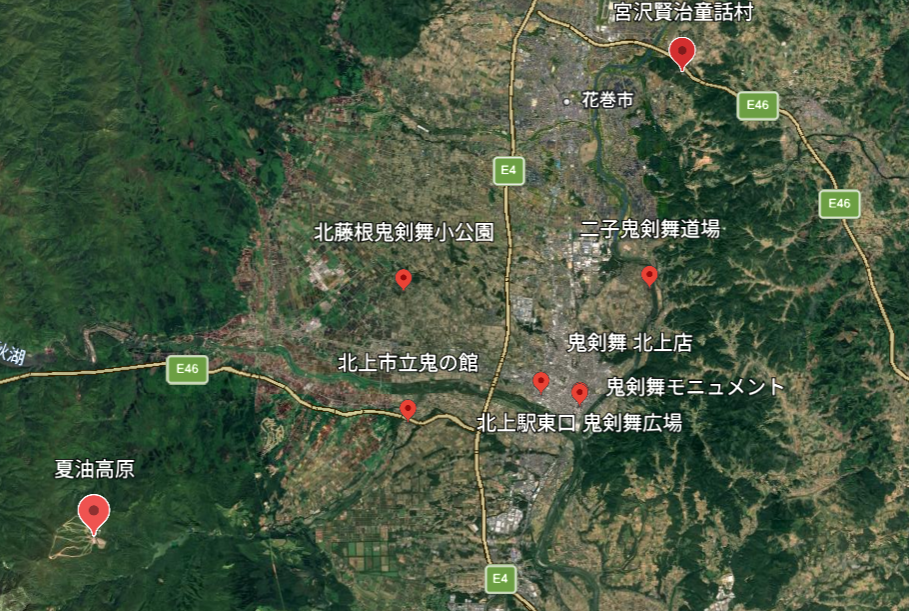
アクセスポイント(座標): 39.2811, 141.0428
(※鬼剣舞の歴史と文化を伝える北上市「鬼の館」付近の座標)