岩手の境界線:鬼剣舞と妖怪たちが織りなす異界の系譜 / The Borders of Iwate: A Genealogy of the Supernatural from Onikenbai to Tono’s Spirits

岩手という「異界」への入り口

岩手県は、現世と異界が交差する稀有な土地である。深い山々に抱かれ、厳しい冬が支配するこの地では、古来より人々は「目に見えないもの」と共に生きてきた。北上の「鬼剣舞」の勇壮な跳躍から、遠野の深淵に潜む妖怪伝承まで、その精神的風土を紐解くことは、日本人の深層心理に眠るアニミズムの根源を探求する行為に他ならない。

The Gateway to the “Otherworld” of Iwate

Iwate Prefecture is a rare landscape where the mundane world intersects with the supernatural. Embraced by deep mountains and ruled by harsh winters, the people here have lived alongside the “unseen” since ancient times. Unraveling the spiritual climate of this region—from the dynamic leaps of the “Onikenbai” in Kitakami to the legends of yokai lurking in the depths of Tono—is nothing less than an exploration of the roots of animism that lie in the Japanese subconscious.

鬼剣舞:鎮魂の儀式としての「鬼」

北上の「鬼剣舞(おにけんばい)」は、単なる郷土芸能ではない。鬼の面を被り、刀を振るうその姿は、かつての修験道や仏教的儀礼が混ざり合った「鎮魂」の儀式である。ここで表現される鬼は、悪の象徴ではない。むしろ、外敵や災厄を追い払う守護神としての「荒ぶる神」である。舞い手が跳躍するたびに、現世の穢れが払われ、静寂がもたらされる。この荒々しいエネルギーこそが、岩手の精神的な防波堤となってきた歴史を物語っている。

Onikenbai: The “Oni” as a Ritual of Repose

The “Onikenbai” (Demon Sword Dance) of Kitakami is far more than mere folk performance. Wearing masks and wielding swords, the dancers perform a ritual of “repose” (chinkon), blending Shugendo and Buddhist rites. The “Oni” (demon) depicted here is not a symbol of evil; rather, it is a “wrathful deity” acting as a guardian to ward off external enemies and calamities. Each leap of the dancer purifies the mundane world, ushering in a sacred silence. This raw, turbulent energy tells the history of how the spirit of the Oni has served as a spiritual bulwark for Iwate.

遠野の妖怪たち:畏怖と共生の物語

鬼という強大な異形から、遠野の「河童」や「座敷わらし」という身近な異界の住人へ。この系譜の背後には、厳しい自然と共存せざるを得なかった北の民の切実な知恵がある。柳田國男の『遠野物語』で知られるこの地は、まさに妖怪たちの聖域だ。川辺で悪戯を働く河童、家に富をもたらす座敷わらし。これらは自然の畏怖を擬人化し、異界との境界を曖昧にすることで、死や災厄を日常の一部として受け入れようとする人間の営みそのものである。

The Yokai of Tono: Tales of Awe and Coexistence

Moving from the powerful, grotesque form of the Oni to the more intimate denizens of the supernatural like Tono’s “Kappa” and “Zashiki-warashi,” we see a shift. Behind this genealogy lies the pragmatic wisdom of northern people who had to coexist with harsh, unforgiving nature. Tono, immortalized by Kunio Yanagita’s Tono Monogatari, is truly a sanctuary for these spirits. Kappa play by the riverbanks; Zashiki-warashi watch over households. These tales anthropomorphize the awe of nature. By blurring the border with the supernatural, humanity attempts to accept death and calamity as part of daily life.

目に見えないものとの対話

岩手を訪れることは、単なる観光ではない。それは、合理主義が覆い隠してしまった「目に見えないもの」との対話を取り戻す旅である。鬼剣舞の足音が地面を揺らし、遠野の森が静かに物語を囁くとき、私たちは現代文明の喧騒から切り離され、遥か昔から続く「異界との隣人関係」を追体験することになるだろう。

A Dialogue with the Unseen

Visiting Iwate is not merely sightseeing. It is a journey to reclaim a dialogue with the “unseen”—a dialogue that modern rationalism has long obscured. When the footsteps of the Onikenbai shake the earth and the forests of Tono whisper their ancient tales, we are detached from the clamor of modern civilization, re-experiencing the “neighborly relationship with the Otherworld” that has endured since time immemorial.

📍 アクセス / Access

日本語:
【鬼剣舞(北上市)】
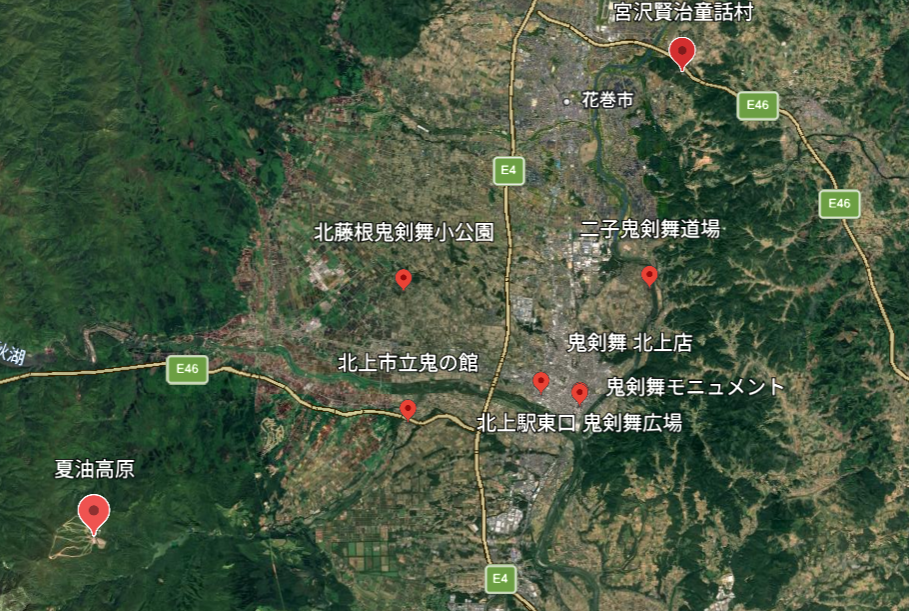
電車: JR北上駅下車。駅東口から岩手県交通バス「口内線」で「鬼の館前」下車。またはタクシーで約20分。
車: 東北自動車道 北上江釣子ICから国道107号経由で約10分。
【遠野地方(河童・座敷わらし)】
電車: JR遠野駅下車。盛岡駅からJR釜石線で約1時間40分。カッパ淵や遠野ふるさと村へは、駅からタクシーまたはレンタカー。
車: 釜石自動車道 遠野ICから遠野市内へすぐ。盛岡市から国道396号経由で約1時間30分。
English:
For Onikenbai (Kitakami City):
By Train: Take JR Kitakami Station. From the East Exit, take Iwate Kenpoku Bus “Kuchinai Line” to

旋律の彼方、大地の咆哮:北上・鬼剣舞が刻む「鬼」の記憶 / Beyond the Melody, A Roar from the Earth: The Memory of the “Oni” Carved by Kitakami’s Oni Kenbai

宮沢賢治の繊細なチェロと、大地の重低音

宮沢賢治の童話『セロ弾きのゴーシュ』において、音楽は魂の救済と成長を象徴する繊細な調和として描かれています。しかし、賢治が愛したこの岩手の地には、物語の優雅な旋律とは対極にある、もっと野性的で、地殻を揺らすような響きが存在します。それが、北上市に伝わる民俗芸能「鬼剣舞(おにけんばい)」です。賢治が言葉で描いた「宇宙の調和」に対し、鬼剣舞は「大地の浄化」をその重厚なビートで体現しています。この対比こそが、岩手の精神的な深層を理解するための鍵となるのです。

セロの弦が夜空へ向かって奏でる透明な旋律が、星々の瞬きとともに静かに精神の層を重ねていく祈りの「堆積」であるならば、怒れる仏の化身である鬼たちが大地を激しく踏み鳴らす躍動は、積年の淀みや邪気を容赦なく削り落とす「侵食」にほかなりません。天を仰ぎ、銀河の理(ことわり)に耳を澄ませる静謐なまなざしと、かがり火の下で泥土を蹴り上げ、魂の底から咆哮する生命の燃焼。この天と地、静と動、そして堆積と侵食が織りなす圧倒的なコントラストの狭間に立つとき、私たちは岩手という風土が脈打つ、荒々しくも美しい生命の鼓動に真に触れることができるのです。

■ English Version

Kenji Miyazawa’s Delicate Cello and the Earth’s Deep Bass

In Kenji Miyazawa’s short story “Gauche the Cellist,” music is depicted as a delicate harmony symbolizing the salvation and growth of the soul. However, in this land of Iwate that Kenji so dearly loved, there exists a sound that stands in stark contrast to the elegant melodies of his stories—a sound far more wild, one that shakes the very crust of the earth. This is the folk performing art known as “Oni Kenbai” (Demon Sword Dance) from Kitakami City. If Kenji represented the “harmony of the universe” through his words, Oni Kenbai embodies the “purification of the earth” through its profound and heavy beat. This sharp contrast between the sophisticated spiritualism of literature and the primal, rhythmic pulse of the soil serves as the essential key to unlocking and understanding the profound spiritual depths of Iwate. To hear the drums of the Oni is to feel the heartbeat of the land itself, reclaiming its ancient power through a dance of light and shadow.

If the transparent melodies of the cello soaring into the night sky represent a quiet “accumulation” of the spirit layered with starlight, the dynamic stomping of the demon-masked dancers—avatars of wrathful deities—is undoubtedly a fierce “erosion” that violently scrapes away accumulated stagnation and evil. The serene gaze raised toward the heavens in prayer for cosmic harmony perfectly counterbalances the burning vitality roaring from the depths of the soul, kicking up the mud under blazing bonfires. When we stand in the crux of this overwhelming contrast—between heaven and earth, stillness and motion, accumulation and erosion—we truly touch the wild yet beautiful, beating heart of Iwate’s profound climate.


■ WordPress設定データ

カテゴリー: 県南 Southern Iwate
タグ: 宮沢賢治, 鬼剣舞, 北上市, 民俗芸能, 詩的リアリズム
アクセスポイント(座標): 39.2847, 141.0506
(※北上市「鬼の館」付近の座標。鬼剣舞の歴史と精神に触れることができる代表的な文化拠点)

岩手の魂を継ぐ舞:早池峰神楽から鬼剣舞への精神的系譜 / Dancing with the Soul of Iwate: The Spiritual Lineage from Hayachine Kagura to Oni Kenbai

遠野の静寂から北上の躍動へ:神聖なる精神の継承

遠野の早池峰神楽は、山岳信仰の結晶であり、神を憑依させる静謐で厳格な儀式です。そこから北上の鬼剣舞(おにけんばい)へと視点を移すと、舞の性質は「神への奉納」から「戦士の魂の具現化」へと劇的な変貌を遂げます。しかし、両者には共通する精神的土壌があります。それは、岩手の厳しい自然と歴史の中で育まれた、見えない存在への畏敬の念です。早池峰の神々が山頂から里を見守る存在であるならば、鬼剣舞の鬼たちは、かつてこの地で命を燃やした蝦夷(えみし)の英雄たちの魂そのものです。遠野で醸成された神聖な空気が、北上の地で力強い肉体表現へと昇華し、大地を力強く踏みしめることで、歴史の闇に葬られた記憶を呼び覚ましているのです。

From the Sacred Silence of Tono to the Fierce Spirits of Kitakami

Hayachine Kagura of Tono, a crystallized form of mountain worship, is a serene ritual inviting deities to descend. Transitioning to Kitakami’s Oni Kenbai, the nature of the dance shifts dramatically from meditative calm to dynamic, physical prowess. Yet, they share a common spiritual foundation: a deep reverence for the unseen, cultivated within Iwate’s harsh nature and history. If the deities of Hayachine are guardians watching from the peaks, the “Oni” (demons) of the sword dance are the very embodiments of the Emishi heroes who once defended this land. The sacred atmosphere nurtured in Tono sublimates into a powerful, earth-shaking performance in Kitakami, awakening memories buried in the shadows of history.

鬼の仮面が語る、蝦夷の鎮魂と祈りの歴史

鬼剣舞の仮面の下にあるのは、単なる悪の象徴としての鬼ではなく、朝廷軍と戦い、敗れ、そしてこの地に散った蝦夷の戦士たちの無念と誇りです。踊り手が激しく跳躍し、剣を振るう姿は、敵を討つためではなく、死者の魂を慰め、鎮めるための儀式に他なりません。「鬼」という呼称は、中央集権から見た異民族への蔑称でしたが、この舞においては、彼らを英雄として称える鎮魂の印へと反転します。荒ぶる魂を静め、平和な世を願う。この鬼剣舞という芸術には、岩手の歴史が刻んだ悲哀と、それを受け入れ昇華させる東北人の精神性が深く根付いています。大地を叩く太鼓の音は、時代を超えて響く、忘れてはならない歴史への鎮魂歌なのです。

The Oni Mask: A Requiem for the Emishi and a Legacy of Prayer

Beneath the masks of Oni Kenbai lies not a symbol of evil, but the pride and sorrow of the Emishi warriors who fought, fell, and perished against the imperial forces. The dancers’ vigorous leaps and sword-wielding movements are not for combat, but a ritual to console and appease the spirits of the dead. While the term “Oni” was originally a derogatory label imposed by the central authority upon those they deemed “others,” this dance subverts that narrative, reclaiming the title as a badge of honor for their fallen heroes. Deeply rooted in the spirituality of the Tohoku people, Oni Kenbai is an art form that transmutes historical grief into a powerful expression of resilience. As the thunderous beat of the drums strikes the earth, it resonates across generations—a timeless requiem for a history that must never be forgotten.