雪国における「光」の精神史
岩手県西和賀町。ここは日本有数の豪雪地帯であり、冬になれば世界は白一色に塗り替えられます。かつてこの地で行われていた農場の雪まつりは、単なる娯楽ではありませんでした。過酷な自然と対峙し、春を待ちわびる農民たちの、切実な共同体の祈りであり、生きるための儀式でもあったのです。この土着の祭りが現代の「雪あかり」へと昇華した過程には、厳しい冬を「敵」ではなく「共生すべき対象」として捉え直した、この地の人々の深い精神性が刻まれています。
A Spiritual History of Light in Snow Country
Nishiwaga, Iwate Prefecture, is one of Japan’s heaviest snowfall regions. When winter arrives, the world is painted in a single shade of white. The snow festivals once held on farms here were far from mere entertainment; they were earnest communal prayers and rituals for survival, born from farmers facing harsh nature while yearning for spring. The process by which this indigenous festival evolved into the modern “Yuki-akari” (snow lights) reflects the deep spirituality of the local people, who redefined the severe winter not as an “enemy,” but as something to coexist with.
雪あかり:凍てつく闇を切り裂く芸術
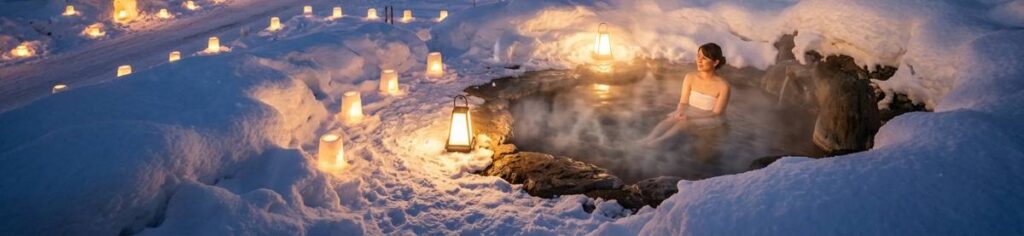
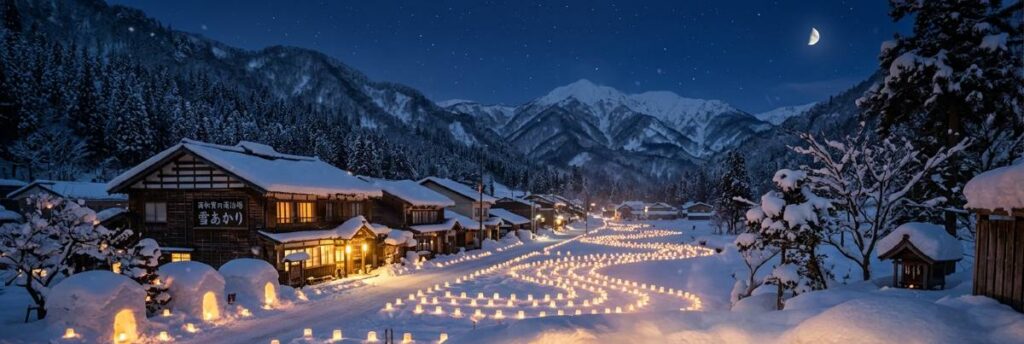
夜の帳が下りると、静寂に包まれた雪原に無数のキャンドルが灯されます。これが西和賀の「雪あかり」です。雪で作られた小さなドームの中に揺らめく炎は、単に美しいだけではありません。それは、凍てつく闇という巨大なキャンバスに描かれた、人間と自然の対話です。農場の雪まつりが持っていた「団結」の精神は、この光の連鎖へと引き継がれ、訪れる者の心を温かく照らし出します。この光景は、豪雪こそがこの地における最大の芸術素材であることを証明しているのです。
Yuki-akari: Art Piercing the Freezing Darkness
As night falls, countless candles are lit across the silent, snow-covered fields. This is Nishiwaga’s “Yuki-akari.” The flames flickering inside small snow domes are more than just beautiful; they are a dialogue between humanity and nature, painted on the massive canvas of freezing darkness. The spirit of “unity” inherent in the original farm festivals has been passed down to this chain of lights, warming the hearts of all who visit. This spectacle proves that deep snow is, in fact, the greatest artistic medium in this region.
湯治の原風景:雪に閉ざされた聖域
雪あかりの夜を過ごした後の締めくくりは、西和賀に脈々と息づく「湯治」の文化です。古くからこの地は、雪に閉ざされた心身を癒やす聖域として、多くの旅人を受け入れてきました。湯気立ち上る温泉に浸かり、窓の外に降り積もる雪を眺める時間は、現代の私たちが忘れてしまった「静寂との対峙」を呼び戻してくれます。豪雪地帯だからこそ実現する、この原始的で贅沢な癒やしの体験こそが、西和賀が世界に誇る文化遺産なのです。
しんしんと降り積もる雪が、風景の輪郭を分厚く覆い隠してゆく「堆積」の夜。それは同時に、私たちの内側にこびりついた日常の疲労や心のささくれを、柔らかな湯の温もりがゆっくりと溶かし、洗い流してゆく「侵食」の過程でもあります。厳冬の自然と共鳴し、凍てつく白銀の底で命の灯火を静かに燃やし続けること。西和賀の湯に身を委ね、ただ深く降りしきる雪の気配に耳を澄ませるとき、私たちは母なる大地へと還るような、確かな再生の息吹を感じるのです。
■ English Version
The Primal Landscape of Toji: A Sanctuary Closed by Snow
The conclusion to a night of Yuki-akari lies in the culture of “Toji” (hot spring healing), which pulses through Nishiwaga. For generations, this region has welcomed travelers as a sanctuary to heal minds and bodies confined by snow. The time spent soaking in steaming hot springs, watching snow pile up outside the window, calls back the experience of “confronting silence”—something many of us have forgotten in the modern age. This primitive yet luxurious healing experience, made possible only by the heavy snowfall, is the cultural heritage that Nishiwaga proudly shares with the world.
The night of “accumulation,” where the silently falling snow thickly cloaks and conceals the contours of the landscape, is simultaneously a process of “erosion.” The gentle warmth of the thermal waters slowly melts and washes away the accumulated fatigue and the splinters of the heart clinging to our inner selves. To resonate with the severe nature of midwinter, quietly keeping the flame of life burning in the depths of the freezing silver-white world—when we surrender ourselves to the waters of Nishiwaga and simply listen to the unseen presence of the deepening snow, we feel a profound breath of rebirth, as if returning to the womb of Mother Earth.
■ WordPress設定データ
カテゴリー: 県南 Southern Iwate
タグ: 西和賀, 湯治, 雪あかり, 豪雪, 静寂
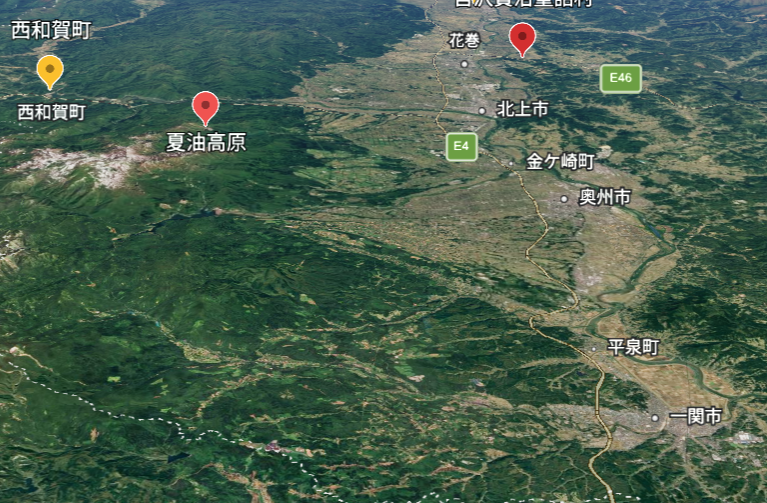
アクセスポイント(座標): 39.3156, 140.7766 (※西和賀町の温泉文化を象徴する「ほっとゆだ駅」付近の座標)