岩手の文学が持つ二つの地平
岩手県という土地は、明治から大正にかけて、日本の近代文学における二つの極点を生み出した。石川啄木がその詩歌で表現した「ふるさと」への郷愁と、近代化の荒波の中で揺れ動く「個」の孤独。それは多くの日本人の心に深く刺さる普遍的な苦悩である。しかし、同じ岩手の地で、宮沢賢治はその「個」の閉塞感を、宇宙的な想像力によって鮮やかに突破した。啄木の文学が内面への沈潜であるならば、賢治の文学は、花巻の風景をキャンバスにして描かれた、銀河系規模の拡張である。
The Two Horizons of Iwate Literature
From the Meiji to the Taisho era, the land of Iwate produced two poles of modern Japanese literature. Ishikawa Takuboku expressed the nostalgia for “home” and the loneliness of the “individual” struggling amidst the waves of modernization. This remains a universal anguish that strikes deep into the hearts of many. Yet, in the same land, Kenji Miyazawa brilliantly broke through that individual isolation using cosmic imagination. If Takuboku’s literature was an immersion into the inner self, Kenji’s was an expansion on a galactic scale, painting the scenery of Hanamaki as his canvas.
童話村:イーハトーブという宇宙への入り口
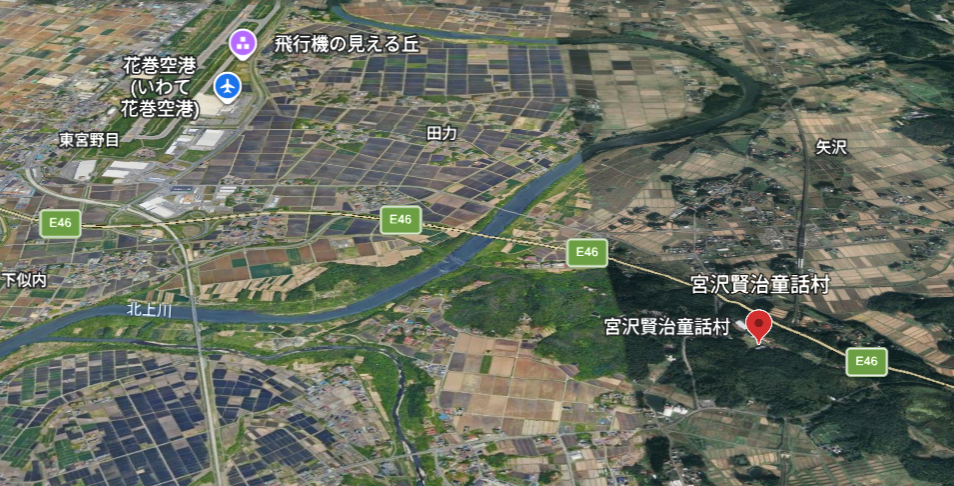
花巻市にある「宮沢賢治童話村」は、単なる観光施設ではない。ここは、賢治が「イーハトーブ」と呼んだ理想郷の縮図である。園内に足を踏み入れると、そこは現実の物理法則から切り離された空間となる。「賢治の学校」の展示室は、彼の童話世界を空間芸術として再構築しており、訪れる者は「宇宙の部屋」「天空の部屋」といったエリアを通じて、彼の脳内で繰り広げられていた多重的な世界観を体感することになる。啄木の詩に見られる「個人の哀しみ」は、賢治の手にかかれば「宇宙的な連帯」へと昇華されるのだ。
Fairy Tale Village: The Gateway to the Cosmos of Ihatov
Hanamaki’s “Kenji Miyazawa Fairy Tale Village” is far more than a mere tourist attraction. It is a microcosm of the utopia Kenji called “Ihatov.” Stepping into the park, one leaves behind the laws of physical reality. The exhibition halls of the “Kenji School” reconstruct his fairy tales as spatial art; visitors traverse areas like the “Room of the Cosmos” and the “Room of the Sky,” experiencing the multi-layered worldview that unfolded within his mind. The “individual sorrow” found in Takuboku’s poetry is sublimated into “cosmic solidarity” in Kenji’s hands.
なぜ、花巻から「宇宙」が生まれたのか
賢治が描いたイーハトーブは、岩手の厳しい自然環境と、彼が抱いた熱烈な科学的探究心の化学反応によって生まれた。農学校の教師として土と向き合い、同時に星空を見上げては望遠鏡を覗いた賢治。彼にとって、農作業の泥と銀河の輝きは等価であった。童話村を歩くことは、この「地上の労働」と「天上の理想」を統合しようとした、一人の天才の格闘の痕跡をなぞることと同義である。私たちはここで、啄木的な「情念」から跳躍し、より高次の視座から世界を眺める賢治の哲学に触れることができる。
その眼差しは、何万年もの時をかけてイーハトーブの地層に「堆積」した土着の哀しみや祈りを、宇宙という無限のスケールで「侵食」し、普遍的な美へと昇華させる試みであった。花巻の風に吹かれながら耳を澄ませば、チェロの重低音のように響く大地の鼓動と、星々の瞬きにも似た風の囁きが交差するのを感じるだろう。泥にまみれた足で大地に深く根を張りながら、心は銀河の彼方へ飛翔する。この鮮やかなコントラストこそが、今なお色褪せない岩手の原風景として、私たちの魂を深く揺さぶり続けるのだ。
■ English Version
Why the “Cosmos” was Born in Hanamaki
The Ihatov depicted by Kenji was born from a chemical reaction between the harsh natural environment of Iwate and his fervent scientific curiosity. As a teacher at an agricultural school, he faced the soil, while simultaneously peering through a telescope at the starry sky. To him, the mud of farm work and the brilliance of the galaxy were equivalent. Walking through the Fairy Tale Village is synonymous with tracing the traces of a genius’s struggle to integrate “earthly labor” and “celestial ideals.” Here, we can leap from Takuboku-esque “passions” and touch Kenji’s philosophy, which views the world from a higher perspective.
His gaze was a profound attempt to let the infinite scale of the cosmos “erode” the indigenous sorrows and prayers that had “accumulated” in the geological layers of Ihatov over tens of thousands of years, sublimating them into universal beauty. If you listen closely while feeling the wind of Hanamaki, you will sense the intersection of the earth’s heartbeat, echoing like the deep resonance of a cello, and the whispers of the wind, akin to the twinkling of stars. Standing with mud-stained feet firmly rooted in the earth, the mind soars beyond the galaxy. This vivid contrast remains an unfading primeval landscape of Iwate, continuing to deeply shake our souls.
■ WordPress設定データ
カテゴリー: 県南 Southern Iwate
タグ: 宮沢賢治, 花巻, イーハトーブ, 宮沢賢治童話村, 宇宙
アクセスポイント(座標): 39.4005, 141.1706