獣の饗宴から至高の保存食へ:風土が施す塩と時間の魔法
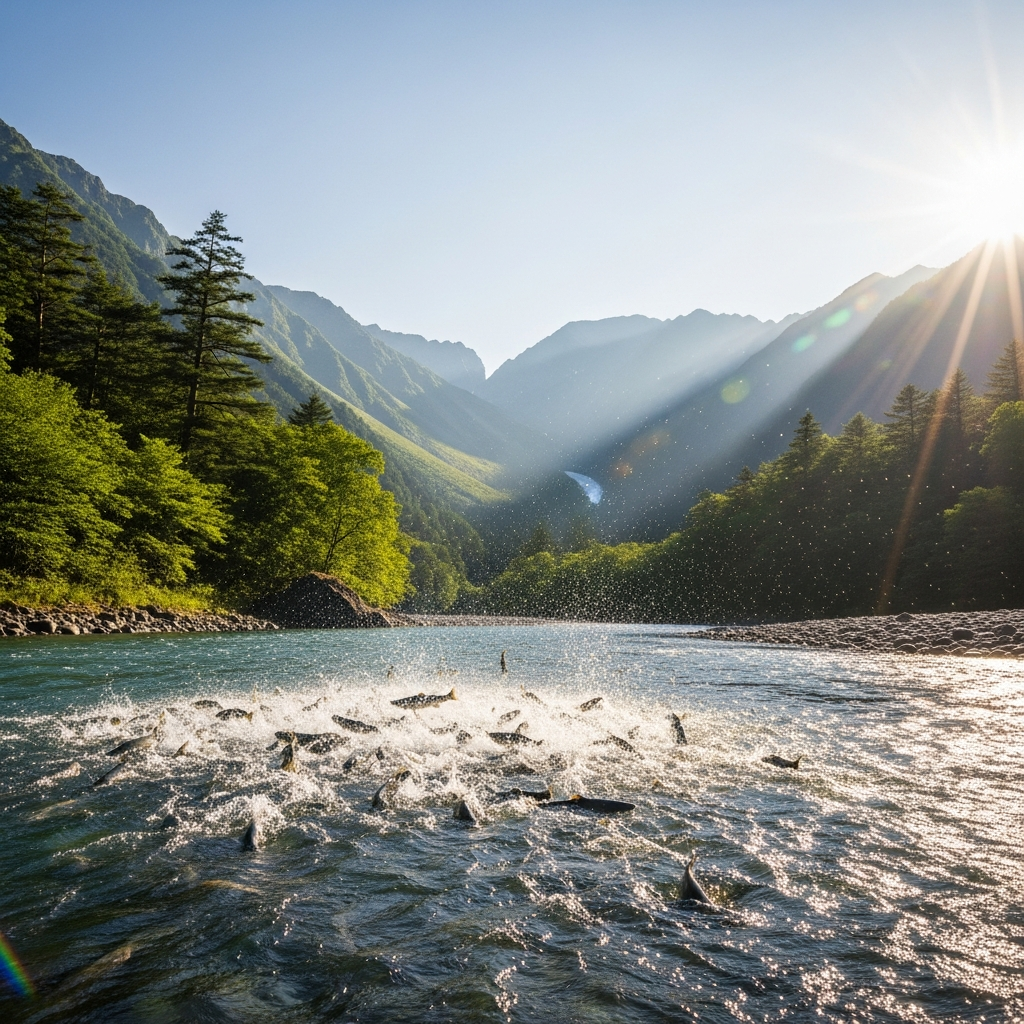
晩秋の風が岩手県宮古市の閉伊川(へいがわ)を吹き抜ける頃、川面には凄絶な命の帰還劇が幕を開ける。数千キロの彼方、ベーリング海やアラスカ湾の荒波を泳ぎ抜いた鮭たちが、自らが生まれた川の微かな匂い——水に溶け込んだ岩石や土壌の独自のミネラル組成による化学的な指紋——を嗅ぎ分け、遡上してくるのだ。その群れの中に、ひと際異形を誇る雄の姿がある。産卵期の闘争を経て上顎が恐ろしいほどに鉤状に湾曲した「南部鼻曲り鮭」である。そのしゃくれた吻部(ふんぶ)と鋭い歯、そして全身を覆う婚姻色の赤黒い斑紋は、命のバトンを繋ごうとする執念と、北の海を生き抜いた野生の狂気をそのまま具現化したかのようだ。
森の生態系において、遡上する鮭は冬眠を控えたツキノワグマや獣たちにとって、手っ取り早い脂肪とタンパク質の塊、いわば「自然の恵みそのもの」である。彼らは浅瀬で鮭を捕らえ、そのはち切れんばかりの生肉を貪り食う。しかし、宮古の人々はこの野性味溢れる命の糧を、ただの「獲物」として消費し尽くすことはなかった。彼らは獣の饗宴を、高度な保存の科学と精神性を伴う「食文化」へと跳躍させたのである。
その鍵となるのが、「やませ」と呼ばれる三陸特有の冷涼で湿った海風と、三陸の荒波がもたらす良質な「塩」である。江戸時代、南部藩の特産品として重宝された鼻曲り鮭は、内臓を丁寧に取り除かれ、エラや腹にたっぷりと塩をすり込まれたのち、軒下で寒風に晒される。この「干す」という行為は、単なる水分の除去ではない。生身の魚肉が塩と冷風という過酷な環境に置かれることで、鮭の体内にある自己消化酵素が働き始め、タンパク質がゆっくりとアミノ酸へと分解されていくのだ。すなわち、イノシン酸やグルタミン酸といった旨味成分の爆発的な増加である。冷害をもたらし、農作物を枯らす忌まわしき「やませ」を、宮古の人々は天然の巨大な「低温熟成庫」として手なずけたのである。これは、風土の猛威に対する人間の見事な逆転の知恵と言えよう。
囲炉裏の炭火でじっくりと炙られた鼻曲り鮭の切り身から、脂がしたたり落ちてパチパチと爆ぜる音を聞くとき、私たちの五感は時空を超越する。一口噛み締めれば、凝縮された塩味の奥底から、ルビー色に輝く身肉に刻み込まれた北太平洋の雄大さ、閉伊川の清冽な雪解け水、そして三陸の冬の冷気が、渾然一体となって味蕾を打ち据える。南部鼻曲り鮭を食すという行為は、単にカロリーを摂取することではない。それは、獣たちが本能で求めた大自然の荒々しいエネルギーを、先人たちが塩と時間、そして風の魔法で磨き上げた「風土の哲学」を味わうという、極めて厳粛な儀式なのである。
Transcendence from a Beast’s Banquet: The Alchemy of Salt, Time, and Climate
Transcendence from a Beast’s Banquet: The Alchemy of Salt, Time, and Climate
As the late autumn winds sweep across the Hei River in Miyako City, Iwate Prefecture, the water’s surface becomes the stage for a breathtaking drama of life’s return. Having navigated thousands of kilometers through the turbulent waters of the Bering Sea and the Gulf of Alaska, schools of chum salmon swim upstream, guided by an olfactory miracle. They decipher the microscopic chemical fingerprints of the river where they were born—a unique mineral signature dissolved from local rocks and soil. Among them swims a creature of striking, almost monstrous visage: the male “Nanbu Hook-nosed Salmon” (Hanamagari Sake). Through the fierce competition of the spawning season, the male’s upper jaw morphs into a terrifying, exaggerated hook. Its protruding snout, razor-sharp teeth, and the crimson-black nuptial coloration across its body are the very incarnations of an obsession to pass on the baton of life, a physical manifestation of the primordial ferocity required to survive the unforgiving northern seas.
In the forest ecosystem, these anadromous voyagers are the ultimate feast for Asiatic black bears and other wildlife preparing for winter hibernation—a pure, accessible bounty of fat and protein. The beasts tear into the raw flesh in the shallows. However, the people of Miyako did not simply mimic this savage consumption. They orchestrated a monumental leap from a beastly banquet to a sophisticated culinary art form, intertwining advanced preservation science with a profound reverence for nature.
The catalysts for this transformation are “Yamase”—the characteristic cold, damp ocean winds of the Sanriku coast—and the high-quality salt yielded by the rough local seas. Highly prized as a local specialty of the Nanbu domain during the Edo period, the hook-nosed salmon undergoes a meticulous process. After its entrails are carefully removed, generous amounts of salt are rubbed into its gills and belly, and the fish is hung under the eaves to be battered by the freezing winds. This act of drying is far more than mere dehydration. By subjecting the raw flesh to the harsh environment of salt and frigid air, the salmon’s autolytic enzymes are activated. The proteins slowly break down into amino acids, resulting in an explosive concentration of umami components like inosinate and glutamate. The people of Miyako ingeniously harnessed the dreaded “Yamase” – the cold, damp ocean winds notorious for bringing famine and blighting crops – transforming them into a colossal natural “cold aging chamber.” This was a brilliant reversal of human ingenuity against the ferocity of their climate and landscape.
When we listen to the fat drip and sizzle as slices of hook-nosed salmon are slowly grilled over an irori hearth, our senses transcend time and space. With a single bite, beyond the concentrated saltiness, the ruby-red flesh reveals the grandeur of the North Pacific, the pristine meltwater of the Hei River, and the crisp winter chill of Sanriku, all converging to strike the palate. To partake in Nanbu Hook-nosed Salmon is not merely to consume calories. It is a profoundly solemn ritual: to savor the raw, untamed energy of nature, which beasts instinctively crave, refined into a “philosophy of terroir” by our ancestors, polished by the alchemy of salt, time, and the magic of the wind.
■ WordPress設定データ
カテゴリー: 沿岸 Coastal Iwate
タグ: 南部鼻曲り鮭, 宮古, 閉伊川, やませ, 熟成
アクセスポイント(座標): 39.645, 141.954