星降る牧場、宇宙と交信する夜 / A Star-Studded Pasture, A Night of Communion with the Cosmos

おおぐま座の瞬きと、洋野町の風が紡ぐ天体観測

岩手県沿岸部の最北端に位置する洋野町。その内陸側に広がる大野地区のなだらかな丘陵地帯に、「ひろのまきば天文台」はひっそりと佇んでいる。昼間は牛たちがのんびりと草を食む牧歌的な風景が広がるが、太陽が稜線の彼方に沈み、逢魔が時を過ぎると、この場所は深遠なる宇宙の深淵へと繋がる秘密の港へと変貌を遂げる。街の明かりという現代のベール(光害)が一切存在しない漆黒のキャンバスには、まるで神々がダイヤモンドの粉末を無造作に撒き散らしたかのような星屑が瞬いている。

この圧倒的な星空を語るうえで、決して避けて通れない「寄り道」がある。それは、三陸の気候を支配する風、「やませ(山背)」の存在だ。初夏から夏にかけて、太平洋から吹き込むこの冷たく湿った偏東風は、しばしば大地を深い海霧で覆い隠し、農作物に冷害をもたらすこともある厳しい自然現象である。しかし、このやませが運んできた湿り気を大気が見事に払い落とし、奇跡のように空が晴れ渡る夜がある。海風が大気中の塵を彼方へ吹き飛ばし、標高に恵まれた大野の牧場は、天然の巨大な光学レンズへと姿を変えるのだ。その夜の星空の透明度と立体感は、環境省がかつて「日本一の星空」と称えたほどの、筆舌に尽くしがたい美しさを誇る。

天頂を仰げば、おおぐま座が天空の特等席に悠然と横たわっている。その背中から長い尻尾にかけて描かれる七つの星——北斗七星は、古代バビロニアの時代から旅人たちが北極星を探し出すための、決して揺らぐことのない不動の羅針盤であった。ギリシャ神話に耳を傾ければ、女神の嫉妬によって醜い熊の姿に変えられ、実の息子に弓を引かれそうになった悲劇のニュンペー(精霊)、カリストの哀しい物語が思い浮かぶだろう。しかし、洋野町の澄み切った冷気の中で輝くおおぐま座は、悲劇の象徴というよりむしろ、永遠の時を刻みながら地球を見守る、優しき天球の守護者のように見える。

岩手が生んだ稀代の童話作家・宮沢賢治は、自らの作品の中で星空を「桔梗いろの空」や「透明な水」と表現した。ここ、ひろのまきば天文台の冷たい芝生に身を横たえ、数千年、数万年の果てしない旅を経て網膜に飛び込んでくる光の矢を受け止めていると、賢治の言葉が単なる詩的暗喩ではなく、岩手の夜空を極めて正確に捉えた写実描写であったことに気づかされる。風が運ぶ青草の匂い、遠くで微かに響く秋虫の音、そして、手を伸ばせば届きそうなほど間近に迫る圧倒的な星の瞬き。あなたはここで、望遠鏡を覗き込むまでもなく、自分自身がこの広大な宇宙を構成する、ちっぽけで、しかし途方もなく愛おしい「星屑の欠片」であることを静かに思い出すだろう。

The Twinkle of Ursa Major and the Winds of Hirono

The Twinkle of Ursa Major and the Winds of Hirono

Situated in the gently rolling hills of the Ono district, inland from the northernmost coastal town of Hirono in Iwate Prefecture, stands the Hirono Makiba Observatory. By day, the area offers a pastoral landscape of cows grazing peacefully. Yet, as the sun dips below the horizon and twilight fades, this very spot transforms into a secret port connecting directly to the profound depths of the cosmos. On a pitch-black canvas entirely free from the modern veil of urban light pollution, stardust twinkles as if the gods had haphazardly scattered diamond powder across the heavens.

To truly understand this overwhelming starry sky, one must take a fascinating detour into the local geography and climate—specifically, the presence of the “Yamase.” From early summer to midsummer, this cold, damp easterly wind blows in from the Pacific Ocean, dictating the climate of the Sanriku coast. The Yamase is a harsh natural phenomenon that often blankets the land in thick sea fog and occasionally brings cold-weather damage to crops. However, there are nights when the atmosphere miraculously shakes off the moisture brought by the Yamase, and the sky clears completely. The sea breeze sweeps away airborne dust, turning the elevated pastures of Ono into a gigantic, pristine natural optical lens. The transparency and three-dimensionality of the sky on such nights boast an indescribable beauty, so much so that the Ministry of the Environment once crowned it the best starry sky in Japan.

Gazing at the zenith, Ursa Major—the Great Bear—lies majestically in its celestial VIP seat. The seven stars tracing from its back to its long tail, widely known as the Big Dipper, have served since the days of ancient Babylonia as an unwavering compass for travelers seeking the North Star. If we listen to Greek mythology, we might recall the sorrowful tale of Callisto, the beautiful nymph transformed into a hideous bear by divine jealousy and nearly hunted down by her own son. Yet, shining through the crystal-clear, crisp air of Hirono, Ursa Major appears less a symbol of tragedy and more a gentle guardian of the celestial sphere, quietly watching over the earth while ticking away eternal time.

Kenji Miyazawa, the brilliant fairy-tale writer born in Iwate, once described the starry night in his works as a “bellflower-colored sky” and ‘transparent water.’ Lying on the cool grass of Hirono Makiba Observatory, accepting the arrows of light that have traveled countless millennia to reach your retina, you realize that Miyazawa’s words were not mere poetic metaphors but acutely realistic depictions of Iwate’s night sky. The scent of fresh grass carried on the wind, the faint distant chirping of autumn insects, and the overwhelming shimmer of stars so close you feel you could almost touch them. Here, without even peering into a telescope, you will quietly recall that you, too, are a tiny yet immensely precious ‘fragment of stardust,’ forming part of this vast universe.


■ WordPress設定データ

カテゴリー: 県北 Northern Iwate
タグ: ひろのまきば天文台, 洋野町, 星空, 宮沢賢治, やませ
アクセスポイント(座標): 39.9926, 141.5971

「銀河鉄道」から跳躍する星空:洋野町に広がる三陸海岸の満天の夜空 / Leaping from the “Galactic Railroad”: The Starry Heavens of the Sanriku Coast in Hirono Town

岩手の夜空に刻まれた「銀河鉄道」の地図

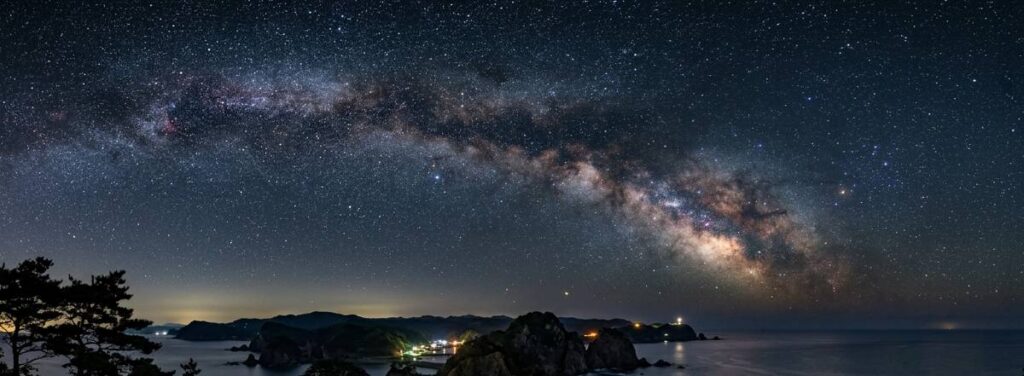
宮沢賢治が遺した不朽の名作『銀河鉄道の夜』。多くの読者は、あの物語を単なる空想の産物として捉えがちですが、岩手県洋野町の海岸線に立つとき、その認識は根底から覆されます。暗闇の中で海と空の境界線が消失し、地平線から天頂へと銀河がアーチを描く光景は、賢治が描こうとした宇宙の深淵そのものです。ここは、文学と天文学が交差する、日本でも数少ない「星の聖地」と言えるでしょう。

The Galactic Map Etched into Iwate’s Night Sky

Kenji Miyazawa’s timeless masterpiece, *Night on the Galactic Railroad*, is often perceived by readers as a mere product of fantasy. However, when standing on the coastline of Hirono Town in Iwate, that perception is fundamentally overturned. In the darkness, the boundary between the sea and the sky dissolves, and the sight of the Milky Way arching from the horizon to the zenith is the very abyss of the cosmos that Kenji sought to depict. This is one of the few “sacred sites of the stars” in Japan, where literature and astronomy intersect.

三陸の断崖が誘う、宇宙への没入

三陸海岸の地形は、地球という惑星の荒々しい歴史を物語っています。洋野町の断崖は、太古の地層が積み重なった「地球の肌」であり、その足元には太平洋が静かに、あるいは激しく波を打ち寄せています。人工の光が届かないこの場所で夜空を見上げることは、単なる天体観測ではありません。それは、数億年の地質学的時間と、数万光年の天文学的時間が、個人の意識の中で同調する稀有な体験なのです。この場所では、星々はただ輝くだけではなく、重力を持って見る者の心を捉えます。

The Sanriku Cliffs: An Invitation to Cosmic Immersion

The topography of the Sanriku Coast narrates the rugged history of our planet. The cliffs of Hirono are the “skin of the Earth,” layered with ancient strata, while the Pacific Ocean laps at its feet—sometimes silently, sometimes violently. Looking up at the night sky in this place, far removed from artificial light, is not merely astronomical observation. It is a rare experience where hundreds of millions of years of geological time and tens of thousands of light-years of astronomical time synchronize within one’s consciousness. Here, the stars do not just shine; they possess a gravity that captures the heart of the observer.

光の汚染なき「ほんとうのさいわい」

現代社会において、私たちは常に情報を浴び、光に晒されています。しかし、洋野町の夜空は、その過剰な刺激を容赦なく剥ぎ取ります。街灯の灯りが存在しない場所で、人間の瞳は本来の感度を取り戻し、肉眼で天の川の複雑な濃淡を捉えるようになります。賢治が求めた「ほんとうのさいわい」とは、何者にも邪魔されず、静寂の中で宇宙の運行に身を委ねる、このような瞬間を指していたのではないでしょうか。星空を見上げる行為は、自己の小ささを認め、同時に宇宙の一部であるという連帯感を取り戻す哲学的な儀式なのです。

“True Happiness” in the Absence of Light Pollution

In modern society, we are constantly bathed in information and exposed to artificial light. However, the night sky of Hirono mercilessly strips away such excessive stimuli. In the absence of streetlights, human eyes regain their original sensitivity, coming to perceive the complex density of the Milky Way with the naked eye. Perhaps the “true happiness” that Kenji sought refers to these very moments—surrendering oneself to the movement of the cosmos in the silence, undisturbed by anyone. The act of looking up at the starry sky is a philosophical ritual: it is the recognition of one’s own smallness, and simultaneously, the reclamation of the sense of solidarity that comes from knowing we are a part of the universe.

星空の回廊を歩むために

洋野町の夜空は、季節ごとに異なる物語を紡ぎます。春の澄み渡る空気の中で輝く星座、夏の天の川の圧倒的な密度、秋の深まりとともに凛とする星々、そして冬の凍てつく空に浮かぶダイヤモンドのような輝き。ここを訪れることは、単なる観光ではなく、賢治が見た銀河の回廊を自らの足で歩く旅です。岩手のこの地で、私たちは「銀河鉄道」の乗客となり、日常の喧騒から離れて、永遠の時間へと跳躍することができるのです。

Walking the Corridor of the Starry Sky

The night sky of Hirono weaves a different story with each season: the constellations shining in the clear air of spring, the overwhelming density of the Milky Way in summer, the crisp, deepening stars of autumn, and the diamond-like brilliance floating in the frozen sky of winter. Visiting this place is not merely tourism; it is a journey to walk the corridor of the galaxy that Kenji once saw, using one’s own feet. Here in Iwate, we can become passengers on the “Galactic Railroad” ourselves, leaving behind the clamor of daily life to resonate with the profound depths of eternal time. In the silence of this sacred site of stars, we find our own “true happiness” etched into the boundless dark.

盛岡の静寂から荒磯の響きへ — 洋野町「ウニ牧場」が織りなす海との共生 / From the Stillness of Morioka to the Roar of the Pacific — The Symbiosis of Hirono Town’s

盛岡の静寂から荒磯の響きへ — 洋野町「ウニ牧場」が織りなす海との共生

From the Stillness of Morioka to the Roar of the Pacific — The Symbiosis of Hirono Town’s Sea Urchin Farm

岩手県最北端の沿岸に位置する洋野町。ここには、世界でも類を見ない「ウニ牧場」が広がっています。太平洋の荒波が打ち寄せる広大な平らな岩盤に、深さ数メートルの溝を縦横無尽に掘り進めたこの場所は、まさに人間と海が知恵を絞り合って作り上げた「共生の極致」です。

自然に寄り添う、持続可能な知恵 盛岡の静かな朝から車を走らせ、辿り着いた先で耳にするのは、豪快な波音と潮騒の響き。この「増殖溝」の中にたっぷりと蓄えられた天然のコンブを食べて育つウニは、その身の詰まりも甘みも一級品です。自然を征服するのではなく、地形を利用し、海のリズムに寄り添うことで生まれたこの景色は、岩手が誇る「持続可能なフロンティア」の象徴と言えるでしょう。


English Text

Located along the northernmost coast of Iwate Prefecture, Hirono Town is home to a world-exclusive “Sea Urchin Farm.” Here, human ingenuity and the power of the ocean intersect in an extraordinary display of symbiosis. Long trenches have been carved directly into the vast bedrock along the Pacific shore, creating a sheltered environment where sea urchins thrive on abundant, naturally grown kelp.

A Sustainable Wisdom in Harmony with Nature Leaving behind the quiet mornings of Morioka and arriving at this rugged coast, you are greeted by the magnificent roar of the Pacific. These man-made “breeding trenches” utilize the natural tides to provide fresh nutrients, resulting in sea urchins of exceptional sweetness and quality. This landscape is a symbol of Iwate’s “sustainable frontier,” where humans do not conquer nature but instead move in harmony with its rhythms.