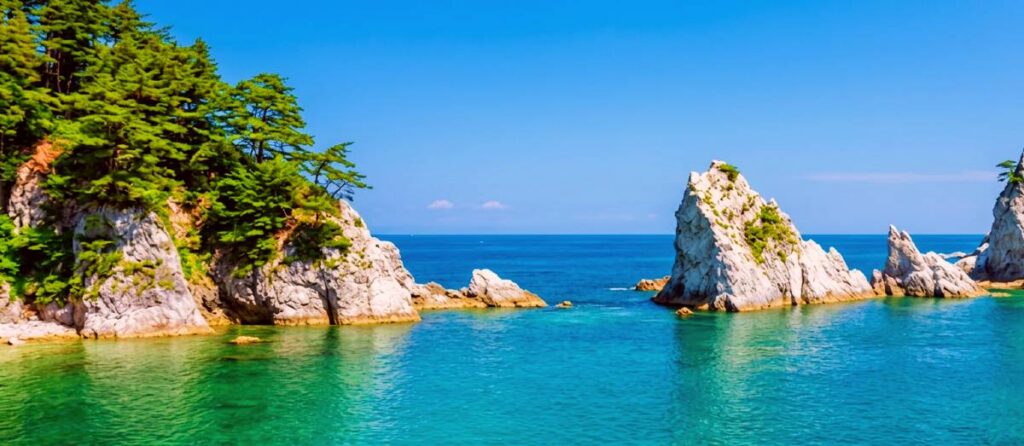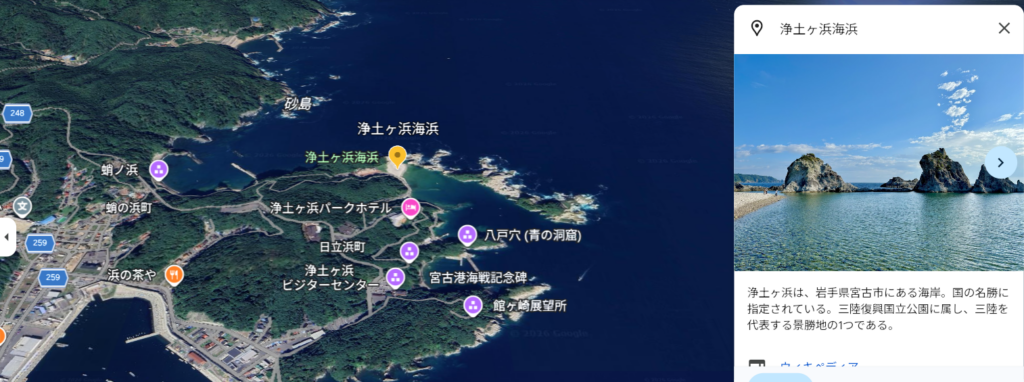
岩手県宮古市、三陸の荒々しい海岸線に突如として現れる白亜の絶景。それが「浄土ヶ浜」です。深い紺碧の海と、鋭く尖った白い岩肌のコントラストは、まるで水墨画が色彩をまとったかのような静謐な美しさを湛えています。三日月が満ちて丸くなるまで、悠久の時をかけてこの岩が削り出されたかのように、ここには自然の神秘と仏教的な祈りが交差する特別な空気が流れています。
Jodogahama in Miyako City, Iwate, is a breathtaking vista of white rock that emerges suddenly along the rugged Sanriku coastline. The contrast between the deep, azure sea and the sharp, white rhyolite crags creates a serene beauty, as if a traditional ink wash painting had suddenly come to life with color. Just as a crescent moon waxes into fullness over time, this landscape feels as though it was sculpted by eons of nature, creating a space where mystery and Buddhist devotion intersect.
5200万年の地質が語る「白亜の聖域」
浄土ヶ浜の主役である鋭く尖った白い岩肌は、約5200万年前の火山活動によって形成された「流紋岩(りゅうもんがん)」です。長い年月をかけて波と風に洗われ、削り出されたその造形は、自然が作り出した彫刻と言っても過言ではありません。
この白い岩肌が、陽光を受けて輝くとき、海面は鏡のように空を映し出し、訪れる者を現世から隔絶された別世界へと誘います。岩の白さは、不純物を削ぎ落としたかのような清廉さを持ち、見る人の心に深い静寂をもたらします。地質学的な荒々しさと、目に見える静謐さ。この二面性こそが、浄土ヶ浜が持つ最大の魅力です。
The White Sanctuary Carved by 52 Million Years of Geology
The jagged, white rock that defines Jodogahama is rhyolite, formed by volcanic activity approximately 52 million years ago. Sculpted by the relentless waves and wind over vast eons, these formations are nothing short of natural sculptures.
When these white rocks catch the sunlight, the sea reflects the sky like a mirror, drawing visitors into a world apart from the mundane. The whiteness of the rock possesses a purity that seems to strip away impurities, bringing a profound silence to the observer’s heart. This duality—geological ruggedness juxtaposed with visual serenity—is the true essence of Jodogahama’s charm.
僧侶・霊鏡が観た「この世の極楽」
江戸時代の天和年間(1678年頃)、この地を訪れた宮古山常安寺の僧、霊鏡(れいきょう)和尚は、あまりの美しさにこう詠みました。「さながら極楽浄土のごとし」。
彼がこの地を「浄土」と名付けた背景には、当時の人々が抱いていた極楽浄土への憧れと、この風景が持つ圧倒的な精神的救済力がありました。仏教宇宙において、極楽浄土は苦しみのない理想郷です。霊鏡和尚にとって、この荒々しい断崖と穏やかな海の調和は、まさに彼が修行の果てに目指していた理想の境地そのものだったのでしょう。
歴史のパズルを紐解くと、浄土ヶ浜は単なる観光地ではなく、かつての人々が「祈り」を捧げた聖域であったことが分かります。三日月が満月へと変化するような、自然の摂理と人の信仰心が重なり合った場所。それが、ここ浄土ヶ浜なのです。
The stark contrast between the jagged white rocks and the deep blue sea creates a space where one can truly feel the intersection of geological history and spiritual devotion. Visiting Jodogahama is not just a sightseeing trip; it is an encounter with the eternal “Pure Land” that exists within the rugged beauty of the Sanriku coast.