森の静寂を震わせる黒鉄の祈り / A Prayer of Black Iron Trembling the Forest’s Silence

千年の業火が鍛え上げた、森と人を繋ぐ澄明なる残響

 東北の山深く、朝露に濡れたブナの原生林に足を踏み入れるとき、腰に下げた真っ黒な鉄の鈴が「ちりぃん」と高く澄んだ音を立てる。その音色は、単なる金属の衝突音ではない。木々の隙間を縫い、苔生した岩肌を滑り、底知れぬ谷の奥底までも染み渡るような、透明な余韻を持っている。岩手の森を歩く者にとって、この「熊よけの鈴」は単なる安全装備ではなく、大自然という神域へ足を踏み入れる際の、畏敬を込めたご挨拶なのだ。「私というちっぽけな人間が、今からあなたの領域にお邪魔しますよ」。森の主であるヒグマやツキノワグマに対する、謙虚なる境界の鐘。その神秘的な音色を生み出しているのが、岩手県が世界に誇る「南部鉄器」の鋳造技術である。

 南部鉄器と一口に言うが、その水脈には、奥州市(旧水沢市)と盛岡市という二つの異なる歴史の源流があることをご存知だろうか。奥州市の鉄器の歴史は古い。平安時代後期、奥州藤原氏の初代・清衡が、中尊寺建立のために近江国から鋳物師を招いたのが始まりとされる。彼らは鍋や釜、あるいは武具といった「日々の命を支えるための鉄」を泥臭く、しかし途方もなく頑丈に鋳造し続けた。一方、盛岡市の鉄器は江戸時代、茶の湯を愛した南部藩主が京都や甲州から釜師を呼び寄せ、芸術品としての「茶釜」を作らせたことに端を発する。言わば、奥州の「土着と実用」と、盛岡の「洗練と美学」——この全く出自の異なる二つの川が、昭和の時代に「南部鉄器」という一つの大河へと合流したのである。全く異なるルーツを持つ職人たちが、同じ鉄という物質に向き合い、互いの技を昇華させてきた奇跡がここにある。

 しかし、なぜ岩手の地でこれほどまでに鉄の技術が花開いたのか。そこには、地質学的な大地の采配がある。日本最古の地層を抱く北上山地は、古くから良質な砂鉄と鉄鉱石の宝庫であった。そして、鉄を溶かす1000度を超える業火を生み出すのは、北上山地を覆う広葉樹林から作られる上質な木炭である。さらに、鋳型を作るためには北上川が運ぶきめ細やかな川砂と粘土が不可欠であった。つまり南部鉄器とは、岩手の「鉱」「木」「水」「土」という四大要素が、職人の手を通じて黒光りする小宇宙へと凝縮されたものなのだ。

 熊よけの鈴の製造工程を見ると、その小宇宙の誕生に息を呑む。職人は、砂と粘土を精緻に突き固めて鈴の鋳型を造る。そこへ、真っ赤に煮えたぎる湯(溶解した鉄)を一気に流し込む。このとき、わずかな温度の変化や砂の湿度が、完成した鈴の「音色」を決定づけてしまう。冷え固まった鋳型を割り、中から現れるのは、無骨でありながらえも言われぬ品格を漂わせる漆黒の鈴。最後に表面に焼き付けられる漆と鉄漿(おはぐろ)が、鉄を錆から守ると同時に、あの吸い込まれるような深い黒「南部黒」を生み出す。

 千度の炎と土から生まれた鉄が、森の木々が化けた炭によって鍛えられ、再び森の獣たちに語りかけるための鈴となる。岩手の森で南部鉄器の鈴を鳴らすとき、私たちは無意識のうちに、大地の循環という壮大な輪廻のなかに組み込まれている。硬質で冷たいはずの鉄片から放たれる音が、なぜこれほどまでに人の心を揺さぶり、森の静寂に美しく溶け込むのか。それは、この黒鉄の中に、岩手の風土そのものが封じ込められているからに他ならない。

The Clear Reverberation Forged by a Millennium of Fire: Bridging Man and Forest

The Clear Reverberation Forged by a Millennium of Fire: Bridging Man and Forest

Deep in the mountains of Tohoku, as you step into a primeval beech forest damp with morning dew, a pitch-black iron bell hung at your waist lets out a high, clear chiriin. This sound is no mere metallic clatter. It possesses a penetrating resonance—a transparent reverberation that weaves through the canopy, glides over moss-covered boulders, and seeps into the very bottom of the abyssal valleys. For those walking the forests of Iwate, this “bear warning bell” is not simply a piece of safety gear; it is an act of profound reverence, a greeting upon entering the sacred sanctuary of nature. “I, a mere human, am humbly encroaching upon your domain.” It is a bell of boundaries, offering humble respect to the masters of the forest, the bears. The source of this mystical timbre lies in the casting techniques of “Nanbu Tekki” (Nanbu ironware), a craft that Iwate Prefecture proudly presents to the world.

Though collectively known as Nanbu Tekki, you may not know that its lineage flows from two distinct historical springs: Oshu City (formerly Mizusawa) and Morioka City. The ironware of Oshu traces its roots back to the late Heian period, when Fujiwara no Kiyohira, the first lord of the Oshu Fujiwara clan, summoned casters from Omi Province to aid in the construction of Chuson-ji Temple. There, they forged cauldrons, pots, and weaponry—the “iron of daily survival”—with a rugged, earthy, and extraordinarily durable constitution. Conversely, Morioka’s ironware originated in the Edo period, born from the refined aesthetics of the Nanbu domain lords who adored the tea ceremony. They invited master kettle makers from Kyoto and Koshu to craft exquisite chagama (iron tea kettles) as works of art. The “indigenous practicality” of Oshu and the “aristocratic refinement” of Morioka—two entirely different rivers of tradition—eventually merged into the great confluence known as Nanbu Tekki in the Showa era. It is a historical miracle that artisans with such disparate roots confronted the same elemental iron, ultimately sublimating each other’s techniques.

But why did the art of iron flourish so magnificently in Iwate? The answer lies in the profound providence of geology. The Kitakami Mountains, harboring some of Japan’s oldest geological formations, have long been a treasure trove of high-quality iron sand and iron ore. To melt this iron, artisans required infernos exceeding 1,000 degrees Celsius, fueled by premium charcoal produced from the vast broadleaf forests blanketing those very mountains. Furthermore, the creation of the intricate casting molds demanded the fine river sand and clay carried by the Kitakami River. Thus, Nanbu Tekki is the ultimate condensation of Iwate’s four great elements—ore, wood, water, and earth—forged into a gleaming black microcosm by the hands of master craftsmen.

To witness the creation of a bear bell is to watch the birth of this microcosm. Artisans meticulously tamp sand and clay to form the mold, into which they pour a torrent of molten, crimson iron. In that fleeting moment, the slightest fluctuation in temperature or the humidity of the sand dictates the final “voice” of the bell. When the cooled mold is broken apart, a pitch-black bell emerges—rugged, yet exuding an indescribable elegance. The final application of urushi (lacquer) and ohaguro (iron rust and tea solution) baked onto the surface protects the iron from corrosion while giving birth to that captivating, deep Nanbu black. This profound black transcends the mere realm of color; it is the accumulated memory of the earth across millennia, the testament to life absorbed by the trees of the Kitakami Mountains, and countless prayers offered by nameless artisans who continually confronted iron. The chiriin sound emitted by a Nanbu Tekki bell therefore possesses a primordial resonance, echoing from a distant past. It is the sound of Iwate’s soul, where humans and nature coexist, living with mutual reverence. When one touches this jet-black mass and listens to its timbre, one cannot help but feel the grand narrative unfolding beneath their feet and the invisible connections of “life.” Within it resides the very breath of Iwate itself, transcending a mere tool.


■ WordPress設定データ

カテゴリー: 県央 Central Iwate
タグ: 南部鉄器, 熊よけの鈴, 伝統工芸, 北上山地, 岩手
アクセスポイント(座標): 39.7027, 141.1394

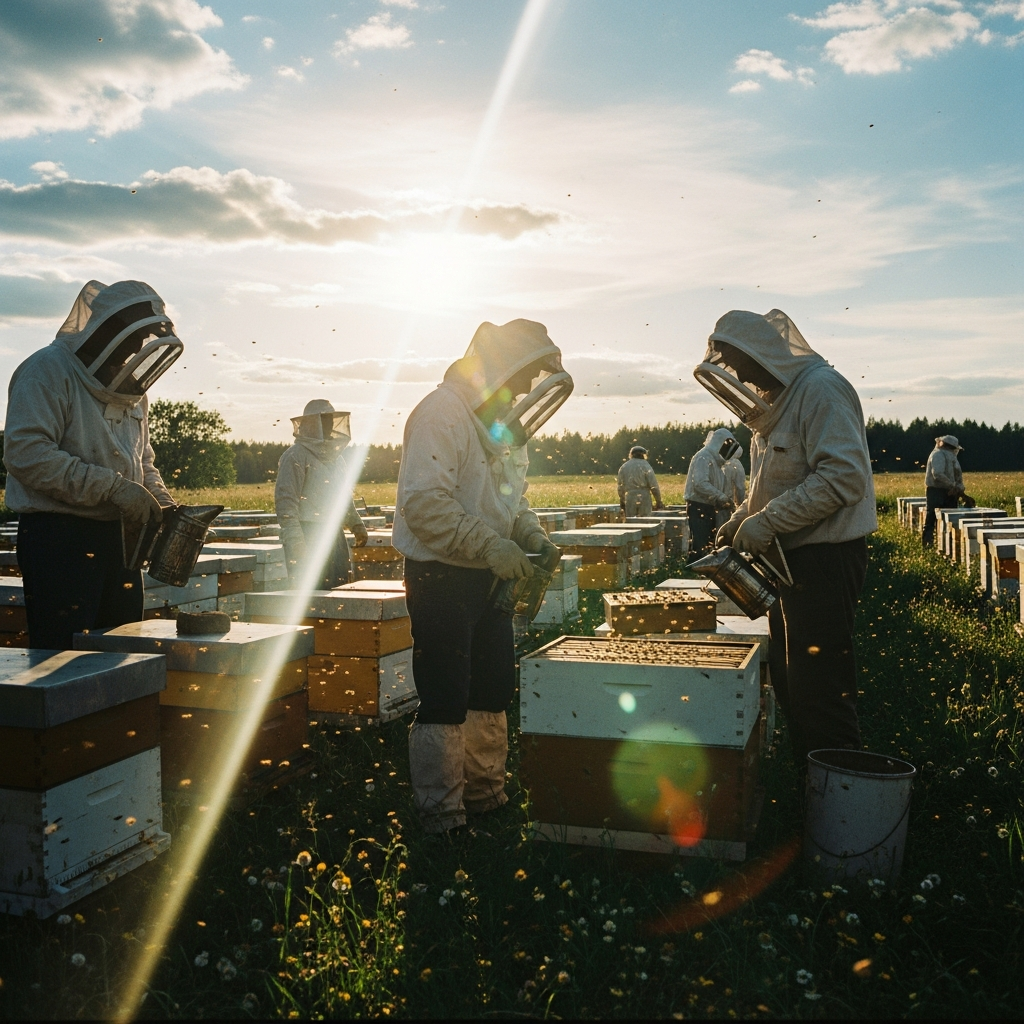
森の血潮を舐める — 盛岡・老舗養蜂場が紡ぐ熊と花々の蜜月 / Tasting the Lifeblood of the Forest: The Honeymoon of Bears and Flora Woven by Morioka’s Historic Apiaries

黄金の雫に宿る、奥羽の森の野性と洗練

岩手の森は、深く、そして濃い。奥羽山脈と北上高地に抱かれたこの地には、太古の息吹を色濃く残す広葉樹の海が広がっている。童話の世界では「熊と蜂蜜」は愛らしいアイコンとして描かれるが、ここ岩手において、それは生々しい命のやり取りと直結した森の真理だ。胸に白い三日月の刻印を持つ森の覇者、ツキノワグマ。彼らが厳しい冬の眠りにつく前、血眼になって探し求める究極のエネルギー源こそが、森の奥深くに隠された黄金の甘露である。

盛岡の地で一世紀以上にわたりミツバチと対話を続けてきた老舗養蜂場の営みは、この荒ぶる森の野性と、人間の繊細な手仕事の交差点にある。彼らは、森のバイオリズムを誰よりも熟知している。奥羽の山々を潤した雪解け水が地下の岩盤で濾過され、トチノキやアカシア、そして山藤の根から吸い上げられて、初夏の陽光の下で爆発的に開花するその瞬間を、彼らは逃さない。岩手の夏は短く、花々の命もまた儚い。植物たちはその短い期間に受粉を完遂させるため、自身の命の結晶とも言える濃密な蜜を分泌する。それはまさに、森の血管を流れる血潮そのものである。

一匹のミツバチが、その短い生涯のすべてを懸けて集めることのできる蜂蜜は、わずかティースプーンの半分にも満たない。盛岡の養蜂家たちは、ミツバチという小さな錬金術師たちが集めた数百万の花の記憶を、決して濁らせることなく瓶へと封じ込める。琥珀色に輝くトチノキの蜜を一口含んでみてほしい。豊かな甘みの中に潜む、野性味を帯びた僅かな渋みと複雑な酸味。それは、雨に濡れた黒土の匂いや、朝露に光るシダの葉脈、そして遠くで森の王が気配を消して佇む情景すら感じさせる、岩手特有の「テロワール」だ。

純度の高い蜂蜜は、数千年腐らないと言われている。瓶の蓋を開けるとき、あなたは単なる甘味料を口にするのではない。人と蜂が紡いだ途方もない時間と、熊が焦がれた奥羽の森の濃密な空気を、静かに舌の上で溶かしているのだ。

Wilderness and Refinement of the Ou Mountains Enclosed in Golden Drops

Wilderness and Refinement of the Ou Mountains Enclosed in Golden Drops

The forests of Iwate are deep, dense, and profound. Cradled between the Ou Mountains and the Kitakami Highlands, this land boasts a vast sea of broadleaf trees that strongly retain the breath of antiquity. In fairy tales, the pairing of bears and honey is often depicted as an endearing motif. However, in Iwate, this pairing directly embodies the raw truth of the forest, a profound exchange of life itself. The crescent-chested Asian black bear, the true sovereign of these woods, feverishly seeks the ultimate energy source—the golden nectar hidden deep within the forest—before their long winter slumber.

The century-long endeavor of a venerable beekeeping establishment in Morioka lies at the intersection of this untamed wilderness and the delicate craftsmanship of human hands. They possess an unparalleled understanding of the forest’s biorhythms. They never miss the moment when snowmelt, filtered through the subterranean bedrock of the Ou Mountains, is drawn up by the roots of horse chestnuts, acacias, and wisteria, bursting into spectacular bloom under the early summer sun. Iwate’s summer is fleeting, and the lives of its flowers are equally ephemeral. To complete pollination within this brief period, plants secrete a concentrated nectar—the very crystallization of their life force—a true lifeblood flowing through the forest’s veins.

A single honeybee, dedicating its entire short life, collects less than half a teaspoon of honey. The beekeepers of Morioka meticulously seal millions of floral memories, gathered by these tiny alchemists, into jars without ever clouding their purity. Take a sip of the amber-hued horse chestnut honey. Beneath its rich sweetness, you’ll discover a subtle bitterness and complex acidity, tinged with a wild essence. It is Iwate’s unique “terroir,” evoking the scent of rain-soaked black earth, the shimmering veins of ferns in morning dew, and even the distant, hushed presence of the forest’s king.

Pure honey is said to remain unspoiled for thousands of years. When you uncap a jar, you are not merely tasting a sweetener. You are quietly dissolving on your tongue the immense span of time woven by humans and bees, and the concentrated essence of the Ou Mountains’ air, yearned for by bears.


■ WordPress設定データ

カテゴリー: 県央 Central Iwate
タグ: 岩手, 蜂蜜, 養蜂, 奥羽山脈, 盛岡
アクセスポイント(座標): 39.7028, 141.1523

星降る牧場、宇宙と交信する夜 / A Star-Studded Pasture, A Night of Communion with the Cosmos

おおぐま座の瞬きと、洋野町の風が紡ぐ天体観測

岩手県沿岸部の最北端に位置する洋野町。その内陸側に広がる大野地区のなだらかな丘陵地帯に、「ひろのまきば天文台」はひっそりと佇んでいる。昼間は牛たちがのんびりと草を食む牧歌的な風景が広がるが、太陽が稜線の彼方に沈み、逢魔が時を過ぎると、この場所は深遠なる宇宙の深淵へと繋がる秘密の港へと変貌を遂げる。街の明かりという現代のベール(光害)が一切存在しない漆黒のキャンバスには、まるで神々がダイヤモンドの粉末を無造作に撒き散らしたかのような星屑が瞬いている。

この圧倒的な星空を語るうえで、決して避けて通れない「寄り道」がある。それは、三陸の気候を支配する風、「やませ(山背)」の存在だ。初夏から夏にかけて、太平洋から吹き込むこの冷たく湿った偏東風は、しばしば大地を深い海霧で覆い隠し、農作物に冷害をもたらすこともある厳しい自然現象である。しかし、このやませが運んできた湿り気を大気が見事に払い落とし、奇跡のように空が晴れ渡る夜がある。海風が大気中の塵を彼方へ吹き飛ばし、標高に恵まれた大野の牧場は、天然の巨大な光学レンズへと姿を変えるのだ。その夜の星空の透明度と立体感は、環境省がかつて「日本一の星空」と称えたほどの、筆舌に尽くしがたい美しさを誇る。

天頂を仰げば、おおぐま座が天空の特等席に悠然と横たわっている。その背中から長い尻尾にかけて描かれる七つの星——北斗七星は、古代バビロニアの時代から旅人たちが北極星を探し出すための、決して揺らぐことのない不動の羅針盤であった。ギリシャ神話に耳を傾ければ、女神の嫉妬によって醜い熊の姿に変えられ、実の息子に弓を引かれそうになった悲劇のニュンペー(精霊)、カリストの哀しい物語が思い浮かぶだろう。しかし、洋野町の澄み切った冷気の中で輝くおおぐま座は、悲劇の象徴というよりむしろ、永遠の時を刻みながら地球を見守る、優しき天球の守護者のように見える。

岩手が生んだ稀代の童話作家・宮沢賢治は、自らの作品の中で星空を「桔梗いろの空」や「透明な水」と表現した。ここ、ひろのまきば天文台の冷たい芝生に身を横たえ、数千年、数万年の果てしない旅を経て網膜に飛び込んでくる光の矢を受け止めていると、賢治の言葉が単なる詩的暗喩ではなく、岩手の夜空を極めて正確に捉えた写実描写であったことに気づかされる。風が運ぶ青草の匂い、遠くで微かに響く秋虫の音、そして、手を伸ばせば届きそうなほど間近に迫る圧倒的な星の瞬き。あなたはここで、望遠鏡を覗き込むまでもなく、自分自身がこの広大な宇宙を構成する、ちっぽけで、しかし途方もなく愛おしい「星屑の欠片」であることを静かに思い出すだろう。

The Twinkle of Ursa Major and the Winds of Hirono

The Twinkle of Ursa Major and the Winds of Hirono

Situated in the gently rolling hills of the Ono district, inland from the northernmost coastal town of Hirono in Iwate Prefecture, stands the Hirono Makiba Observatory. By day, the area offers a pastoral landscape of cows grazing peacefully. Yet, as the sun dips below the horizon and twilight fades, this very spot transforms into a secret port connecting directly to the profound depths of the cosmos. On a pitch-black canvas entirely free from the modern veil of urban light pollution, stardust twinkles as if the gods had haphazardly scattered diamond powder across the heavens.

To truly understand this overwhelming starry sky, one must take a fascinating detour into the local geography and climate—specifically, the presence of the “Yamase.” From early summer to midsummer, this cold, damp easterly wind blows in from the Pacific Ocean, dictating the climate of the Sanriku coast. The Yamase is a harsh natural phenomenon that often blankets the land in thick sea fog and occasionally brings cold-weather damage to crops. However, there are nights when the atmosphere miraculously shakes off the moisture brought by the Yamase, and the sky clears completely. The sea breeze sweeps away airborne dust, turning the elevated pastures of Ono into a gigantic, pristine natural optical lens. The transparency and three-dimensionality of the sky on such nights boast an indescribable beauty, so much so that the Ministry of the Environment once crowned it the best starry sky in Japan.

Gazing at the zenith, Ursa Major—the Great Bear—lies majestically in its celestial VIP seat. The seven stars tracing from its back to its long tail, widely known as the Big Dipper, have served since the days of ancient Babylonia as an unwavering compass for travelers seeking the North Star. If we listen to Greek mythology, we might recall the sorrowful tale of Callisto, the beautiful nymph transformed into a hideous bear by divine jealousy and nearly hunted down by her own son. Yet, shining through the crystal-clear, crisp air of Hirono, Ursa Major appears less a symbol of tragedy and more a gentle guardian of the celestial sphere, quietly watching over the earth while ticking away eternal time.

Kenji Miyazawa, the brilliant fairy-tale writer born in Iwate, once described the starry night in his works as a “bellflower-colored sky” and ‘transparent water.’ Lying on the cool grass of Hirono Makiba Observatory, accepting the arrows of light that have traveled countless millennia to reach your retina, you realize that Miyazawa’s words were not mere poetic metaphors but acutely realistic depictions of Iwate’s night sky. The scent of fresh grass carried on the wind, the faint distant chirping of autumn insects, and the overwhelming shimmer of stars so close you feel you could almost touch them. Here, without even peering into a telescope, you will quietly recall that you, too, are a tiny yet immensely precious ‘fragment of stardust,’ forming part of this vast universe.


■ WordPress設定データ

カテゴリー: 県北 Northern Iwate
タグ: ひろのまきば天文台, 洋野町, 星空, 宮沢賢治, やませ
アクセスポイント(座標): 39.9926, 141.5971