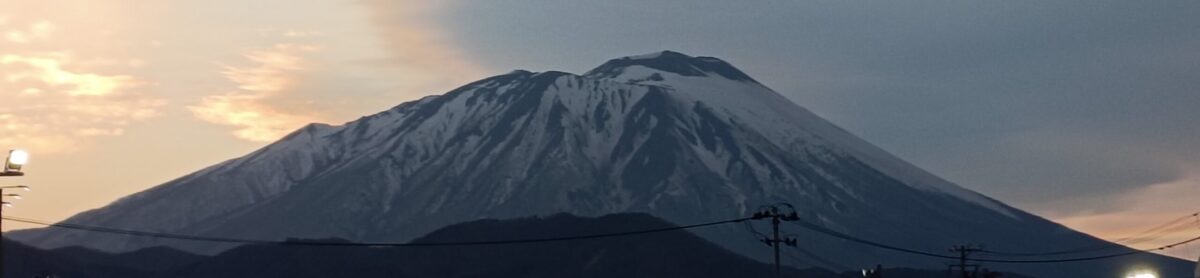
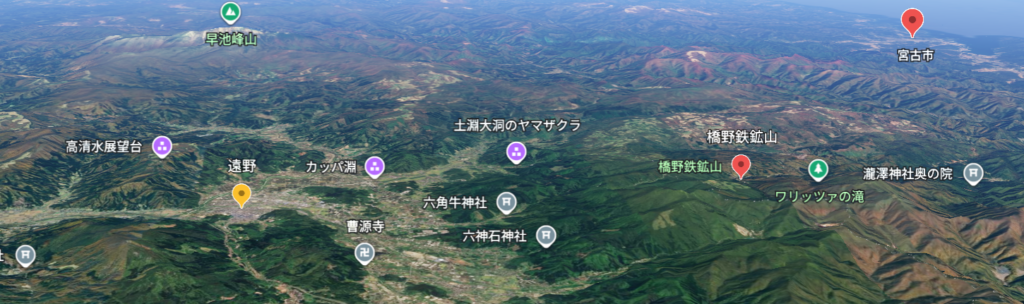
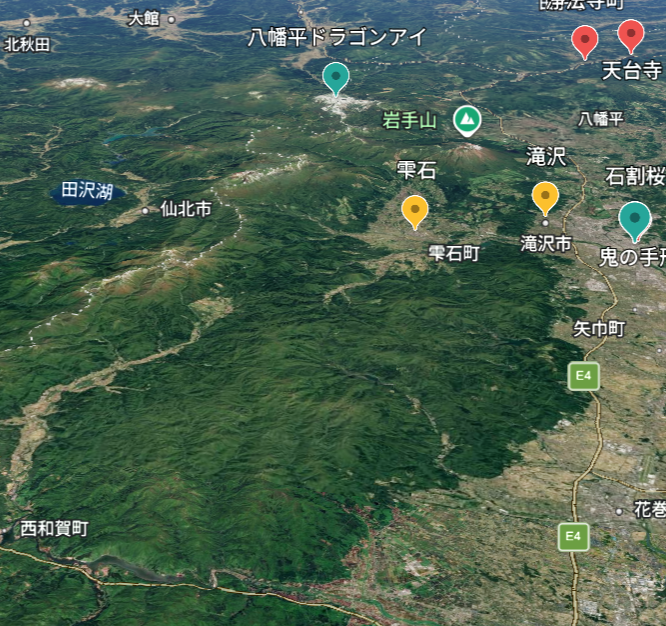
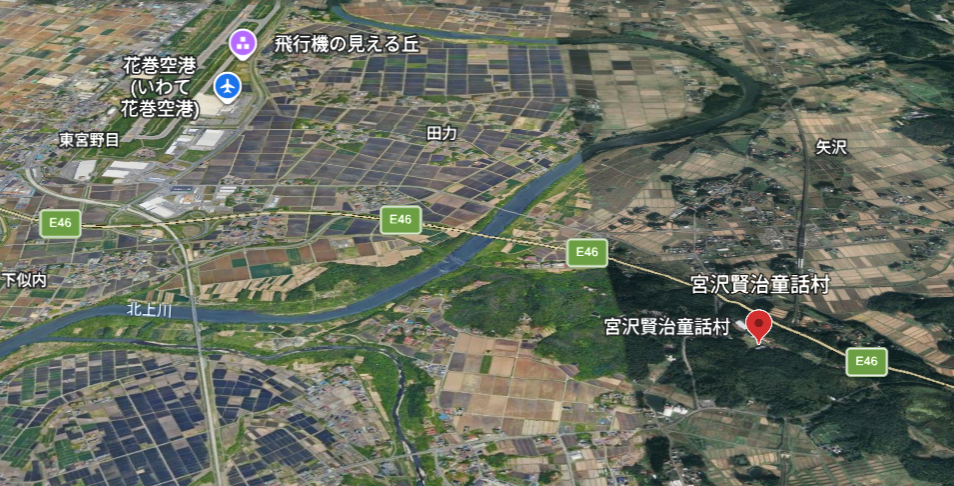
Iwate Prefecture possesses two distinct faces due to its vast expanse. The open skylines of Hachimantai evoke the grandeur of a European mountain resort, while stepping into Tono transports you to a world of silent, primal landscapes where ancient folklore thrives. Traversing these two regions is more than sightseeing; it is a journey through time, allowing you to experience the history of Iwate’s “sky” and “earth.”
Hachimantai represents a magnificent “accumulation” of nature’s raw power, where the fiery breath of ancient volcanoes layered lava to heave the land toward the heavens. Conversely, Tono embodies the quiet “erosion” of time, where generations of prayers and folklore have been carved deeply into the valleys, revealing the profound abyss of the human spirit. After embracing the celestial winds on the soaring peaks, breathing in the rich scent of the damp earth below unveils the true essence of Iwate—a vast, living mandala. Drifting between these polar extremes of motion and stillness, the traveler’s own heart will awaken to forgotten memories, gracefully tracing a new contour within.
From the Meiji to the Taisho era, the land of Iwate produced two poles of modern Japanese literature. Ishikawa Takuboku expressed the nostalgia for “home” and the loneliness of the “individual” struggling amidst the waves of modernization. This remains a universal anguish that strikes deep into the hearts of many. Yet, in the same land, Kenji Miyazawa brilliantly broke through that individual isolation using cosmic imagination. If Takuboku’s literature was an immersion into the inner self, Kenji’s was an expansion on a galactic scale, painting the scenery of Hanamaki as his canvas.
Fairy Tale Village: The Gateway to the Cosmos of Ihatov
Hanamaki’s “Kenji Miyazawa Fairy Tale Village” is far more than a mere tourist attraction. It is a microcosm of the utopia Kenji called “Ihatov.” Stepping into the park, one leaves behind the laws of physical reality. The exhibition halls of the “Kenji School” reconstruct his fairy tales as spatial art; visitors traverse areas like the “Room of the Cosmos” and the “Room of the Sky,” experiencing the multi-layered worldview that unfolded within his mind. The “individual sorrow” found in Takuboku’s poetry is sublimated into “cosmic solidarity” in Kenji’s hands.
The Ihatov depicted by Kenji was born from a chemical reaction between the harsh natural environment of Iwate and his fervent scientific curiosity. As a teacher at an agricultural school, he faced the soil, while simultaneously peering through a telescope at the starry sky. To him, the mud of farm work and the brilliance of the galaxy were equivalent. Walking through the Fairy Tale Village is synonymous with tracing the traces of a genius’s struggle to integrate “earthly labor” and “celestial ideals.” Here, we can leap from Takuboku-esque “passions” and touch Kenji’s philosophy, which views the world from a higher perspective.
His gaze was a profound attempt to let the infinite scale of the cosmos “erode” the indigenous sorrows and prayers that had “accumulated” in the geological layers of Ihatov over tens of thousands of years, sublimating them into universal beauty. If you listen closely while feeling the wind of Hanamaki, you will sense the intersection of the earth’s heartbeat, echoing like the deep resonance of a cello, and the whispers of the wind, akin to the twinkling of stars. Standing with mud-stained feet firmly rooted in the earth, the mind soars beyond the galaxy. This vivid contrast remains an unfading primeval landscape of Iwate, continuing to deeply shake our souls.
The Kitakami River and Shiwa Town: A Waterway that Nourished History
Shiwa Town, Iwate Prefecture. The Kitakami River, which flows north to south through this region, was not merely a waterway, but a major artery for logistics and culture. In the Edo period, the active transport of rice and goods by boat inevitably led to the rooting of the sophisticated fermentation culture of sake brewing. Water carried the rice, and rice created the sake. This cycle formed the legend of the “Nanbu Toji” (Nanbu Master Brewers), a source of immense pride for Iwate.
Nanbu Toji: The Meticulous Craft Cultivated in a Cold Climate
The “Nanbu Toji,” counted among the three great master brewer guilds of Japan, possess an intimate knowledge of Iwate’s bitterly cold winters. This harsh climate enabled “low-temperature, long-term fermentation,” which allows the sake to ferment slowly and steadily. In the breweries of Shiwa Town, techniques that maximize this environment to extract the essence of the rice have been passed down through generations. To them, sake brewing is not merely manufacturing; it is a dialogue with nature and an art form that manipulates the seasoning of time.
Modern-day Shiwa Town has evolved beyond the boundaries of traditional sake brewing, emerging as a new hub for fermentation culture. The breweries, inheriting the bounty of the Kitakami River—a profound “accumulation” of history and nature—use locally harvested sake rice to brew sake that perfectly expresses the terroir of the land.
While river transport once connected physical goods, today, the water veins have transformed into invisible ties that span the globe. As the rushing currents of time “erode” and wash away outdated customs, the unyielding spirit of the Nanbu Toji (master brewers) remains deeply rooted in the bedrock of this region. Wrapped in a crystalline refinement, their craft crosses borders, seeking to connect and quench the souls of sake enthusiasts worldwide. Within the serene depths of a single cup, one can still undeniably sense the earthy fragrance of Iwate and the eternal ripples of the great river.
📍 Access
Get off at “Shiwa-Chuo Station” on the JR Tohoku Main Line. The area around the station is dotted with facilities where visitors can immerse themselves in the local fermentation culture, serving as a perfect gateway to trace the memories of this beautiful land.
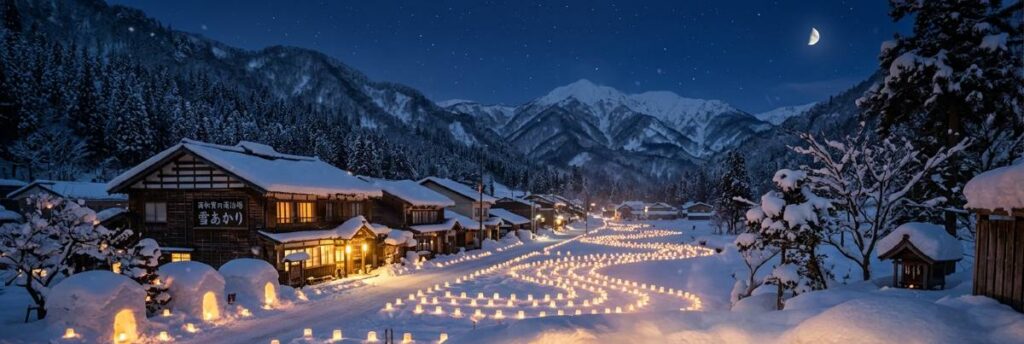
Experience the magic of Nishiwaga’s “Yuki-akari,” where candles glow amidst deep snow, reflecting the ancient spirit of hot spring healing. A winter journey into the heart of Iwate. #VisitIwate #Morioka
Nishiwaga, Iwate Prefecture, is one of Japan’s heaviest snowfall regions. When winter arrives, the world is painted in a single shade of white. The snow festivals once held on farms here were far from mere entertainment; they were earnest communal prayers and rituals for survival, born from farmers facing harsh nature while yearning for spring. The process by which this indigenous festival evolved into the modern “Yuki-akari” (snow lights) reflects the deep spirituality of the local people, who redefined the severe winter not as an “enemy,” but as something to coexist with.
As night falls, countless candles are lit across the silent, snow-covered fields. This is Nishiwaga’s “Yuki-akari.” The flames flickering inside small snow domes are more than just beautiful; they are a dialogue between humanity and nature, painted on the massive canvas of freezing darkness. The spirit of “unity” inherent in the original farm festivals has been passed down to this chain of lights, warming the hearts of all who visit. This spectacle proves that deep snow is, in fact, the greatest artistic medium in this region.
The Primal Landscape of Toji: A Sanctuary Closed by Snow
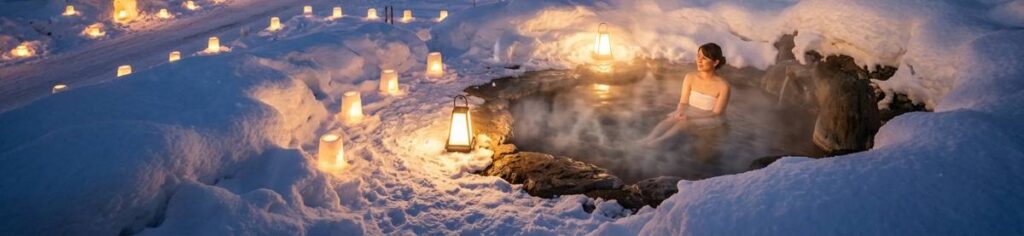
The conclusion to a night of Yuki-akari lies in the culture of “Toji” (hot spring healing), which pulses through Nishiwaga. For generations, this region has welcomed travelers as a sanctuary to heal minds and bodies confined by snow. The time spent soaking in steaming hot springs, watching snow pile up outside the window, calls back the experience of “confronting silence”—something many of us have forgotten in the modern age. This primitive yet luxurious healing experience, made possible only by the heavy snowfall, is the cultural heritage that Nishiwaga proudly shares with the world.
The night of “accumulation,” where the silently falling snow thickly cloaks and conceals the contours of the landscape, is simultaneously a process of “erosion.” The gentle warmth of the thermal waters slowly melts and washes away the accumulated fatigue and the splinters of the heart clinging to our inner selves. To resonate with the severe nature of midwinter, quietly keeping the flame of life burning in the depths of the freezing silver-white world—when we surrender ourselves to the waters of Nishiwaga and simply listen to the unseen presence of the deepening snow, we feel a profound breath of rebirth, as if returning to the womb of Mother Earth.
Experience the exquisite taste of Yamada’s oysters and scallops, nurtured by the perfect harmony of mountain forests and the Sanriku sea. A culinary masterpiece born from nature’s cycle. #VisitIwate #Morioka #Sanriku #Seafood #YamadaBay
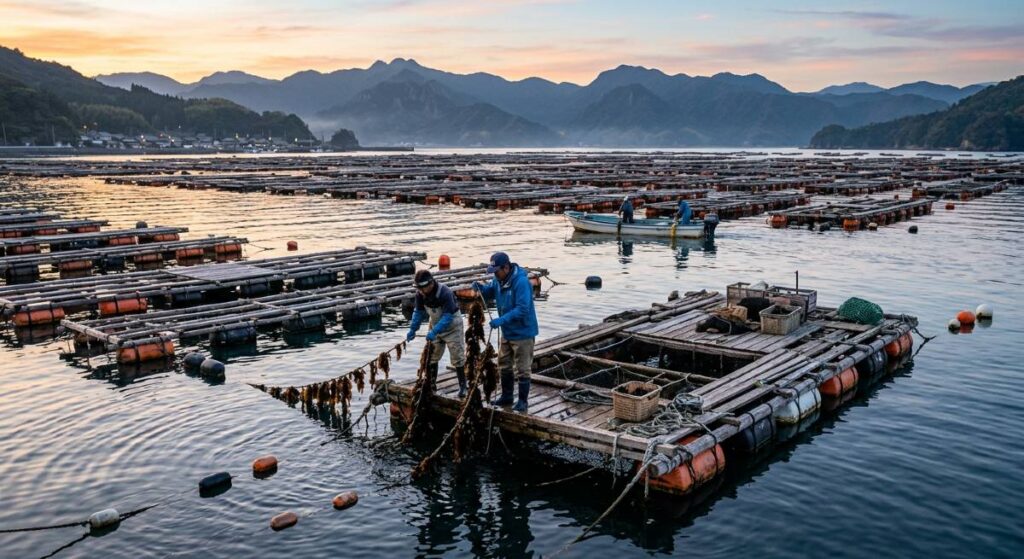
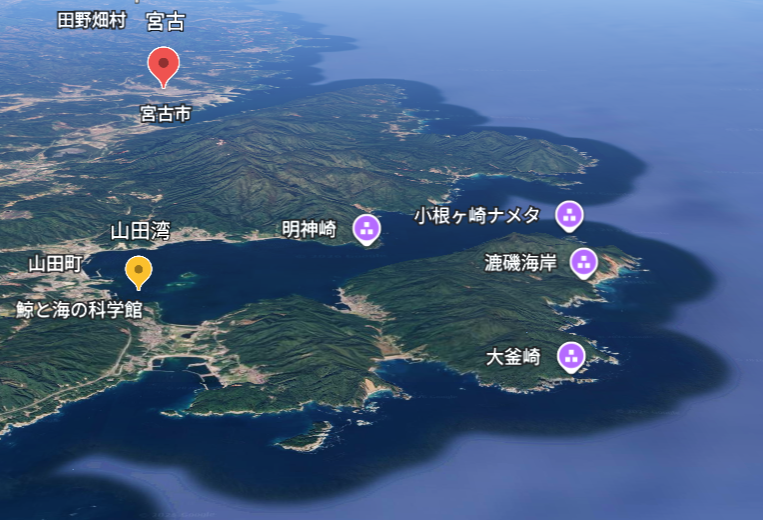
Located in the heart of the Sanriku Coast in Iwate Prefecture, Yamada Bay is defined by its complex, indented ria coastline, which shields the inner waters from the rough currents of the open ocean. Yet, the true value of Yamada Bay lies beyond its topography. From the lush mountains towering in the background, numerous rivers carry mineral-rich snowmelt into the sea. There is a saying in Japan: “The forest is the sea’s lover.” Yamada Town is a place where this life-giving cycle is vividly realized.
Bringing Agricultural Wisdom to the Sea: The “Precision Farming” of Raft Aquaculture
Just as land-based agriculture optimizes harvests through soil analysis and precise irrigation, the aquaculture industry in Yamada has pursued similar precision in the marine field. Raft aquaculture, in particular, transcends traditional fishing; it is a leap into “modern agriculture” where the sea is the soil. By calculating the balance of currents, water temperatures, and nutrients supplied by the forests, fishermen adjust the depth of the hanging oysters and scallops with millimeter precision. This stoic management system is what creates the “pure umami”—intense yet clean—that defines Yamada oysters.
Regeneration from Disaster and Succession to the Next Generation
The 2011 Great East Japan Earthquake dealt a devastating blow to the aquaculture facilities in Yamada. Yet, from this desperate situation, they derived not just restoration, but “evolution.” They introduced new, more efficient, and environmentally friendly aquaculture technologies, redefining their brand quality. Today, savoring a Yamada oyster is not merely about enjoying delicious seafood. It is synonymous with tasting a story of life—a crystallization of the connection between sea and forest, and the wisdom and will of people who overcame great adversity.
Just as the ria coast of Sanriku has formed its extraordinary landscape over mind-boggling eons through the repeated “erosion” by fierce waves and the “accumulation” of rich nutrients flowing from the forests, the people of Yamada have also faced the profound erosion of unimaginable loss, only to accumulate new hope and innovation on the edge of despair. Within the plump, milky-white meat, the tranquil sea reflecting a cosmic journey of stars seamlessly blends with the earthy scent of Iwate. This proud endeavor, etched alongside the rhythm of the waves, will never be interrupted, but gracefully handed down to the next millennium.
The Memory of “Oni” Engraved in the Strata of Iwate
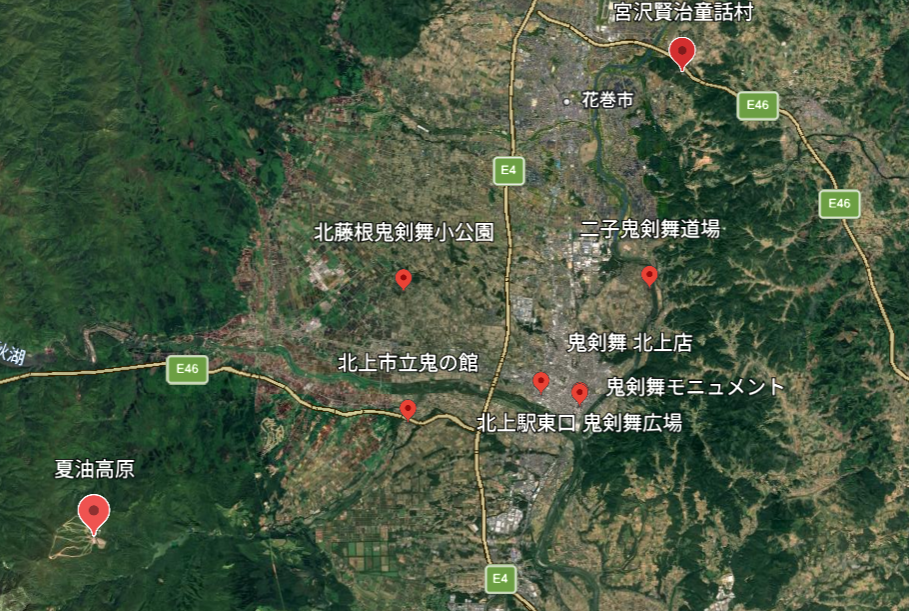
Iwate Prefecture has long been home to numerous legends surrounding the “Oni” (demons). The legend of the demon’s handprint at Kozukata Castle in Morioka is widely known as a story of “conquest,” where a demon was defeated and forced to leave its mark as a vow. However, the “Onikenbai” (Demon Sword Dance) of Kitakami City, a designated Important Intangible Folk Cultural Property, presents a perspective at the opposite end of the spectrum. Here, the Oni are not objects to be defeated, but subjects of requiem and reverence, living on within a wild, powerful dance.
The origins of Onikenbai are said to lie in the “Nembutsu Odori” (Buddhist prayer dance) intended to appease the spirits of the “Emishi,” the indigenous people who once confronted the Imperial court in this region. The fearsome masks worn by the dancers actually represent manifestations of Buddha; behind the expressions of rage lies a profound mourning for those who met untimely deaths. The “leaping” movements, where dancers brandish swords and stomp powerfully on the ground, are not merely a performance. It is a sacred ritual designed to awaken and soothe the spirits sleeping in the earth, anchoring their pride in the modern world.
From “Extermination” to “Coexistence”: Filling the Puzzle of History
While the Kozukata legend sought to maintain order by “excluding the Oni,” Onikenbai seeks harmony by “accepting the Oni as deities.” The contrast between these two narratives symbolizes the complexity of history in the Northern Tohoku region. Watching the wild yet beautiful dance of Onikenbai is not merely a sightseeing experience. It is an intellectual journey where we listen to the stories of the “defeated” sleeping deep beneath the earth of Iwate, conversing with their forgotten souls.
If the great river of time has “eroded” the surface memories, carving out and leaving behind only the convenient tales of the victors, then the powerful stomping of the Onikenbai is a profound act of awakening the prayers of the nameless that have “accumulated” layer upon layer beneath our feet. As we sense the fiery breath of the Emishi—who once deeply loved this land—behind the masks dancing wildly in the light of the bonfires, we arrive at a quiet truth. The Oni are not terrifying others to be eliminated; they are the very reflection of our ancestors, who embraced both the awe and the blessings of nature, living in enduring harmony with this harsh yet magnificent climate.
The Warmth of Wool Cultivated by Iwate’s Harsh Winters
The severe winters of Iwate do not merely impose cold; they serve as a foundation for a textile culture that yearns for the warmth of the human touch. During the Meiji era, the techniques of sheep farming and weaving introduced from Britain underwent a unique evolution in Hanamaki. This is “Homespun.” This fabric is not merely protective gear against the cold, but a crystallization of history, born from the intersection of British traditional techniques and the climate of Iwate.
Transmission from Britain and Flowering in Hanamaki
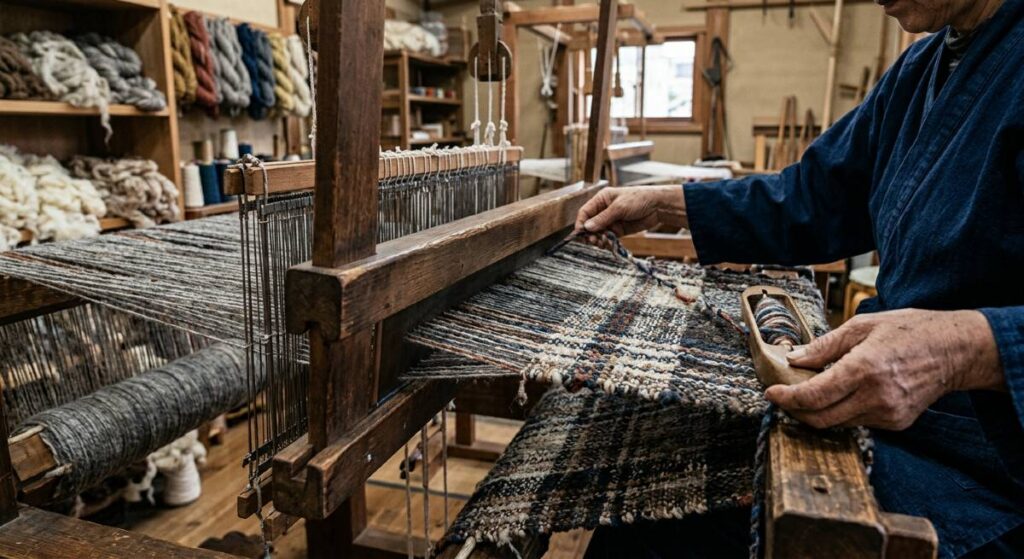
The history of Homespun traces back to the industrial promotion policies of the Meiji era. At the time, it was recognized that Iwate’s cold climate was suitable for sheep farming. Technicians were invited from Britain, and local pioneers traveled abroad to bring back expertise, allowing this craft culture to take root. Particularly in the Hanamaki area, the skills of hand-spinning and hand-weaving were refined as a vital source of income during the agricultural off-season and as an art form to enrich daily life. Unlike mass-produced, machine-made goods, this fabric, which carries the breath of the maker in every single thread, is truly the origin of “craftsmanship by human hands.”
The greatest appeal of Homespun lies in its “irregularity.” Wool yarn spun on a hand-spinning wheel is not uniform in thickness. However, this unevenness creates unique textures when woven, trapping air and achieving surprising lightness and warmth. This is the ultimate harmony of controlling natural materials through human intuition. It begins with the scenery of sheep grazing against the backdrop of Iwate’s mountains, continuing through the artisan’s hands as it becomes yarn and then fabric. This entire narrative is condensed into a single piece of cloth.
In the modern era, homespun transcends the boundaries of traditional crafts, presenting a model for sustainable fashion. In an age of mass production and consumption, items made carefully over time grow dearer as the years pass. This textile, woven in Hanamaki, is a bridge that reinterprets British tradition with the soul of Iwate and connects it to the future. Visiting Iwate is not merely sightseeing; it is an intellectual journey of wearing the time that has been spun in this land, or perhaps, touching its history directly.
Today, the “erosion” of relentless consumption swiftly homogenizes and washes away the essence of things. In stark contrast, the act of hand-dyeing, spinning, and weaving homespun wool stands as a resilient “accumulation” of local memories and human devotion, radiating a quiet luminescence. A single piece of cloth born from a workshop in Hanamaki, where the cool winds of Ihatov blow, is synonymous with wrapping oneself in an unyielding stratum of the soul. Until the day it is loved to tatters and eventually returns to the earth, the time woven into its threads will continue to spin a rich and enduring landscape alongside you.
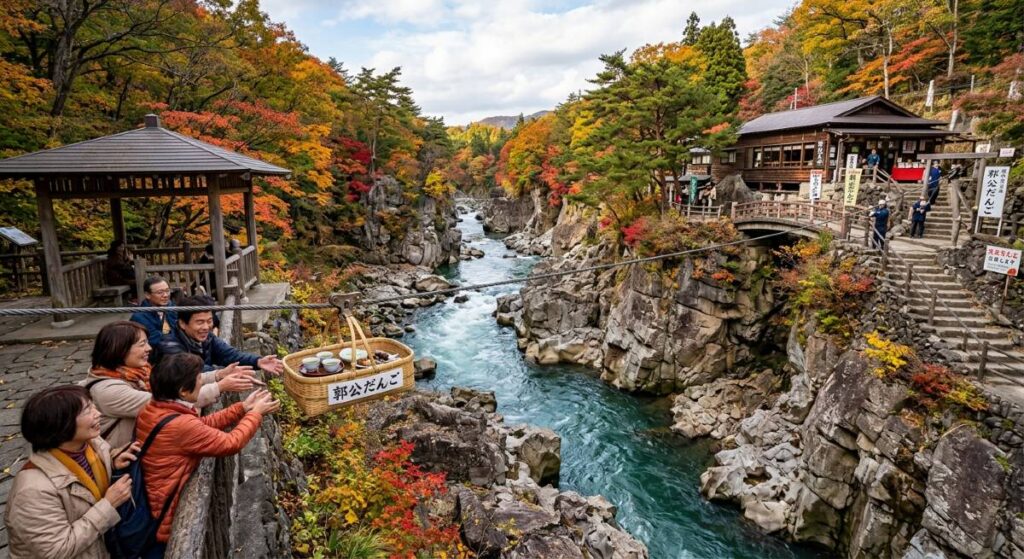
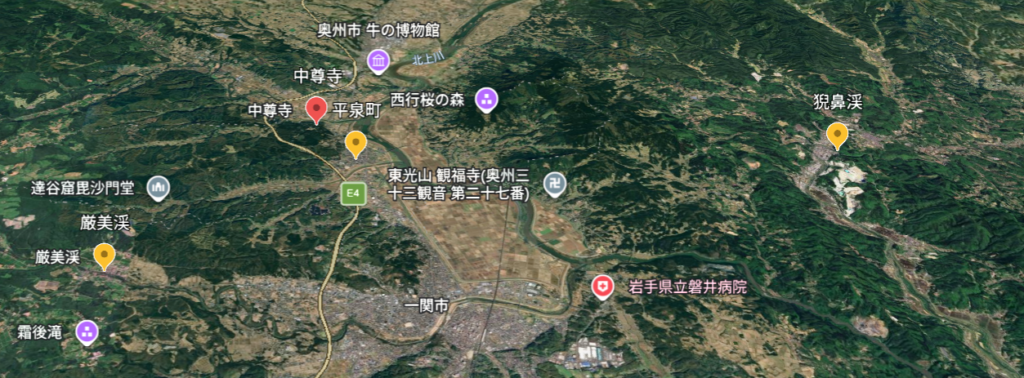
In Japanese history, castle stone walls are symbols that embody the will of rulers, representing “frozen time” as artificial fortifications. However, when standing before Genbikei and Geibikei in Ichinoseki, Iwate, we confront a completely different scale of “dynamic history.” These are not works of human hands, but masterpieces carved by the Earth—water and tectonic activity—over an unfathomable span of millions to hundreds of millions of years.
Genbikei: The Art of Volcanic Rock Pierced by the Iwai River
Genbikei is a gorge formed by the Iwai River, flowing from Mt. Kurikoma, as it erodes the tuff deposited by ancient volcanic activity. The most striking features are the “potholes” bored into the bedrock by the raging current. Hard stones trapped in depressions on the riverbed rotate, drilling cylindrical holes as if by a machine. This phenomenon speaks to the sheer ferocity of nature’s physical force. If castle walls boast strength through orderly stacking, Genbikei is a drama of nature’s destruction and creation, where the fluid power of water manipulates “solid” rock as if it were malleable.
Geibikei: Limestone Cliffs Sleeping with 200 Million Years of History
Geibikei, conversely, holds a different geological narrative. The massive limestone cliffs that define this gorge are the result of ancient seafloor uplifted and exposed by subsequent erosion. Its history dates back 200 million years. Remains of Triassic marine organisms accumulated to form these limestone strata. Looking up at the cliffs, which tower over 100 meters from the river surface, feels like reading a massive book containing the Earth’s memories. As visitors drift through the silence on a traditional boat, they are not merely visiting a scenic spot; they are placing themselves within the history of the Earth’s long slumber and awakening.
The Ichinoseki region is full of diversity, where volcanic activity and marine strata intermingle, as evidenced by these gorges. If stone walls aim for “defense of a place,” these gorges are “records of the Earth’s transformation.” We should walk through these beautiful natural formations just as we would wander through the ruins of an ancient castle. Here flows a time far longer and more profound than the span of human civilization. Delving into the geological abyss of Iwate is the key to understanding how the Japanese archipelago was born and how it continues to evolve.
The thick bedrock, “deposited” over tens of millions of unfathomable years, has been relentlessly “eroded” by clear river waters, carving out the ethereal gorges we see today. Gazing at the deep waters of Genbikei and Geibikei, we bear witness to the eternal cycle woven by creation and destruction. It is as if the very land of Iwate is reciting a silent poem. By touching the rugged, sculpted rock faces and listening to the streams weaving through the stones, we profoundly and quietly realize that our fleeting human lives are but a small fraction of this magnificent earthly tapestry.
The Duality of Iwate’s Cuisine: Celebration and Survival
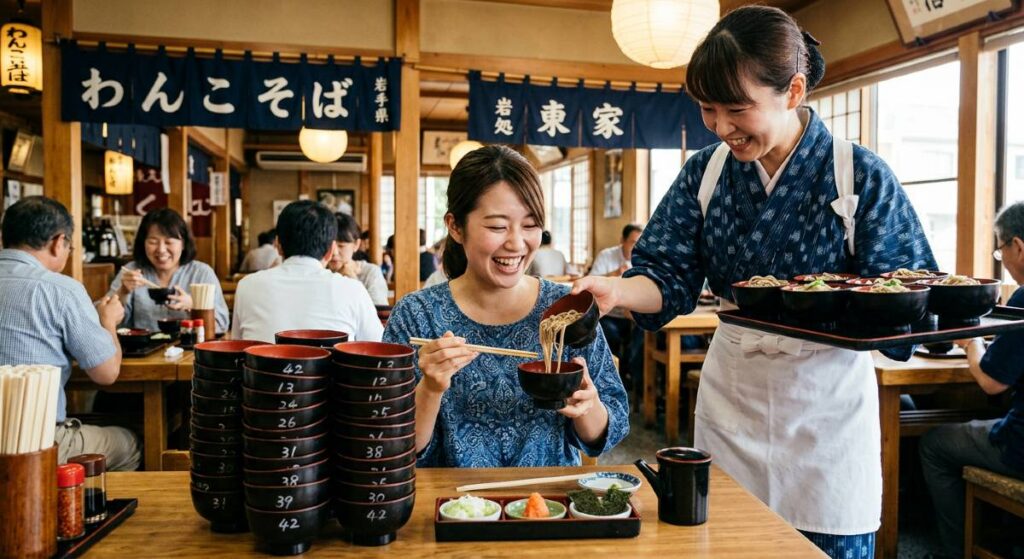
Unraveling the culinary culture of Iwate Prefecture reveals two contrasting faces: the grand spirit of celebration and the profound wisdom required for survival in harsh winters. “Wanko Soba,” beloved in the Morioka region, is a culture of celebration designed to provide the ultimate hospitality. Conversely, in Nishiwaga, one of the prefecture’s heaviest snowfall areas, a distinct survival-based culinary tradition thrives. Comparing these two provides a key to deeply understanding Iwate’s historical context.
“Wanko Soba” is far more than a competitive eating challenge. Its origins lie in traditional banquet cuisine. To serve large groups of guests hot noodles continuously, the noodles were served in small portions into bowls. This practice reflects the host’s earnest desire to ensure guests are fully satisfied, combined with refined hospitality operations. This rhythm and live atmosphere represent the very essence of Iwate’s famed *omotenashi*.
Nishiwaga’s Wisdom: The “Tempura Biscuit” of the Snow Country
Turning to Nishiwaga, we find a robust culinary culture rooted in surviving snow-bound winters. A standout is the “tempura biscuit” (biscuits fried in batter). Why fry a biscuit? It is the crystallization of our ancestors’ wisdom, created to supplement the calories often lacking in cold regions and to spark vitality through a warm meal. By wrapping slightly hardened biscuits in batter and deep-frying them, their savory aroma and sweetness were beautifully drawn out, fulfilling their role as essential winter provisions. This is no mere local curiosity; it is a historical legacy of a people confronting an unforgiving nature.
As heavy snows persistently “accumulated” to test their endurance, and the long, bitter winter threatened to “erode” their spirits with isolation, these golden-fried biscuits shone like miniature suns, warming both body and soul amid the overwhelming white silence. Bite into the hot, crispy batter, and a rustic sweetness fills your mouth, gently melting away the frozen hours. It is an act of gracefully embracing the immense pressure of a harsh climate, finding pure joy in everyday survival. Within a single piece of this biscuit tempura breathes the resilient life force that continues to thrive in the deep-snow lands of Ihatov, remaining unfaded to this day.
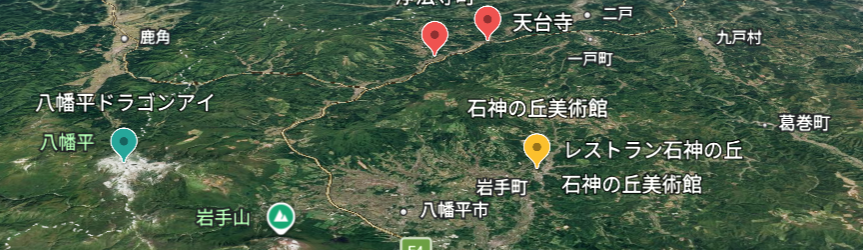
The journey through Iwate Prefecture is akin to tracing a story painted upon the colossal canvas of nature. After feeling the breath of the earth at the majestic pasture resorts of Hachimantai, which straddles the 40th parallel north, one travels south to the town of Iwate to visit the Ishigami-no-Oka Art Museum, where nature and art reside in serene harmony. This route is no mere sightseeing tour; it is an intellectual expedition to discover what Iwate’s vast wilderness conveys when granted the “words” of sculpture.
Within the verdant ocean of foliage where eons of time have naturally accumulated life upon the earth, sculptures born of human erosion—the deliberate act of chiseling stone—sit as though they had belonged there since the dawn of time. The profound, eternal silence of nature and the secret eloquence of carved stone. As you wander through this vivid contrast and miraculous harmony, the winds of Ihatov whispering through the trees will gently and beautifully sculpt the inner landscapes of your own wandering soul.