馬と家族が分かち合った生活:南部曲り家の歴史と哲学
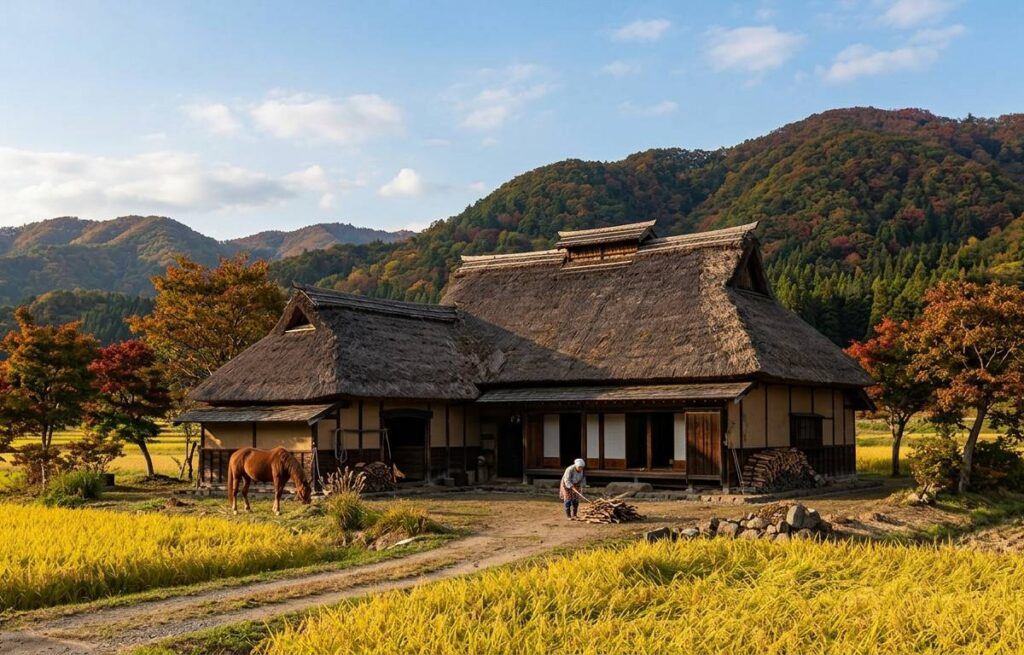
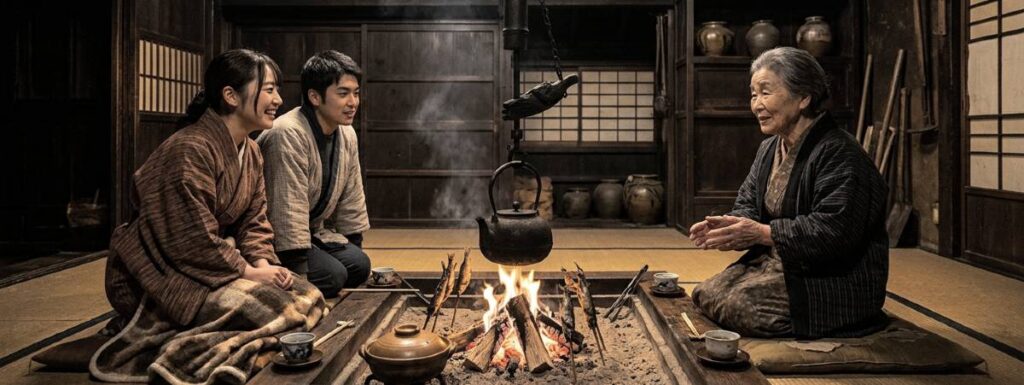
かつて岩手県の遠野地方を中心に育まれた「南部曲り家」は、人と馬が一つ屋根の下で暮らすという、世界的に見ても極めて稀有な建築様式です。L字型に折れ曲がった構造を持つこの民家は、家族の居住空間と馬小屋が直接つながっており、馬は単なる家畜ではなく、苦楽を共にする家族の一員として大切にされてきました。冬の厳しい寒さが続く岩手において、馬の体温は家全体を温める熱源となり、家族の絆を深める物理的かつ精神的な支柱となっていたのです。この「馬を家族として慈しむ」という生活哲学は、岩手の人々の気質に深く根を下ろし、単なる効率性や経済性だけでは語れない、命への深い敬意と共生の精神を形作りました。遠野の風景に溶け込む曲り家は、かつての農耕社会における馬の重要性と、人間と動物が対等に近い距離感で支え合っていた時代の記憶を、今に伝えています。
The Philosophy of Coexistence: Life Within the Nanbu Magariya
The “Nanbu Magariya” (L-shaped house), which flourished primarily in the Tono region of Iwate, is an architectural style rarely seen elsewhere in the world, where humans and horses lived under the same roof. The L-shaped structure directly connected the family’s living quarters to the stable, reflecting a lifestyle where horses were cherished not merely as livestock, but as essential family members who shared in life’s hardships and joys. During the harsh winters of Iwate, the warmth of the horses served as a vital heat source for the entire home, physically and metaphorically strengthening the bonds between family members. This philosophy of cherishing horses as kin is deeply embedded in the character of the people of Iwate, representing a profound respect for life that transcends mere economic utility. The Magariya, blending seamlessly into the Tono landscape, preserves the memory of an era when horses were the backbone of agrarian society, and humans and animals supported one another in a relationship of mutual respect.
農耕文化の結晶:チャグチャグ馬コの装束と祈り
この馬への深い愛情は、時代を経て、滝沢市を中心に受け継がれる伝統行事「チャグチャグ馬コ」へと見事に昇華しました。江戸時代から続くこの祭礼は、農作業の合間に馬の健康と無病息災を祈り、神仏に感謝を捧げたことが起源とされています。最大の見どころは、馬たちが身に纏う色鮮やかな「小荷駄装束」です。赤や黄色を基調とした美しい刺繍が施された鞍や、揺れるたびに「チャグチャグ」と軽快な音を奏でる鈴の数々は、かつて田畑を耕し、家族を支えた馬たちへの最大限の敬意の現れです。無形民俗文化財にも指定されたこの行列は、単なる観光行事ではありません。機械化された現代社会において、かつての農耕馬文化が持つ誇りと、命に対する温かな眼差しを再確認する儀式なのです。鈴の音が響くたび、私たちは岩手の歴史が紡いできた、人間と馬の絆の深さを改めて実感します。
A Crystallization of Agrarian Culture: The Costumes and Prayers of Chagu-Chagu Umakko
This deep affection for horses has evolved into the traditional festival known as “Chagu-Chagu Umakko,” centered in Takizawa City. Originating in the Edo period, this festival began as a way for farmers to pray for their horses’ health and offer gratitude to the gods during their arduous work. The highlight of the event is the horses adorned in vibrant “Konida” costumes. The intricately embroidered saddles, featuring striking red and yellow patterns, and the bells that chime with a rhythmic “chagu-chagu” sound create a melody of profound gratitude that resonates across the fields. This procession is not merely a tourist spectacle; it is a sacred ritual to reaffirm the pride of a vanishing agrarian culture and a warm, compassionate gaze toward life in our increasingly mechanized society. Each time the bells ring, we are reminded of the deep, unbreakable bond between humans and horses that has been meticulously woven through the long history of Iwate.
■ WordPress設定データ
カテゴリー: 県央 Central Iwate
タグ: 南部曲り家, チャグチャグ馬コ, 馬文化, 共生, 詩的リアリズム
アクセスポイント(座標): 39.7346, 141.0850 (※行事の出発地点である滝沢市・鬼越蒼前神社の座標)