岩手の境界線:鬼剣舞と妖怪たちが織りなす異界の系譜 / The Borders of Iwate: A Genealogy of the Supernatural from Onikenbai to Tono’s Spirits

岩手という「異界」への入り口

岩手県は、現世と異界が交差する稀有な土地である。深い山々に抱かれ、厳しい冬が支配するこの地では、古来より人々は「目に見えないもの」と共に生きてきた。北上の「鬼剣舞」の勇壮な跳躍から、遠野の深淵に潜む妖怪伝承まで、その精神的風土を紐解くことは、日本人の深層心理に眠るアニミズムの根源を探求する行為に他ならない。

The Gateway to the “Otherworld” of Iwate

Iwate Prefecture is a rare landscape where the mundane world intersects with the supernatural. Embraced by deep mountains and ruled by harsh winters, the people here have lived alongside the “unseen” since ancient times. Unraveling the spiritual climate of this region—from the dynamic leaps of the “Onikenbai” in Kitakami to the legends of yokai lurking in the depths of Tono—is nothing less than an exploration of the roots of animism that lie in the Japanese subconscious.

鬼剣舞:鎮魂の儀式としての「鬼」

北上の「鬼剣舞(おにけんばい)」は、単なる郷土芸能ではない。鬼の面を被り、刀を振るうその姿は、かつての修験道や仏教的儀礼が混ざり合った「鎮魂」の儀式である。ここで表現される鬼は、悪の象徴ではない。むしろ、外敵や災厄を追い払う守護神としての「荒ぶる神」である。舞い手が跳躍するたびに、現世の穢れが払われ、静寂がもたらされる。この荒々しいエネルギーこそが、岩手の精神的な防波堤となってきた歴史を物語っている。

Onikenbai: The “Oni” as a Ritual of Repose

The “Onikenbai” (Demon Sword Dance) of Kitakami is far more than mere folk performance. Wearing masks and wielding swords, the dancers perform a ritual of “repose” (chinkon), blending Shugendo and Buddhist rites. The “Oni” (demon) depicted here is not a symbol of evil; rather, it is a “wrathful deity” acting as a guardian to ward off external enemies and calamities. Each leap of the dancer purifies the mundane world, ushering in a sacred silence. This raw, turbulent energy tells the history of how the spirit of the Oni has served as a spiritual bulwark for Iwate.

遠野の妖怪たち:畏怖と共生の物語

鬼という強大な異形から、遠野の「河童」や「座敷わらし」という身近な異界の住人へ。この系譜の背後には、厳しい自然と共存せざるを得なかった北の民の切実な知恵がある。柳田國男の『遠野物語』で知られるこの地は、まさに妖怪たちの聖域だ。川辺で悪戯を働く河童、家に富をもたらす座敷わらし。これらは自然の畏怖を擬人化し、異界との境界を曖昧にすることで、死や災厄を日常の一部として受け入れようとする人間の営みそのものである。

The Yokai of Tono: Tales of Awe and Coexistence

Moving from the powerful, grotesque form of the Oni to the more intimate denizens of the supernatural like Tono’s “Kappa” and “Zashiki-warashi,” we see a shift. Behind this genealogy lies the pragmatic wisdom of northern people who had to coexist with harsh, unforgiving nature. Tono, immortalized by Kunio Yanagita’s Tono Monogatari, is truly a sanctuary for these spirits. Kappa play by the riverbanks; Zashiki-warashi watch over households. These tales anthropomorphize the awe of nature. By blurring the border with the supernatural, humanity attempts to accept death and calamity as part of daily life.

目に見えないものとの対話

岩手を訪れることは、単なる観光ではない。それは、合理主義が覆い隠してしまった「目に見えないもの」との対話を取り戻す旅である。鬼剣舞の足音が地面を揺らし、遠野の森が静かに物語を囁くとき、私たちは現代文明の喧騒から切り離され、遥か昔から続く「異界との隣人関係」を追体験することになるだろう。

A Dialogue with the Unseen

Visiting Iwate is not merely sightseeing. It is a journey to reclaim a dialogue with the “unseen”—a dialogue that modern rationalism has long obscured. When the footsteps of the Onikenbai shake the earth and the forests of Tono whisper their ancient tales, we are detached from the clamor of modern civilization, re-experiencing the “neighborly relationship with the Otherworld” that has endured since time immemorial.

📍 アクセス / Access

日本語:
【鬼剣舞(北上市)】
電車: JR北上駅下車。駅東口から岩手県交通バス「口内線」で「鬼の館前」下車。またはタクシーで約20分。
車: 東北自動車道 北上江釣子ICから国道107号経由で約10分。
【遠野地方(河童・座敷わらし)】
電車: JR遠野駅下車。盛岡駅からJR釜石線で約1時間40分。カッパ淵や遠野ふるさと村へは、駅からタクシーまたはレンタカー。
車: 釜石自動車道 遠野ICから遠野市内へすぐ。盛岡市から国道396号経由で約1時間30分。
English:
For Onikenbai (Kitakami City):
By Train: Take JR Kitakami Station. From the East Exit, take Iwate Kenpoku Bus “Kuchinai Line” to

遠野の食文化と奥州の鉄器:岩手が育んだ鋳物の系譜 / The Culinary Soul of Tono and the Iron Legacy of Oshu: A Tale of Iwate’s Metalcraft

遠野のジンギスカン:バケツから始まる鉄の物語

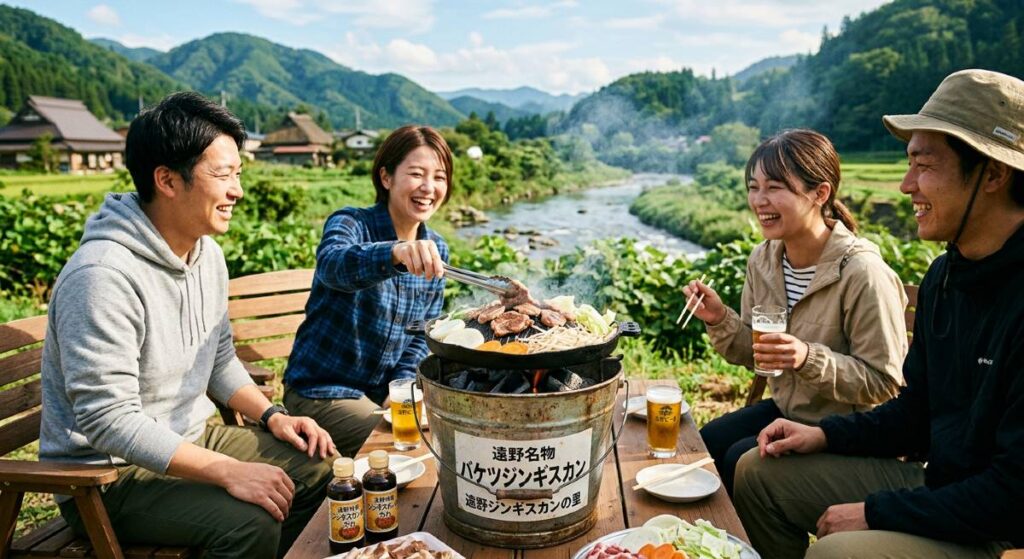
岩手県遠野市を訪れると、独特のジンギスカン文化に出会います。その象徴ともいえるのが、ブリキのバケツを改造した簡易コンロで肉を焼くスタイルです。この一見素朴な調理法には、鉄という素材が持つ「蓄熱性」と「放射熱」を最大限に活かす知恵が詰まっています。遠野の厳しい冬と、羊飼育が盛んだった歴史的背景が融合し、家族や友人が囲炉裏を囲むように鉄器を囲む食文化が根付きました。この「鉄で焼く」という行為は、単なる調理を超え、地域の人々の絆を深める儀式のような役割を果たしてきました。鉄鍋から立ち上がる香ばしい煙と肉の旨味は、遠野の風土が作り上げた、まさに鉄の芸術といえるでしょう。

Tono’s Genghis Khan: The Iron Story Beginning with a Bucket

In the city of Tono, Iwate Prefecture, one encounters a unique culinary culture centered around Genghis Khan (grilled mutton). Its most iconic symbol is the “bucket” grill—a simple, modified tin bucket that serves as a makeshift stove. This seemingly rustic method is, in fact, a masterclass in utilizing the heat retention and radiant heat properties of iron. Born from Tono’s harsh winters and a history of sheep farming, this style of dining became deeply rooted in the community, with friends and family gathering around the iron grill much like they would a hearth. This act of “grilling on iron” transcends mere cooking; it has served as a ritual to deepen communal bonds. The savory smoke rising from the iron pan and the rich flavor of the meat represent the essence of Tono’s local climate—a true art form crafted from iron.

奥州市の南部鉄器:平安から続く鋳物の美と哲学

遠野の食文化を支える鉄器の技術的ルーツを辿ると、奥州市水沢を中心とした南部鉄器の歴史に行き着きます。平安時代から受け継がれるこの鋳物産業は、砂鉄や鉄鉱石という大地の恵みを、職人の緻密な技術で「一生もの」の道具へと昇華させてきました。南部鉄器の魅力は、単に丈夫であることだけでなく、使えば使うほどに手に馴染み、味わい深くなる経年変化にあります。奥州市の工房で生み出される鉄瓶や鍋は、伝統的な意匠を守りつつも、現代のライフスタイルに寄り添うデザインへと進化を続けています。鉄という素材が持つ重厚な存在感と、日々の暮らしに溶け込む繊細な使い心地。この両立こそが、岩手の鋳物が世界中で愛され続ける理由であり、先人たちが守り抜いてきた「鉄の哲学」なのです。

Nanbu Tekki of Oshu: The Beauty and Philosophy of Casting Since the Heian Period

Tracing the technological roots of the ironware that supports Tono’s culinary culture leads us to the history of Nanbu Tekki, centered in Oshu City’s Mizusawa district. This casting industry, inherited since the Heian period, has elevated the gifts of the earth—iron sand and ore—into “lifetime tools” through the precise skills of master craftsmen. The allure of Nanbu Tekki lies not only in its durability but also in the way it develops a deeper character over time, becoming more familiar to the user’s hand with every use. The iron kettles and pots created in the workshops of Oshu continue to evolve, blending traditional designs with modern lifestyles. The profound presence of iron combined with the delicate usability that integrates into daily life—this duality is the reason why Iwate’s metalwork is loved worldwide, representing the “philosophy of iron” that has been steadfastly preserved by generations of artisans. Through these vessels, the ancient wisdom of the land continues to breathe, enriching our lives with a beauty that only grows with the passage of time.

遠野の風と鉄の記憶:橋野鉄鉱山が刻む日本の近代化 / The Winds of Tono and the Echoes of Iron: Hashino Iron Mining and Smelting Site

宮沢賢治の銀河を越えて:橋野鉄鉱山への旅路

宮沢賢治の『銀河鉄道の夜』の情景を彷彿とさせる釜石線。遠野の山々を縫うように走り、内陸の神秘的な民話の世界から、海風香る釜石の港町へと抜けるこの路線は、まさに時空を旅する回廊です。しかし、この路線の先には、単なる観光地とは一線を画す、日本の近代産業史の原風景が隠されています。それが「橋野鉄鉱山」です。遠野の深い森の中に静かに佇むこの場所は、かつて日本初の洋式高炉が火を噴き、近代化という巨大な潮流を生み出した聖地でした。民話が息づく静寂の森と、鉄を溶かす熱き技術のコントラストは、訪れる者の想像力を強く刺激します。廃墟となった高炉跡は、自然の力に飲み込まれながらも、かつてここで日本の未来を切り拓こうとした人々の熱い息吹を、今なお現代に伝えているのです。

Beyond the Milky Way of Kenji Miyazawa: A Journey to Hashino

Beyond the Milky Way of Kenji Miyazawa: A Journey to Hashino

The Kamaishi Line, evocative of the celestial landscapes in Kenji Miyazawa’s “Night on the Galactic Railroad,” weaves through the verdant mountains of Tono, serving as a profound corridor that travels through both time and space. As the train moves from the mystical realm of ancient folklore toward the sea-scented port of Kamaishi, it reveals a hidden, primal landscape at its heart: the Hashino Iron Mining and Smelting Site.

Nestled silently in the deep forest, this was once a sacred industrial ground where Japan’s first Western-style blast furnace roared to life, sparking the massive tide of national modernization. The stark contrast between the quiet, legend-filled woods and the intense, heat-driven technology of molten iron powerfully stirs the observer’s imagination. Though the ruins of the furnace are now slowly being reclaimed by the relentless force of nature, they continue to echo the passionate breath of the pioneers who once carved out a path for Japan’s future, whispering their legacy to us in the present day.

遠野の物語と北山崎の断崖:岩手の魂を巡る旅 / The Legends of Tono and the Cliffs of Kitayamazaki: A Journey Through Iwate’s Soul

異界と現世が交差する地、遠野の深淵

岩手県の内陸に位置する遠野盆地は、単なる地方都市ではない。民俗学者・柳田國男が『遠野物語』で描き出したように、そこは異界と現世が隣り合わせで存在する境界の地である。周囲を山々に囲まれた閉鎖的な地形が、カッパや座敷童子といった伝承を育み、人々は自然の脅威と恩恵を「見えない存在」として畏怖し、共生してきた。この地を歩くことは、日本人の精神の深層にあるアニミズム的な自然観を追体験することに他ならない。遠野の静寂の中には、合理的な現代社会が忘れ去った、自然に対する謙虚な敬意が今も息づいている。

The Abyss of Tono: Where the Spirit World Meets Reality

The Tono Basin, located in the inland of Iwate, is far more than a rural town. As immortalized in Kunio Yanagita’s “The Legends of Tono,” it is a liminal space where the spirit world and reality coexist. Surrounded by mountains, this enclosed topography nurtured folklore such as the Kappa and Zashiki-warashi, reflecting a culture that perceives nature’s awe and benevolence through the lens of animism. To walk through Tono is to re-experience the profound depths of the Japanese psyche, where the boundary between the seen and unseen is perpetually blurred. Within the silence of Tono, a humble respect for nature—often forgotten in modern, rational society—still breathes.

北山崎の断崖が突きつける自然の暴力的な美学

遠野の静謐な山々を抜け、太平洋側へ向かうと、田野畑村・北山崎の圧倒的な断崖絶壁が我々を待ち受ける。高さ200メートルに及ぶ切り立った崖は、数億年をかけて波が削り出した地球の彫刻であり、日本屈指のリアス海岸のハイライトだ。ここには遠野の物語とは対照的な、生の荒々しい力が満ちている。激しく打ち寄せる波音は、自然が人間を寄せ付けない圧倒的な「他者」であることを突きつける。静寂の遠野から、荒ぶる海の北山崎へ。このコントラストこそが岩手が持つ二面性であり、私たちが自然とどう向き合うべきかという根源的な問いを投げかける旅となるだろう。

The Violent Aesthetics of Kitayamazaki’s Cliffs

Leaving the serene mountains of Tono for the Pacific coast, one encounters the sheer, dramatic precipices of Kitayamazaki in Tanohata Village. These 200-meter cliffs are a geological masterpiece, sculpted by waves over millions of years, and represent the pinnacle of Japan’s rias coastline. Here, unlike the introspective myths of Tono, one feels the raw, wild power of existence. The crashing waves serve as a stark reminder that nature is an overwhelming “other”—a force that exists entirely independent of human presence. As you stand on the edge of the abyss, the profound contrast between the silence of the forest and the fury of the sea reveals the fundamental duality of Iwate. This journey is a primal inquiry, challenging each visitor to reconsider their own place within the sublime and unforgiving order of the natural world.

遠野の霧と八幡平の竜の瞳:岩手の静寂とダイナミズムを巡る旅 / The Mist of Tono and the Dragon’s Eye of Hachimantai: A Journey Through Iwate’s Serenity and Dynamism

遠野盆地の朝霧:物語が息づく異界へのヴェール

岩手の朝、遠野盆地を包み込む深い霧は、単なる気象現象ではない。それは、柳田國男が『遠野物語』で描き出した異界への入り口であり、カッパや座敷わらしが今も息づく気配を現代に留めるヴェールである。盆地特有の放射冷却によって醸成されるこの雲海は、静寂の中で時の流れを止め、訪れる者の知的好奇心を揺さぶる。かつて南部藩の馬産地として栄えたこの地は、馬と人が共生する強靭な風土を育んできた。霧が晴れゆくにつれ、山々の稜線が浮かび上がる瞬間、私たちは歴史の深淵を垣間見る。この霧の静謐さは、これから向かう八幡平の荒々しい自然への、いわば精神的な助走のようなものである。

The Morning Mist of the Tono Basin: A Veil to the Folklore Realm

In Iwate, the morning mist enveloping the Tono Basin is far more than a mere meteorological occurrence. It acts as a veil separating the present from the “otherworld” immortalized in Kunio Yanagita’s Tono Monogatari, where the spirits of Kappa and Zashiki-warashi still linger. This sea of clouds, forged by the basin’s radiative cooling, suspends time in profound silence, stirring the intellectual curiosity of all who witness it. Once a thriving center for horse breeding under the Nambu Clan, the region cultivated a deep symbiosis between humanity and nature. As the mist disperses and the mountain ridges emerge, one catches a glimpse into the depths of history. This serenity serves as a spiritual prelude to the untamed wilderness of Hachimantai that awaits.

八幡平ドラゴンアイ:雪解けが可視化する地球の鼓動

遠野の静寂から一転、八幡平の頂上付近に広がるのは、春の雪解けが織りなす「ドラゴンアイ」という名の奇跡である。鏡沼の雪解けが描く円形の造形は、まるで巨大な竜の瞳が静かに開眼したかのように見える。地熱と春の陽光が数週間という短い期間だけ作り出すこの現象は、火山活動が続く八幡平のダイナミズムそのものだ。雪の白さと沼の紺碧がコントラストを成すこの風景は、冬の終わりと生命の息吹の邂逅を象徴している。遠野の伝説的な霧が「物語の深さ」を語るならば、八幡平のドラゴンアイは「地球の鼓動」を可視化する。この高低差の旅は、岩手という土地が持つ、静と動、歴史と自然という二面性を体感する知的な冒険なのである。

The Dragon Eye of Hachimantai: The Earth’s Pulse Visualized

Transitioning from the stillness of Tono, the summit of Hachimantai unveils a miracle of spring thaw known as the “Dragon Eye.” The circular pattern formed by melting snow on Kagami-numa Lake evokes the image of a giant dragon’s eye slowly opening. This phenomenon, crafted over a few short weeks by geothermal heat and the spring sun, embodies the raw dynamism of the active Hachimantai volcano. The stark contrast between the white snow and the deep blue of the lake symbolizes the encounter between winter’s end and the breath of new life. If Tono’s legendary mist speaks to the “depth of folklore,” the Dragon Eye of Hachimantai visualizes thevery pulse of the Earth. This journey across contrasting altitudes is an intellectual adventure that invites you to experience the dual nature of Iwate—a land where silence and dynamism, history and nature, coexist in a profound and living mandala.

塩の道が育んだソウルフード「遠野ジンギスカン」 / Tono Genghis Khan: Soul Food Born from the Salt Trail

独自の肉食文化が息づく内陸の町

沿岸と内陸を結ぶ交易路「塩の道」の宿場町として栄えた遠野。豊かな交流の歴史は独自の食文化を育みました。その代表格が「遠野ジンギスカン」です。昭和初期に羊毛用として飼育された羊の肉を食べる習慣が根付き、今や一家に一台専用鍋があるほどのソウルフードに。特製ダレに絡む野趣あふれる羊肉の旨みは、遠野の風土と歴史が重なる奥深い味わいです。

An Inland Town with a Unique Meat Culture

Tono thrived as a post town on the “Salt Trail” connecting the coast and inland. This history of trade birthed a unique food culture, notably “Tono Genghis Khan.” Beginning in the early Showa period, the custom of eating mutton—originally raised for wool—deeply permeated the local community, eventually evolving into a beloved soul food. Today, it is said that nearly every household in Tono owns a specialized Genghis Khan grill pan. The wild, robust umami of the meat, perfectly harmonized with a secret savory sauce, creates a profound flavor profile where the unique climate and rich history of Tono intersect. To dine on this dish is to taste the very vitality of a town that has served as a cultural crossroads for centuries.

遠野の南部曲り家で語り継がれる囲炉裏端の伝承 / Hearthside Lore in Tono’s Nambu Magariya

火と馬と異界が交差するL字の小宇宙

遠野盆地に底冷えのする夕闇が降りてくる頃、人はなぜか火のそばへと引き寄せられる。柳田国男が『遠野物語』を著し、日本民俗学の夜明けを告げたこの地において、「南部曲り家」は単なる古い建築様式ではない。それは、厳しい自然と向き合う人々の切実な祈りと、異界への畏怖が凝縮されたL字型の小宇宙である。
曲り家の最大の特徴は、人間の住居である母屋と、馬の住処である厩(うまや)が直角に連結され、一つ屋根の下に収まっている点にある。なぜこのような構造が生まれたのか。それは、奥州南部藩の特産であった名馬への、異常なまでの愛情と生活の依存に他ならない。氷点下を彷徨う冬の夜、囲炉裏で焚かれた薪の暖気は、土間を伝って厩へと流れ込み、愛馬を凍えから守った。同時に、闇夜の中で静かに鼻を鳴らす馬の温かい吐息や蹄の音は、囲炉裏端に集う家族に言い知れぬ安心感を与えた。人間と獣という境界すら溶け合うこの濃密な共生空間が、人間の娘と馬の悲恋を描いた「オシラサマ」の伝承(馬娘婚姻譚)を生み出したのも、ある種の必然と言えよう。
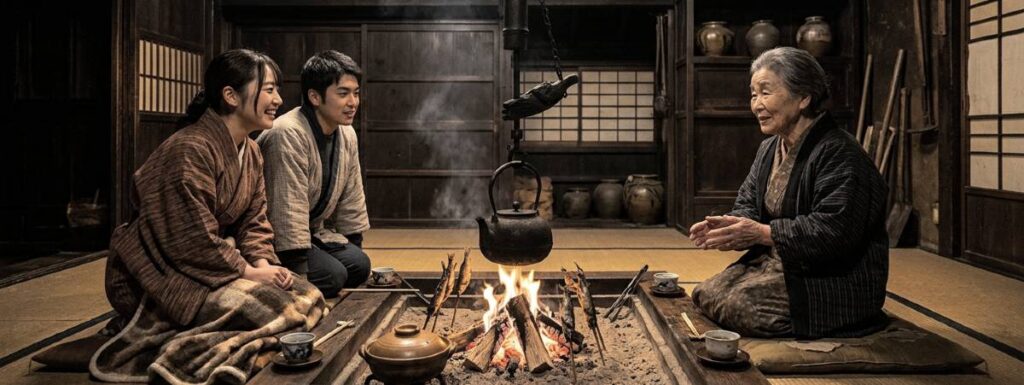
そして、この家の中心には常に「囲炉裏」があった。パチパチとはぜる楢の木の音、空間を燻す青白い煙、そして柱や梁に揺らめく不規則な火影。電灯の無い時代、囲炉裏の僅かな光の届かない部屋の四隅は、完全なる「暗黒」であり、異界そのものであった。炉端に身を寄せ合う老若男女の耳に、語り部の媼(おうな)が紡ぐ低い声が響く。座敷を駆け回る赤い顔の童子、山中でふと現れる豪壮な迷い家、そして神隠し。それは現代の私たちが消費する「おとぎ話」ではなく、山の神の気配や死者の魂の息遣いを感じ取るための、生々しいドキュメンタリーであったのだ。
今も遠野の里に残る曲り家の敷居を跨ぎ、永い年月を経て煤光りする太い梁を見上げてみてほしい。鼻腔をくすぐる煤煙の匂いの中に身を置けば、囲炉裏の火が照らし出していた深い闇の広がりと、そこに潜む不可視のものたちへの敬意が、あなたのDNAの奥底を静かに揺さぶるはずである。

The L-shaped Microcosm Where Fire, Horses, and the Underworld Intersect

As the bone-chilling dusk descends upon the Tono Basin, one feels an inexplicable pull toward the warmth of a fire. In this very land—where Kunio Yanagita penned *The Legends of Tono*, heralding the dawn of Japanese folklore studies—the traditional *Nambu Magariya* (L-shaped farmhouse) is far more than a mere architectural relic. It is an L-shaped microcosm, condensing the earnest prayers of people braving a harsh environment and their profound reverence for the otherworldly.
The defining feature of the *Magariya* lies in its right-angled structure, joining the main house—the realm of humans—with the stable under a single, continuous thatched roof. Why was such a unique design conceived? The answer lies in the extraordinary affection and absolute reliance the people of the Nambu domain had on their famed horses. During the freezing winter nights when temperatures plummeted, the warm air from the hearth flowed across the earthen floor into the stable, protecting their beloved steeds from the bitter cold. Simultaneously, the warm breath and quiet snorts of the horses in the dark bestowed an unspoken sense of security upon the family gathered around the fire. It is no wonder that this intimate space, where the boundary between human and beast melted away, gave birth to the legend of *Oshira-sama*—a tragic tale of marriage between a farmer’s daughter and her beloved horse.
At the very heart of this space was always the *irori* (sunken hearth). The crackling of oak firewood, the pale smoke curing the air, and the erratic shadows dancing upon the pillars and beams created an atmosphere of profound mystique. In an era devoid of electric light, the four corners of a room beyond the hearth’s faint glow were consumed by absolute darkness—the very embodiment of the otherworld. Huddled around the embers, young and old alike would listen to the low, resonant voice of the storyteller—often an elderly woman—weaving tales. A red-faced child spirit running through the parlor, a magnificent illusory mansion appearing deep in the mountains, or an abrupt spiriting away by supernatural forces. To them, these were not the sanitized

“fairy tales” we consume today, but a raw, vivid documentary intended to capture the presence of mountain deities and the rhythmic breathing of ancestral spirits. Inside the smoke-filled darkness, the boundary between this world and the “other side” was thin, and the tales told by the elders were essential maps for navigating the mysteries of existence.

Even now, I encourage you to visit the Magariya that remain in the Tono countryside. Gaze up at the lintels and the massive, soot-blackened beams that have acquired a dark luster over countless years. As you immerse yourself in the scent of smoke that tickles your senses, the expanse of the deep darkness once cast by the hearth and the enduring obsession with the invisible entities lurking within will surely resonate with the very depths of your DNA.

遠野の河童から盛岡の鬼へ――岩手という名の起源を辿る神話の旅 / From Tono’s Kappa to Morioka’s Demon: A Mythical Journey Tracing the Origins of

From Tono’s Kappa to Morioka’s Demon: A Mythical Journey Tracing the Origins of Iwate

岩手県という名前そのものが、実はひとつの巨大な神話によって刻印されていることをご存知でしょうか。この地は、目に見えない存在たちが人間と共生し、時には歴史を動かしてきた「物語の集積地」です。今回は、遠野の象徴である「河童」から、県都・盛岡の名の由来となった「鬼」の伝説まで、岩手の精神的なルーツを辿る旅へご案内します。

遠野の河童:異界との境界線
遠野物語で語られる河童は、単なる愛らしいキャラクターではありません。それは、自然の猛威や人知を超えた現象の象徴であり、人間が「異界」に対して抱く畏怖の念が形を成したものです。カッパ淵の静寂の中に身を置くと、現代社会が忘れ去った「自然への謙虚さ」を思い起こさせます。

盛岡の鬼と「岩手」の起源
一方、盛岡市の三ツ石神社には、さらにダイナミックな神話が残っています。かつてこの地で暴れていた鬼「羅刹」が、神様の力に屈し、二度と悪さをしない誓いとして巨大な岩に手形を残しました。これこそが「岩に手形」、つまり**「岩手」**という県名の由来そのものなのです。

遠野の水の精霊と、盛岡の岩の巨像。これら二つの物語を繋ぐことは、岩手という土地が持つ「目に見えない力」を紐解く作業に他なりません。


Did you know that the name "Iwate" itself is inscribed by a single, grand myth? This land is a "collection of narratives" where invisible beings have coexisted with humans and, at times, shaped history. In this article, we journey through Iwate’s spiritual roots, from the "Kappa" (water imps)—the symbols of Tono—to the legend of the "Demon" that gave the capital city of Morioka its name.

Tono’s Kappa: The Boundary with the Otherworld
The Kappa depicted in "The Tales of Tono" are more than just cute characters. They represent the fury of nature and phenomena beyond human understanding—the embodiment of the awe humans felt toward the "otherworld." Standing in the silence of Kappabuchi pool reminds us of the "humility toward nature" that modern society has long forgotten.

The Demon of Morioka and the Origin of "Iwate"
Meanwhile, at Mitsuishi Shrine in Morioka City, an even more dynamic myth remains. Long ago, a demon named "Rasetsu" who terrorized the area was defeated by the power of a god. As a vow never to cause trouble again, he left his handprint on a massive rock. This "handprint on the rock" (Iwa-te) is the very origin of the prefecture's name.

From the water spirits of Tono to the stone monoliths of Morioka—connecting these two stories is nothing less than unraveling the "invisible power" that the land of Iwate holds.

遠野の霊気から二戸の湯けむりへ:南部藩に息づく伝承と癒やしの旅 / From Tono’s Spirits to Ninohe’s Steam: A Journey into the Folklore and Healing Traditions of the Nanbu Domain

Explore the mysterious legends of Tono and the healing waters of Kindaichi Onsen. A journey through the history of the Nanbu Domain awaits in Iwate. Discover the intersection of spirit and rest. #VisitIwate #Morioka #Tono #KindaichiOnsen #JapanHistory

[Area] North
[Category] Landmarks & History

遠野の「異界」と、二戸の「湯治」。一見すると遠く離れた二つの文化ですが、かつて岩手を治めた南部藩という大きな歴史の枠組みの中で、これらは密接に繋がっています。遠野で育まれた「座敷わらし」の伝承が示すのは、人間と精霊が隣り合わせで暮らす世界観。そして、県北の金田一温泉で受け継がれてきた湯治文化は、厳しい北国の冬を生き抜くための身体的知恵です。本記事では、岩手の精神性と身体性が交差する歴史の旅路を辿ります。

From Tono’s Spirits to Ninohe’s Steam: A Journey into the Folklore and Healing Traditions of the Nanbu Domain

The “otherworld” of Tono and the “hot spring healing” (toji) of Ninohe. At first glance, these may seem like two separate cultures, but they are deeply intertwined within the grand historical framework of the Nanbu Domain, which once ruled over Iwate. The legend of the Zashiki-warashi born in Tono reveals a worldview where humans and spirits coexist side by side. Meanwhile, the toji culture preserved at Kindaichi Onsen in the north represents the physical wisdom necessary to survive the brutal winters of the northern lands. In this article, we trace a historical journey where Iwate’s spirituality and physicality intersect.

獣の鼓動と山の記憶—鹿踊りからマタギの深淵、遠野の妖怪譚へ / The Pulse of the Beast and the Memory of the Mountains: From Shishi-odori to the Matagi and the Tales of Tono

岩手県は、単なる観光地ではありません。ここは、現代社会が忘れ去った「自然への畏怖」と「精霊との共生」が、今なお色濃く残る場所です。胸に太鼓を抱き、獣の魂を憑依させて舞う鹿踊り(ししおどり)。険しき山々で命のやり取りを神聖な儀式として昇華させたマタギの狩猟術。そして、柳田國男の『遠野物語』が描き出した、境界線上の妖怪たち。これらはバラバラの民俗芸能ではなく、岩手の山々が紡いできた一つの壮大な物語の断片なのです。

The Pulse of the Beast and the Memory of the Mountains: From Shishi-odori to the Matagi and the Tales of Tono

Iwate Prefecture is not merely a tourist destination; it is a place where the “awe of nature” and “coexistence with spirits”—elements often forgotten by modern society—still breathe with vivid intensity.

There is the Shishi-odori (Deer Dance), where dancers clutch drums to their chests and dance as if possessed by the souls of beasts. There are the hunting traditions of the Matagi, who transformed the life-and-death struggle in the rugged mountains into a sacred ritual. And then, there are the yokai (supernatural beings) dwelling on the threshold of reality, as immortalized in Kunio Yanagita’s “The Tales of Tono.” These are not isolated pieces of folklore, but fragments of a single, grand epic woven over centuries by the mountains of Iwate.