岩手の深層を辿る:イギリス海岸の泥岩から三王岩の荒波へ / Tracing Iwate’s Depths: From the Mudstones of the British Coast to the Wild Waves of San’o-iwa

地質学が語る岩手の壮大な物語

宮沢賢治が愛した「イギリス海岸」の静謐な泥岩と、宮古市の海岸線に聳え立つ「三王岩」が突きつける荒々しい自然の造形。これらは一見、何の関係もない別々の観光地のように思えるかもしれません。しかし、地質学というレンズを通せば、これらは岩手という土地が歩んできた壮大な物語の「起」と「結」であることがわかります。北上川のほとりで眠る太古の記憶と、太平洋の激流に削り出された現代の彫刻。この二つの地点を結ぶとき、岩手の風景は単なる景勝地から、地球の鼓動を感じる深淵なフィールドへと姿を変えます。

The Geological Narrative of Iwate

The serene mudstone of the “British Coast,” beloved by Kenji Miyazawa, and the rugged, towering San’o-iwa Rocks in Miyako City may seem like disparate, unrelated tourist spots at first glance. Yet, through the lens of geology, they represent the beginning and the climax of the epic narrative that defines the land of Iwate. By connecting the ancient memories resting along the Kitakami River with the modern sculptures carved by the violent Pacific, the landscapes of Iwate transform from mere scenic spots into a profound field where one can feel the very heartbeat of the Earth.

イギリス海岸:北上川が暴く太古の海底

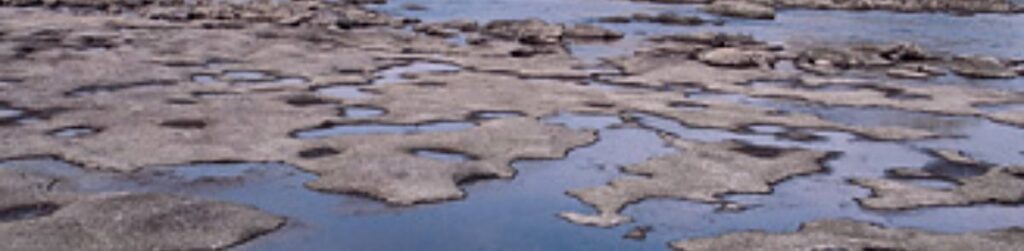
花巻市にあるイギリス海岸。詩人・宮沢賢治が名付けたこの場所は、北上川の渇水期に現れる白い泥岩の層です。一見するとただの川原の岩肌ですが、これは数百万年前、この地がまだ深い海の底であったことを示す動かぬ証拠です。堆積した泥は、地殻変動という地球規模の力によって隆起し、やがて北上川の浸食作用によって再び太陽の光を浴びることとなりました。賢治はここに、イギリスのドーバー海峡のような風景を見出したと言われています。泥岩という「静」の素材は、岩手がかつて海洋プレートの衝突によって生まれた地であることを、静かに、しかし雄弁に物語っています。

The British Coast: Ancient Seafloor Revealed

Located in Hanamaki City, the British Coast—named by the poet Kenji Miyazawa—is a layer of white mudstone revealed during the dry season of the Kitakami River. At first glance, it appears to be nothing more than a rocky riverbank, yet it is irrefutable evidence that this region was once deep beneath the ocean millions of years ago. The accumulated mud was uplifted by the tectonic forces of the Earth, eventually to be bathed in sunlight once again through the erosive power of the Kitakami River. It is said that Miyazawa saw in this place a landscape reminiscent of the English coast. This mudstone, a material of “stillness,” quietly yet eloquently tells the story of how Iwate was born from the collision of oceanic plates.

三王岩:太平洋と対峙する「動」の造形

イギリス海岸の泥岩から東へ。北上山地を越え、太平洋の荒波が打ち寄せる宮古市へ向かうと、全く異なる地質のドラマが展開されます。そこに鎮座するのが、高さ約50メートルの男岩、女岩、太鼓岩からなる「三王岩」です。これらは、大陸の一部であった岩盤が波の浸食によって切り離された「海食柱(スタック)」と呼ばれる地形です。イギリス海岸が「堆積」の歴史であるならば、三王岩は「侵食」の歴史です。太平洋の猛烈なエネルギーが、数百万年かけて岩盤を彫刻し、この圧倒的な造形美を作り上げました。荒波に晒され、崩れ落ちては新たな姿を見せる三王岩は、今この瞬間も地球が動いていることを私たちに突きつけています。

San’o-iwa: The Sculptures of “Motion” Defying the Pacific

Heading east from the mudstones of the British Coast, crossing the Kitakami Mountains to Miyako City where the wild Pacific waves crash, a completely different geological drama unfolds. Here stands “San’o-iwa,” consisting of three monoliths—the Otokoiwa (Man Rock), Onnaiwa (Woman Rock), and Taikoiwa (Drum Rock)—reaching heights of nearly 50 meters. These are “sea stacks,” landforms once part of the mainland that have been separated by the relentless erosion of the waves. If the British Coast is a history of “sedimentation,” San’o-iwa is a history of erosion. The ferocious energy of the Pacific has sculpted the bedrock over millions of years to forge this overwhelming beauty. Battered by rough waves, crumbling and reshaping into new forms, San’o-iwa powerfully reminds us that the Earth is alive and in motion at this very second.

渋民村と啄木:岩手が育んだ望郷の魂 / Shibutami Village and Takuboku: The Soul of Nostalgia Nurtured by Iwate

渋民村の原風景:啄木の魂を育んだ岩手の土壌

岩手という土地は、柳田國男が『遠野物語』で描き出した神秘的な「異界」の香りが色濃く残る場所である。しかし、この地が育んだもう一つの文学的系譜がある。それが、天才歌人・石川啄木である。盛岡市渋民村。この地で少年時代を過ごした啄木にとって、北上川のせせらぎと姫神山の峻厳な姿は、単なる故郷の風景ではなく、自己のアイデンティティを形作る根源的な存在であった。啄木は幼少期、この地で厳しい自然と生活の機微に触れながら、鋭い感受性を磨き上げた。遠野の民話が日本人の集合的無意識に潜む「怪異」や「物語」を紡ぎ出したのに対し、啄木は、岩手の厳しい現実に根ざした「個の苦悩」を、自身の短歌へと昇華させた。渋民の風土は、彼が東京という近代化の奔流の中で挫折を繰り返すたびに、魂が帰るべき「心の聖域」として機能していたのである。彼にとって故郷とは、単なる物理的な空間ではなく、常に背後にあり続ける「精神の揺りかご」であった。

The Scenery of Shibutami: The Soil that Nurtured Takuboku’s Soul

Iwate is a land where the scent of the mysterious “otherworld,” as depicted in Kunio Yanagita’s *Tono Monogatari* (Tales of Tono), lingers. Yet, there is another literary lineage nurtured by this land: that of the genius poet Takuboku Ishikawa. In Shibutami Village, Morioka City, where Takuboku spent his youth, the murmuring of the Kitakami River and the austere silhouette of Mount Himekami were not merely scenery, but fundamental elements that shaped his identity. During his childhood, Takuboku honed his sharp sensibilities while touching upon the harsh realities of life in this environment. While the folklore of Tono wove tales of “mysteries” lurking in the collective unconscious of the Japanese people, Takuboku sublimated the “individual suffering” rooted in the harsh reality of Iwate into his own tanka poetry. The landscape of Shibutami functioned as a “sanctuary of the heart” to which his soul would return whenever he faced setbacks in the rushing currents of modernization in Tokyo. For him, his hometown was not just a physical space, but a “cradle of the spirit” that always existed behind him.

望郷の念が昇華させた近代文学の深淵

啄木の代表作『一握の砂』に収められた「ふるさとの山に向ひて言ふことなし ふるさとの山はありがたきかな」。この一節には、都会の喧騒と経済的困窮の中で彼が抱いた、痛切な望郷の念が凝縮されている。啄木にとって故郷・岩手は、自身の無力さや矛盾をすべて静かに受け入れてくれる、絶対的な母のような存在であった。彼は東京で近代社会の冷徹な波に揉まれ、社会的な成功を夢見ては破れ、そのたびに岩手の山河を想った。この「遠く離れているからこそ美化され、かつ切実に求められる」という感情こそが、彼の詩歌に普遍的な文学的価値を与えたのである。遠野の神秘的な物語群が岩手の精神的な深層を支える柱であるならば、啄木の望郷の詩歌は、近代日本人が抱える「個の孤独」を癒やす文学的な救済となった。岩手の風土は、こうして民話の幻想的な世界から、啄木の人間味あふれる近代文学へと、時を超えて美しく昇華されていったのである。

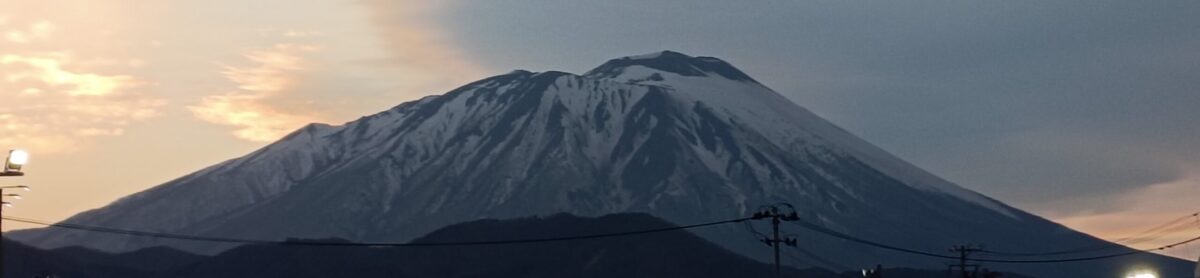
都会という名の荒野で冷徹な風に「侵食」され、身も心も削り取られていった啄木。しかし、彼が擦り切れていくほどに、心の奥底には岩手の不動の山容が、決して消えることのない原風景として分厚く「堆積」していったのだ。悠然とそびえる岩手山や、渋民の村を抱く空は、今もなお、時代という激しい風雨に削られ傷ついた現代人の魂を優しく包み込む。啄木が涙とともに仰ぎ見たあのふるさとの山々は、今を生きる私たちの「孤独という侵食」をも静かに埋め合わせ、明日への新たな祈りとなって深く積もり続けている。

■ English Version

The Abyss of Modern Literature Sublimated by Nostalgia

In his masterpiece Ichiaku no Suna (A Handful of Sand), Takuboku wrote: “Facing the mountains of my hometown, I have no words; how grateful I am for the mountains of my hometown.” This verse encapsulates the poignant nostalgia he felt amidst the hustle and bustle of the city and his economic distress. For Takuboku, his hometown of Iwate was like an absolute mother, silently accepting all his helplessness and contradictions. In Tokyo, battered by the cold waves of modern society and seeing his dreams of success repeatedly shattered, he constantly thought of the mountains and rivers of Iwate. This sentiment—that the distance makes the homeland both idealized and desperately longed for—gave his poetry universal literary value. If the mysterious tales of Tono are the pillars supporting the deep psyche of Iwate, Takuboku’s poems of nostalgia became a literary salvation, healing the “solitude of the individual” that began to plague modern Japanese society. Through his words, the landscape of Iwate was beautifully sublimated across time—evolving from the fantastical world of folklore into a raw, deeply human modern literature that continues to resonate with the hearts of many today.

In the barren wasteland of the metropolis, Takuboku was ruthlessly “eroded” by the cold winds of modernity, his mind and body scraped away day by day. Yet, the more he was worn down, the more thickly the unshakeable silhouettes of Iwate’s mountains were “deposited” deep within his soul as an indelible primal landscape. The majestic peak of Mount Iwate and the sky embracing the village of Shibutami remain unchanged today, gently enveloping the souls of modern people battered by the fierce storms of our times. Those hometown mountains, which Takuboku once looked up to with tears, continue to quietly fill the “erosion of our solitude,” accumulating deeply as a silent prayer for tomorrow.


■ WordPress設定データ

カテゴリー: 【県央 Central Iwate】
タグ: 石川啄木, 望郷, 一握の砂, 岩手山, 詩的リアリズム
アクセスポイント(座標): 39.8415, 141.1517 (※盛岡市渋民・石川啄木記念館付近)

馬と共に生きる岩手の心:遠野の曲り家からチャグチャグ馬コへ / The Spirit of Coexistence with Horses in Iwate: From Tono’s Magariya to Chagu-Chagu Umakko

馬と家族が分かち合った生活:南部曲り家の歴史と哲学

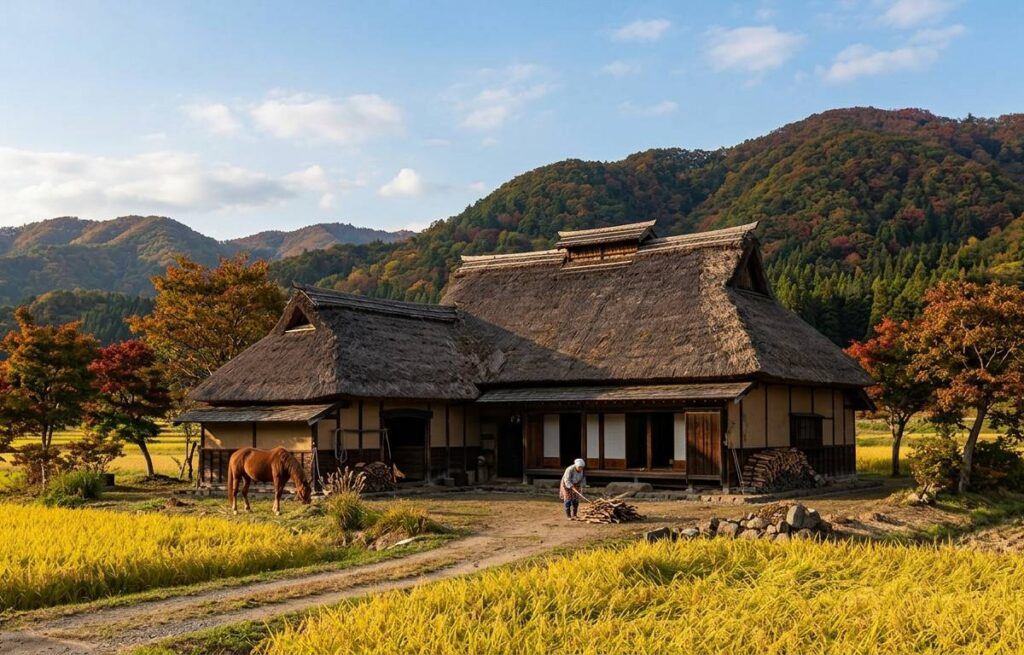
かつて岩手県の遠野地方を中心に育まれた「南部曲り家」は、人と馬が一つ屋根の下で暮らすという、世界的に見ても極めて稀有な建築様式です。L字型に折れ曲がった構造を持つこの民家は、家族の居住空間と馬小屋が直接つながっており、馬は単なる家畜ではなく、苦楽を共にする家族の一員として大切にされてきました。冬の厳しい寒さが続く岩手において、馬の体温は家全体を温める熱源となり、家族の絆を深める物理的かつ精神的な支柱となっていたのです。この「馬を家族として慈しむ」という生活哲学は、岩手の人々の気質に深く根を下ろし、単なる効率性や経済性だけでは語れない、命への深い敬意と共生の精神を形作りました。遠野の風景に溶け込む曲り家は、かつての農耕社会における馬の重要性と、人間と動物が対等に近い距離感で支え合っていた時代の記憶を、今に伝えています。

The Philosophy of Coexistence: Life Within the Nanbu Magariya

The “Nanbu Magariya” (L-shaped house), which flourished primarily in the Tono region of Iwate, is an architectural style rarely seen elsewhere in the world, where humans and horses lived under the same roof. The L-shaped structure directly connected the family’s living quarters to the stable, reflecting a lifestyle where horses were cherished not merely as livestock, but as essential family members who shared in life’s hardships and joys. During the harsh winters of Iwate, the warmth of the horses served as a vital heat source for the entire home, physically and metaphorically strengthening the bonds between family members. This philosophy of cherishing horses as kin is deeply embedded in the character of the people of Iwate, representing a profound respect for life that transcends mere economic utility. The Magariya, blending seamlessly into the Tono landscape, preserves the memory of an era when horses were the backbone of agrarian society, and humans and animals supported one another in a relationship of mutual respect.

農耕文化の結晶:チャグチャグ馬コの装束と祈り

この馬への深い愛情は、時代を経て、滝沢市を中心に受け継がれる伝統行事「チャグチャグ馬コ」へと見事に昇華しました。江戸時代から続くこの祭礼は、農作業の合間に馬の健康と無病息災を祈り、神仏に感謝を捧げたことが起源とされています。最大の見どころは、馬たちが身に纏う色鮮やかな「小荷駄装束」です。赤や黄色を基調とした美しい刺繍が施された鞍や、揺れるたびに「チャグチャグ」と軽快な音を奏でる鈴の数々は、かつて田畑を耕し、家族を支えた馬たちへの最大限の敬意の現れです。無形民俗文化財にも指定されたこの行列は、単なる観光行事ではありません。機械化された現代社会において、かつての農耕馬文化が持つ誇りと、命に対する温かな眼差しを再確認する儀式なのです。鈴の音が響くたび、私たちは岩手の歴史が紡いできた、人間と馬の絆の深さを改めて実感します。

A Crystallization of Agrarian Culture: The Costumes and Prayers of Chagu-Chagu Umakko

This deep affection for horses has evolved into the traditional festival known as “Chagu-Chagu Umakko,” centered in Takizawa City. Originating in the Edo period, this festival began as a way for farmers to pray for their horses’ health and offer gratitude to the gods during their arduous work. The highlight of the event is the horses adorned in vibrant “Konida” costumes. The intricately embroidered saddles, featuring striking red and yellow patterns, and the bells that chime with a rhythmic “chagu-chagu” sound create a melody of profound gratitude that resonates across the fields. This procession is not merely a tourist spectacle; it is a sacred ritual to reaffirm the pride of a vanishing agrarian culture and a warm, compassionate gaze toward life in our increasingly mechanized society. Each time the bells ring, we are reminded of the deep, unbreakable bond between humans and horses that has been meticulously woven through the long history of Iwate.

旋律の彼方、大地の咆哮:北上・鬼剣舞が刻む「鬼」の記憶 / Beyond the Melody, A Roar from the Earth: The Memory of the “Oni” Carved by Kitakami’s Oni Kenbai

宮沢賢治の繊細なチェロと、大地の重低音

宮沢賢治の童話『セロ弾きのゴーシュ』において、音楽は魂の救済と成長を象徴する繊細な調和として描かれています。しかし、賢治が愛したこの岩手の地には、物語の優雅な旋律とは対極にある、もっと野性的で、地殻を揺らすような響きが存在します。それが、北上市に伝わる民俗芸能「鬼剣舞(おにけんばい)」です。賢治が言葉で描いた「宇宙の調和」に対し、鬼剣舞は「大地の浄化」をその重厚なビートで体現しています。この対比こそが、岩手の精神的な深層を理解するための鍵となるのです。

セロの弦が夜空へ向かって奏でる透明な旋律が、星々の瞬きとともに静かに精神の層を重ねていく祈りの「堆積」であるならば、怒れる仏の化身である鬼たちが大地を激しく踏み鳴らす躍動は、積年の淀みや邪気を容赦なく削り落とす「侵食」にほかなりません。天を仰ぎ、銀河の理(ことわり)に耳を澄ませる静謐なまなざしと、かがり火の下で泥土を蹴り上げ、魂の底から咆哮する生命の燃焼。この天と地、静と動、そして堆積と侵食が織りなす圧倒的なコントラストの狭間に立つとき、私たちは岩手という風土が脈打つ、荒々しくも美しい生命の鼓動に真に触れることができるのです。

■ English Version

Kenji Miyazawa’s Delicate Cello and the Earth’s Deep Bass

In Kenji Miyazawa’s short story “Gauche the Cellist,” music is depicted as a delicate harmony symbolizing the salvation and growth of the soul. However, in this land of Iwate that Kenji so dearly loved, there exists a sound that stands in stark contrast to the elegant melodies of his stories—a sound far more wild, one that shakes the very crust of the earth. This is the folk performing art known as “Oni Kenbai” (Demon Sword Dance) from Kitakami City. If Kenji represented the “harmony of the universe” through his words, Oni Kenbai embodies the “purification of the earth” through its profound and heavy beat. This sharp contrast between the sophisticated spiritualism of literature and the primal, rhythmic pulse of the soil serves as the essential key to unlocking and understanding the profound spiritual depths of Iwate. To hear the drums of the Oni is to feel the heartbeat of the land itself, reclaiming its ancient power through a dance of light and shadow.

If the transparent melodies of the cello soaring into the night sky represent a quiet “accumulation” of the spirit layered with starlight, the dynamic stomping of the demon-masked dancers—avatars of wrathful deities—is undoubtedly a fierce “erosion” that violently scrapes away accumulated stagnation and evil. The serene gaze raised toward the heavens in prayer for cosmic harmony perfectly counterbalances the burning vitality roaring from the depths of the soul, kicking up the mud under blazing bonfires. When we stand in the crux of this overwhelming contrast—between heaven and earth, stillness and motion, accumulation and erosion—we truly touch the wild yet beautiful, beating heart of Iwate’s profound climate.


■ WordPress設定データ

カテゴリー: 県南 Southern Iwate
タグ: 宮沢賢治, 鬼剣舞, 北上市, 民俗芸能, 詩的リアリズム
アクセスポイント(座標): 39.2847, 141.0506
(※北上市「鬼の館」付近の座標。鬼剣舞の歴史と精神に触れることができる代表的な文化拠点)

遠野の物語と北山崎の断崖:岩手の魂を巡る旅 / The Legends of Tono and the Cliffs of Kitayamazaki: A Journey Through Iwate’s Soul

異界と現世が交差する地、遠野の深淵

岩手県の内陸に位置する遠野盆地は、単なる地方都市ではない。民俗学者・柳田國男が『遠野物語』で描き出したように、そこは異界と現世が隣り合わせで存在する境界の地である。周囲を山々に囲まれた閉鎖的な地形が、カッパや座敷童子といった伝承を育み、人々は自然の脅威と恩恵を「見えない存在」として畏怖し、共生してきた。この地を歩くことは、日本人の精神の深層にあるアニミズム的な自然観を追体験することに他ならない。遠野の静寂の中には、合理的な現代社会が忘れ去った、自然に対する謙虚な敬意が今も息づいている。

The Abyss of Tono: Where the Spirit World Meets Reality

The Tono Basin, located in the inland of Iwate, is far more than a rural town. As immortalized in Kunio Yanagita’s “The Legends of Tono,” it is a liminal space where the spirit world and reality coexist. Surrounded by mountains, this enclosed topography nurtured folklore such as the Kappa and Zashiki-warashi, reflecting a culture that perceives nature’s awe and benevolence through the lens of animism. To walk through Tono is to re-experience the profound depths of the Japanese psyche, where the boundary between the seen and unseen is perpetually blurred. Within the silence of Tono, a humble respect for nature—often forgotten in modern, rational society—still breathes.

北山崎の断崖が突きつける自然の暴力的な美学

遠野の静謐な山々を抜け、太平洋側へ向かうと、田野畑村・北山崎の圧倒的な断崖絶壁が我々を待ち受ける。高さ200メートルに及ぶ切り立った崖は、数億年をかけて波が削り出した地球の彫刻であり、日本屈指のリアス海岸のハイライトだ。ここには遠野の物語とは対照的な、生の荒々しい力が満ちている。激しく打ち寄せる波音は、自然が人間を寄せ付けない圧倒的な「他者」であることを突きつける。静寂の遠野から、荒ぶる海の北山崎へ。このコントラストこそが岩手が持つ二面性であり、私たちが自然とどう向き合うべきかという根源的な問いを投げかける旅となるだろう。

The Violent Aesthetics of Kitayamazaki’s Cliffs

Leaving the serene mountains of Tono for the Pacific coast, one encounters the sheer, dramatic precipices of Kitayamazaki in Tanohata Village. These 200-meter cliffs are a geological masterpiece, sculpted by waves over millions of years, and represent the pinnacle of Japan’s rias coastline. Here, unlike the introspective myths of Tono, one feels the raw, wild power of existence. The crashing waves serve as a stark reminder that nature is an overwhelming “other”—a force that exists entirely independent of human presence. As you stand on the edge of the abyss, the profound contrast between the silence of the forest and the fury of the sea reveals the fundamental duality of Iwate. This journey is a primal inquiry, challenging each visitor to reconsider their own place within the sublime and unforgiving order of the natural world.

岩手に息づく鉄の魂:釜石の高炉から奥州・南部鉄器へ / The Soul of Iron in Iwate: From Kamaishi to Oshu

炎と職人が生み出す実用美

日本の近代製鉄は釜石の洋式高炉から始まりました。その鉄の記憶は、奥州市に伝わる「南部鉄器」の職人技へと繋がります。約900年の歴史を持つ南部鉄器は、灼熱の炎と職人の手仕事が生み出す実用美の極致。重厚な鉄肌に刻まれた精緻な紋様は、世代を超えて愛されています。釜石の革新と奥州の伝統。岩手で脈々と受け継がれる「鉄の魂」に触れる旅へ出かけましょう。

Functional Beauty Born of Fire and Artisans

Japan’s modern ironmaking began at Kamaishi’s blast furnace. This heritage connects to the master craftsmanship of Nambu Ironware in Oshu City. With a 900-year history, these ironwares are born from roaring flames and artisans’ hands, featuring intricate patterns. Experience the soul of iron passed down through Kamaishi’s innovation and Oshu’s tradition in Iwate.

📍 アクセス / Access

JR水沢江刺駅からタクシーで約10分
Approx. 10 mins by taxi from JR Mizusawa-Esashi Sta.

海から星降る夜空へ 岩手・鉄道ロマン旅 / A Romantic Railway Journey in Iwate

三陸の青い海から、賢治が描いた銀河の世界へ

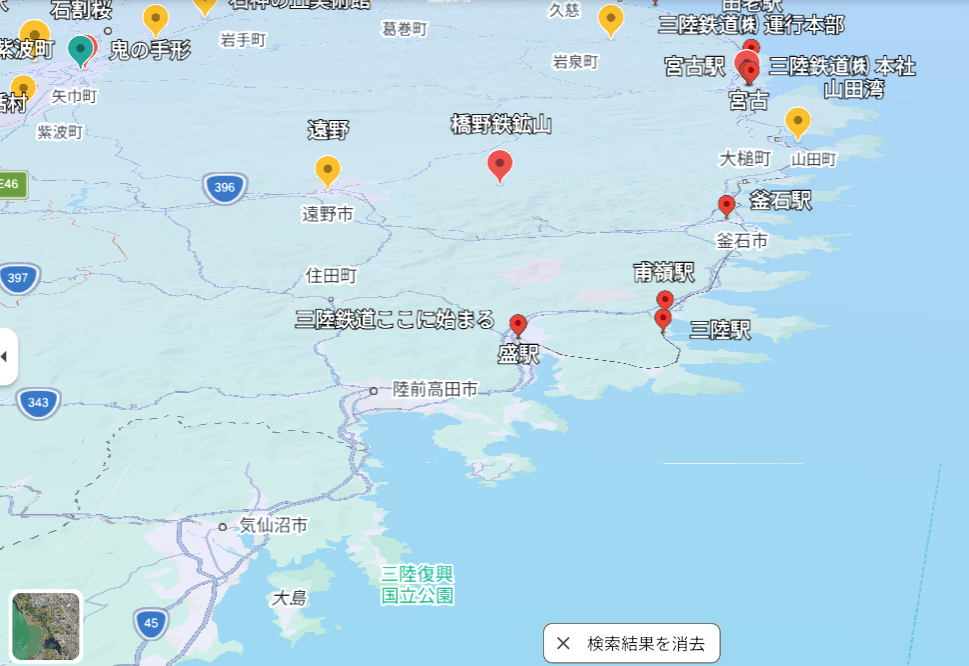
青く輝く太平洋を横目に走る三陸鉄道。車窓を流れるリアス海岸の絶景は、息を呑む美しさです。荒波が悠久の時をかけて大地を削り出した「侵食」の芸術を堪能した後は、鉄路を西へ、内陸の花巻へと向かいます。

宮沢賢治が愛したこの地で夜空を見上げれば、そこはまるで『銀河鉄道の夜』の世界。満天の星が幾千年の時を超えて降り積もり、圧倒的な光の「堆積」となって、幻想的なレールを夜空に浮かび上がらせます。

海が削り出した地の記憶から、星々が紡ぎ出す天の記憶へ。波音の終着駅は、星めぐりの始発駅へと繋がっています。岩手という大地だけが描き出せる、空間と時間を越境するロマンチックな鉄道旅へ出かけてみませんか。

■ English Version

From the Blue Ocean to the Galactic Night Sky

The Sanriku Railway offers breathtaking views of the sparkling Pacific Ocean and the rugged ria coastline. After witnessing the magnificent art of “erosion”—where relentless waves have sculpted the earth over eons—the iron road carries you west, inland toward Hanamaki.

In this land deeply loved by Kenji Miyazawa, gazing at the night sky invites you directly into the world of his masterpiece, Night on the Galactic Railroad. Countless stars, traveling across millennia, pile up in a luminous “accumulation” of ancient light, illuminating phantom rails that stretch across the heavens.

From the earthly memories carved by the ocean to the celestial memories woven by the stars. The terminal of the crashing waves is merely the departure station for the cosmos. Why not embark on this romantic, time-transcending railway journey—a poetic odyssey that can only be truly felt here in Iwate.


■ WordPress設定データ

カテゴリー: 県南 Southern Iwate
タグ: 三陸鉄道, 花巻, 宮沢賢治, 銀河鉄道の夜, 星空
アクセスポイント(座標): 39.3945, 141.1118 (※星めぐりの始発駅・JR花巻駅付近)

岩手の大自然が描く奇跡:三陸海岸から八幡平ドラゴンアイへ / The Miracles of Iwate’s Nature: From Sanriku to the Dragon Eye

海と雪が織りなす圧倒的スケール

三陸海岸の荒々しい断崖から、内陸の八幡平へ。岩手の自然は躍動しています。春の訪れとともに姿を現すのが、雪解けの奇跡「八幡平ドラゴンアイ」。鏡沼の氷雪がドーナツ状に溶け、エメラルドブルーの巨大な瞳が空を見上げます。わずか数週間しか見られない幻の絶景。波が彫り上げた海岸線と、雪が描く神秘の瞳。荒々しさと美しさが交差する岩手の圧倒的なスケールを、その目に焼き付けてください。

Overwhelming Scale of Ocean and Snow

From the rugged cliffs of the Sanriku Coast to the mystical Mount Hachimantai, Iwate’s nature is dynamic. In spring, melting snow creates the miracle known as the “Hachimantai Dragon Eye.” The ice of Kagaminuma Pond thaws into a perfect ring, revealing a vast, emerald blue “eye” gazing up at the heavens. This ephemeral spectacle lasts only a few weeks—a phantom landscape born from the shifting seasons. Between the coastlines carved by relentless waves and this crystalline eye in the mountains, witness the breathtaking contrast and overwhelming scale of Iwate’s natural wonders, an experience that will stay etched in your memory forever.

海から里へ。岩手の心を繋ぐ「チャグチャグ馬コ」 / From the Coast to the Village: Iwate’s Chagu Chagu Umako

初夏に響く感謝の鈴音

三陸の空を舞うウミネコに見送られ、内陸の滝沢市へ。初夏の風物詩「チャグチャグ馬コ」は、農耕馬に感謝を捧げる伝統行事です。色鮮やかな装束を纏った100頭以上の馬が、鈴の音を響かせながら農村から盛岡市へと行進します。人と馬が家族のように暮らしてきた歴史と、素朴で温かい岩手の原風景がここにあります。「日本の音風景100選」にも選ばれた癒やしの音色を、ぜひ体感してください。

Ringing Bells of Gratitude

Leave the coastal seagulls of Sanriku behind and head inland to Takizawa City for the legendary “Chagu Chagu Umako” festival—a vibrant early summer tradition dedicated to expressing profound gratitude to the farm horses that have long been the backbone of Iwate’s agriculture. This spectacular parade features over 100 horses adorned in brilliant, colorful regalia, processing from the rural shrines of Takizawa toward the center of Morioka City. As they walk, the rhythmic, clear jingling of their bells—a sound so iconic it was designated as one of the “100 Soundscapes of Japan”—fills the air with a sense of healing and tranquility. This event is a living testament to a unique cultural heritage where humans and horses have coexisted as family for centuries, capturing the rustic, warm, and resilient essence of the Iwate landscape.

岩手を彩る伝統の色:藍色から紫根・茜染へ / Traditional Colors of Iwate: From Indigo to Purple and Madder

海と城下町を繋ぐ、受け継がれる日本の色彩美

荒波に潜る海女の身を包む、かすり半纏の深い「藍色」。そこから内陸へ向かうと、盛岡の城下町には南部藩の庇護を受けた「紫根染・茜染」の優美な色彩が息づいています。海と共に生きる力強い青と、職人が草木から引き出す高貴な紫と赤。大自然と歴史が織りなす岩手ならではの色鮮やかな伝統は、今も色褪せることなく人々の心を魅了し続けています。

Connecting the Sea and the Castle Town

The deep indigo of the kasuri coats worn by ama divers reflects the powerful ocean. Inland, the elegant purple and red of Shikon and Akane dyeing thrive in Morioka’s castle town. Woven by nature and history, these beautiful traditional colors of Iwate continue to captivate our hearts today.

📍 アクセス / Access

盛岡駅からバスで約10分「中ノ橋通」下車すぐ / 10 mins by bus from Morioka Sta., get off at Nakanohashi-dori