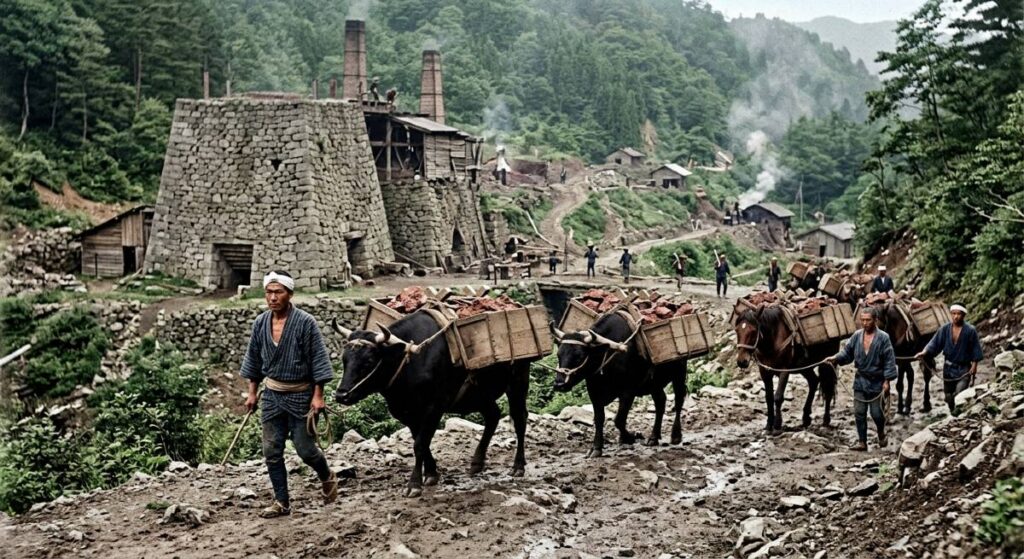
岩手の風景を象徴する「南部曲り家」。L字型のこの家屋は、単なる建築様式ではありません。そこには、人と馬が家族同然に暮らす、この土地特有の深い共生関係が刻まれています。この「馬を愛し、共に生きる」という南部地方の文化が、実は明治時代の日本の近代化を支える巨大なエンジンとなっていたことは、あまり知られていません。今回は、世界遺産・橋野鉄鉱山へと続く歴史の点と線を紐解きます。
The Bond of the Nanbu Magariya: How Horsepower Powered the Modernization of Kamaishi’s Hashino Iron Mine
The “Nanbu Magariya” is an iconic symbol of the Iwate landscape. These L-shaped farmhouses are more than just an architectural style; they represent a deep, symbiotic relationship unique to this land, where humans and horses lived together as family. It is a little-known fact that this culture of “loving and living with horses” in the Nanbu region actually served as a powerful engine supporting Japan’s modernization during the Meiji era. In this article, we unravel the historical “dots and lines” that lead up to the World Heritage site, the Hashino Iron Mine.