南部鉄器:千年の響きを今に伝える鉄の哲学 / Nanbu Tekki: The Philosophy of Iron Echoing Through a Millennium

Nanbu Tekki is more than ironware; it’s a millennium of history forged in fire. From ancient temple bells to modern kitchen essentials, discover the profound functional beauty of Iwate’s iron craftsmanship. A legacy that warms the heart and the table. #VisitIwate #Morioka

鋳物の源流:梵鐘が刻んだ時間

岩手県が誇る伝統工芸「南部鉄器」の歴史を紐解くと、そこには単なる調理器具の枠を超えた、鋳造技術の壮大な系譜が見えてきます。その源流は、平安時代に平泉を拠点として栄えた奥州藤原氏の時代にまで遡ります。当時、仏教文化の隆盛とともに寺院の梵鐘(ぼんしょう)を鋳造する技術がこの地に根付きました。巨大な鐘を均一な厚みで鋳上げ、荘厳な響きを数キロ先まで届けるための精密な鋳造技術。この「熱を操り、鉄を意のままにする」という高度な知性が、のちに南部藩の庇護のもとで茶の湯釜へと昇華し、さらには現代の南部鉄器へと受け継がれていったのです。

The Origins of Casting: Time Carved by Temple Bells

When we unravel the history of Nanbu Tekki, the traditional craft of Iwate, we discover a magnificent lineage of casting technology that transcends the boundaries of mere cookware. Its roots trace back to the Heian period, flourishing under the Oshu Fujiwara clan in Hiraizumi. With the rise of Buddhist culture, the expertise required to cast temple bells (bonsho) took deep root in this region. The precision required to cast massive bells with uniform thickness to ensure a sonorous echo carrying for kilometers—this intellectual mastery of manipulating heat and iron—was later sublimated into tea ceremony kettles under the patronage of the Nanbu clan, eventually evolving into the modern Nanbu Tekki we know today.

鉄の哲学:機能美としての「霰(あられ)」

南部鉄器の代名詞とも言える「霰(あられ)」文様。これは単なる装飾ではありません。鉄器の表面に施された無数の突起は、表面積を増やすことで熱伝導率を高め、保温性を向上させるという、極めて合理的な機能美の結晶です。かつて茶の湯釜として、炭火の熱を効率よく湯に伝えるために磨き上げられたこの技術は、現代においてもIH調理器や直火での調理において、食材に熱を均一に伝えるという重要な役割を果たしています。千年前の鋳物師たちが目指した「熱の調律」は、現代のライフスタイルにおいても、変わらぬ機能として生き続けているのです。

The Philosophy of Iron: The Functional Beauty of “Arare”

The “Arare” (hailstone) pattern, synonymous with Nanbu Tekki, is far from mere decoration. These countless protrusions on the surface increase the surface area, enhancing thermal conductivity and heat retention—a crystallization of highly rational functional beauty. Once honed for tea kettles to efficiently transfer the heat of charcoal fire to the water, this technique continues to play a vital role today, ensuring even heat distribution for modern induction and open-flame cooking. The “tuning of heat” that casting masters sought a millennium ago continues to thrive as an enduring function in today’s lifestyle.

進化の継続:伝統と現代の対話

現在、盛岡と水沢の工房では、古来の砂型鋳造法を守りながらも、国内外のデザイナーとのコラボレーションにより、新たな地平を切り拓いています。鉄という素材は、使い込むほどに表面の酸化皮膜が育ち、持ち主の生活に馴染んでいきます。それは、消費される道具ではなく、世代を超えて受け継がれる「共に生きる道具」です。寺院の鐘として時を告げた鉄は、今、食卓という日常の中で、温かな湯気と共に、私たちの暮らしに静かな豊かさを与え続けています。

長い歴史の中で地層のように「堆積」してきた職人の手の記憶は、目まぐるしい時代の波という容赦ない「侵食」に晒されながらも、決して削り取られることのない堅牢な核を残しました。赤々と燃える炉の熱と、冷たく澄んだ岩手の空気が交差する中で生み出される漆黒の肌には、まるでイーハトーブの深い夜空が閉じ込められているかのようです。南部鉄器から立ち上る白い湯気越しに、松風のように鳴る静かな湯音に耳を澄ませば、私たちは過去から未来へと絶え間なく流れる永遠の時間を、その温かな手のひらの中に確かに感じ取ることができるのです。

■ English Version

The Continuity of Evolution: A Dialogue Between Tradition and Modernity

Today, workshops in Morioka and Mizusawa are pushing into new frontiers through collaborations with domestic and international designers, all while preserving the ancient sand-casting methods. Iron is a material that grows more refined as the surface oxidation layer develops with use, becoming accustomed to the owner’s life. It is not a disposable tool, but a “companion tool” passed down through generations. The iron that once marked time as a temple bell now bestows a quiet richness upon our daily lives, rising with the steam at our dinner tables.

The memories of the artisans’ hands, accumulated and deposited over a long history, have weathered the relentless erosion of changing times, leaving behind an unyielding core. Born from the intersection of the glowing heat of the furnace and the cold, clear air of Iwate, the deep black surface of the ironware seems to encapsulate the profound night sky of Ihatov. As we listen to the gentle, pine-wind-like sound of boiling water through the rising white steam, we can truly feel the eternal flow of time—connecting past and future—resting warmly in the palms of our hands.


■ WordPress設定データ

カテゴリー: 県央 Central Iwate
タグ: 南部鉄器, 伝統工芸, 盛岡, 水沢, イーハトーブ
アクセスポイント(座標): 39.7021, 141.1526

北上の半導体から奥州の南部鉄器へ:岩手が紡ぐ「鉄」の時空を超えた物語 / From Kitakami Semiconductors to Oshu Nanbu Tekki: A Timeless Tale of Iron Forged in Iwate

未来を刻む、北上の「極限」の技術

岩手県北上市は、今や「北のシリコンバレー」として世界的な注目を集めている。超微細な回路を描く半導体製造は、極限まで突き詰められた現代の錬金術である。シリコンという素材を操り、目に見えないほどの緻密さで未来の基盤を築くその姿は、一見すると伝統的な手仕事とは対極にあるように思えるかもしれない。しかし、この精密なモノづくりが、かつてこの地で育まれた鉄の文化と無縁であるはずがない。岩手という土地には、素材の性質を極限まで理解し、それを制御しようとする職人魂が、時代を超えて深く根付いているのだ。

The “Limit” of Technology: Carving the Future in Kitakami

Kitakami City in Iwate Prefecture is now attracting global attention as the “Silicon Valley of the North.” Semiconductor manufacturing, which etches ultra-fine circuits, is a form of modern alchemy pushed to its absolute limits. The way it manipulates silicon to build the foundations of the future with invisible precision might seem, at first glance, to be at the opposite end of the spectrum from traditional handicrafts. However, this precision manufacturing cannot be unrelated to the iron culture nurtured in this region for centuries. In the land of Iwate, the artisan spirit—that which seeks to deeply understand and control the properties of materials—is rooted deeply, transcending the boundaries of time.

奥州水沢:炎と鉄が織りなす「南部鉄器」の哲学

北上の工場から車を走らせれば、ほどなくして奥州市水沢へ辿り着く。ここには、平安時代から続く砂鉄の文化が息づいている。水沢の「南部鉄器」は、単なる工芸品の枠を超え、生活と芸術が溶け合う歴史の証人だ。伊達藩の庇護を受け、かつては鍋や釜、そして茶の湯の道具として洗練されたその技術は、素材の「収縮」や「冷却速度」を計算し尽くすという、ある種の科学的なアプローチを内包している。職人が鋳型に鉄を流し込む瞬間、そこには千年の歴史が凝縮された緊張感が漂う。この「鉄を扱う」という行為の連続性は、北上の半導体工場でウェハーを焼く技術者たちの姿勢と、驚くほど重なり合うものがある。

Oshu Mizusawa: The Philosophy of “Nanbu Tekki” Woven by Fire and Iron

A short drive from the factories of Kitakami brings one to Mizusawa, Oshu City, where the culture of iron sand, dating back to the Heian period, still breathes. The “Nanbu Tekki” of Mizusawa transcends the boundaries of mere crafts; it is a witness to history where life and art converge. Patronized by the Date clan and refined into pots, kettles, and tea ceremony utensils, its techniques contain a certain scientific approach, calculating the “shrinkage” and “cooling rate” of the material. The moment an artisan pours iron into a mold, a tension condensed with a thousand years of history fills the air. This continuity in the act of “handling iron” overlaps surprisingly well with the attitude of the technicians firing wafers in the semiconductor factories of Kitakami.

モノづくりの原点:岩手が示す創造の真価

鉄を溶かし、型に流し込み、冷やす。この単純な工程の中に、職人は数千度の炎と対話し、素材の微細な変化を読み取る。半導体という「見えない回路」を創る科学者も、鉄器という「手触りのある美」を創る職人も、彼らが目指しているのは同じ「極致」である。岩手を訪れることは、単なる観光ではない。未来を創る最先端の技術と、古から受け継がれる職人の魂が交差するこの地で、私たちは「人間の創造力」の真価を目撃することになるのだ。北上と奥州、この二つの拠点は、岩手が誇る「モノづくりの精神」の両輪として、これからも世界を驚かせ続けるだろう。

The Origin of Craftsmanship: The True Value of Creation in Iwate

Melting iron, pouring it into molds, cooling it. In this simple process, the artisan dialogues with fire reaching thousands of degrees and reads the minute changes in the material. Whether it is the scientist creating “invisible circuits” like semiconductors, or the artisan creating “tangible beauty” like ironware, both are aiming for the same “pinnacle.” Visiting Iwate is more than just tourism. In this land where cutting-edge technology that builds the future intersects with the soul of artisans passed down from ancient times, we witness the true value of human creativity. Kitakami and Oshu, as the two wheels of the “spirit of craftsmanship” that Iwate boasts, will surely continue to surprise the world.

📍 アクセス / Access

日本語の交通アクセス:
【電車】JR東北本線「水沢駅」からタクシーで約10~15分(南部鉄器伝統工芸館など南部鉄器関連施設への目安)。
【車】東北自動車道「水沢IC」から約15分。

English access info:
【By Train】From JR Tohoku Main Line

岩手に息づく鉄の魂:釜石の高炉から奥州・南部鉄器へ / The Soul of Iron in Iwate: From Kamaishi to Oshu

炎と職人が生み出す実用美

日本の近代製鉄は釜石の洋式高炉から始まりました。その鉄の記憶は、奥州市に伝わる「南部鉄器」の職人技へと繋がります。約900年の歴史を持つ南部鉄器は、灼熱の炎と職人の手仕事が生み出す実用美の極致。重厚な鉄肌に刻まれた精緻な紋様は、世代を超えて愛されています。釜石の革新と奥州の伝統。岩手で脈々と受け継がれる「鉄の魂」に触れる旅へ出かけましょう。

Functional Beauty Born of Fire and Artisans

Japan’s modern ironmaking began at Kamaishi’s blast furnace. This heritage connects to the master craftsmanship of Nambu Ironware in Oshu City. With a 900-year history, these ironwares are born from roaring flames and artisans’ hands, featuring intricate patterns. Experience the soul of iron passed down through Kamaishi’s innovation and Oshu’s tradition in Iwate.

📍 アクセス / Access

JR水沢江刺駅からタクシーで約10分
Approx. 10 mins by taxi from JR Mizusawa-Esashi Sta.

奥州の雪闇を照らす千年の炎 —— 南部鉄器の錬金術 / The Millennium Flame Illuminating the Snows of Ōshū: The Alchemy of Nambu Ironware

黒き肌に宿る大地の記憶 —— 炎と砂が産み落とす孤独なる洗練

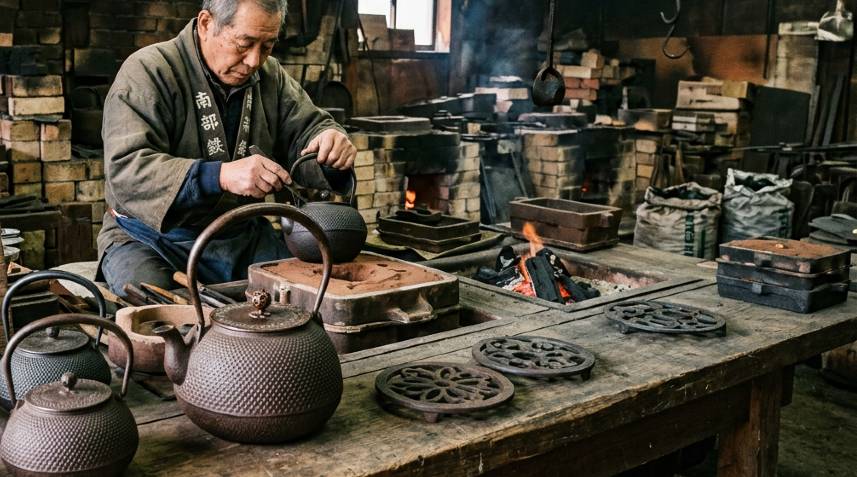
凍てつくような盛岡の冬の朝。北上川から立ち昇る気嵐(けあらし)の向こうに、微かに鉄の匂いを孕んだ煙がたなびいている。重厚な土壁に囲まれた工房の重い扉を開ければ、そこは黒と赤が支配する深淵なる別世界だ。「甑(こしき)」と呼ばれる溶解炉の中で、千五百度を超える炎が轟音を立てて咆哮し、どろりとした黄金色の液状の鉄が、凄まじい火花を散らしながら坩堝へと注がれていく。この荒々しい原初のエネルギーが、やがてあの静謐で漆黒の肌を持つ「南部鉄器」へと生まれ変わるという事実は、何度立ち会っても一つの錬金術を見ているかのような畏怖の念を抱かせる。
南部鉄器の歴史を紐解く時、人はよく江戸時代初期、盛岡藩主・南部信直が京都から釜師・初代小泉仁左衛門を招いたことを起源とする。しかし、この地に根付いた「鉄の記憶」は、決してその四百年ばかりに留まるものではない。寄り道を許されるならば、視線を北上山地という日本最古級の地層へと向けてみたい。古生代の海が隆起して生まれたこの古い山々は、豊かな砂鉄と、極上の木炭となる楢や椚(くぬぎ)の森、そして良質な鋳物砂や粘土という、鋳造に不可欠なすべてを密かに育んできた。平安の昔、ヤマト王権を震撼させた蝦夷の英雄・アテルイの剣や、平泉に黄金の理想郷を築き上げた奥州藤原氏の武力を支えたのも、この大地がもたらす鉄であった。盛岡の職人たちが日々向き合っている炎は、一千年の長きにわたり奥州の雪闇を照らし続けてきた、誇り高き蝦夷たちの命の残り火なのだ。
興味深いのは、辺境の武骨な武将たちが、なぜこれほどまでに洗練された「茶の湯の釜」を求めたかである。雪に閉ざされる長く厳しい冬にあって、彼らは凍てつく外界から切り離された茶室という仄暗い小宇宙に、強烈な美と精神の自由を見出したのではないだろうか。職人たちは、無数の点で構成される「あられ(霰)模様」を、砂で作られた鋳型の内側に一つ一つ、気の遠くなるような手作業で押していく。これは単なる装飾ではなく、表面積を増やして熱効率を高めるという極めて理に適った造形でありながら、同時に、奥州に降りしきる無音の雪そのものを鉄の肌に刻み込んでいるようにも思える。
溶けた鉄が型に注がれる刹那、職人は一切の言葉を発しない。ただ、土と炎と鉄の機嫌を五感のすべてで読み取るのみだ。完成した鉄瓶に湯を沸かし、チンチンという「松風(まつかぜ)」の音に耳を傾けてみてほしい。その黒く硬質な肌の奥には、悠久の地層が孕む大地の記憶と、奥州の鋳物師たちが千年の炎の果てに行き着いた、冷徹なまでの美意識が息づいている。それは、使う者の掌の中で静かに呼吸を続ける、生きた芸術なのである。

The Memory of the Earth Dwelling in Black Iron: The Solitary Refinement Forged by Fire and Sand

On a freezing winter morning in Morioka, beyond the sea smoke rising from the Kitakami River, a wisp of smoke carrying the faint scent of iron drifts through the frosty air. Opening the heavy wooden door of an earthen-walled workshop reveals a profound, otherworldly realm dominated by black and red. Inside a melting furnace known as a “koshiki,” flames exceeding 1,500 degrees Celsius roar with primordial ferocity, while molten iron—a sluggish, golden liquid—is poured into crucibles in a magnificent shower of sparks. The realization that this violent, raw energy will eventually be reborn as the tranquil, pitch-black “Nambu Tekki” (Nambu ironware) never fails to evoke the awe of witnessing true alchemy.
When speaking of the origins of Nambu ironware, historians often point to the early Edo period (17th century), when the lord of the Morioka Domain, Nambu Nobunao, invited the master kettle-maker Koizumi Nizaemon from Kyoto. However, the “memory of iron” rooted in this land extends far beyond a mere four centuries. If I may digress, let us cast our gaze toward the Kitakami Mountains, a geological formation harboring some of Japan’s oldest strata. Born from the uplifting of Paleozoic seas, these ancient mountains secretly nurtured the perfect trinity for metallurgy: abundant iron sand, deep forests of oak and sawtooth oak yielding superlative charcoal, and high-quality casting sand and clay. In the Heian period, it was the iron yielded by this very earth that forged the swords of Aterui, the heroic chieftain of the Emishi people who shook the Yamato court, and later sustained the military might of the Ōshū Fujiwara clan, architects of a golden utopia in Hiraizumi. The flames that Morioka’s artisans tend to daily are, in essence, the lingering embers of a proud, thousand-year fire that has continuously illuminated the snowy darkness of Ōshū.
It is profoundly intriguing why rugged warlords of the northern frontier sought such highly refined tea ceremony kettles. Perhaps, during the long, unforgiving winters buried in snow, they discovered a fierce beauty and spiritual freedom in the dimly lit microcosm of a tea room—a sanctuary entirely severed from the frozen world outside. Within the darkened workshops, artisans engage in the mind-boggling manual labor of stamping the “arare” (hailstone) pattern, consisting of thousands of tiny raised dots, one by one into the interior of the sand mold. While this serves a highly rational purpose—increasing the surface area to improve thermal efficiency—it simultaneously feels as though they are engraving the silent, falling snows of Ōshū directly into the iron’s skin.
In the fleeting moment when the molten iron is poured into the mold, the artisan utters not a single word. He relies solely on his five senses to read the temperament of the earth, the fire, and the metal. I invite you to boil water in a completed iron kettle and listen to the murmuring sound of the boiling water, poetically called “matsukaze” (the sound of wind through pine trees). In that delicate resonance, you will hear the echo of a thousand-year flame that has quietly, yet tenaciously, illuminated the snowy darkness of Iwate’s history. It is not just a tool; it is a resonant vessel of the Tohoku soul.

鉄の系譜:盛岡の南部鉄器から釜石の近代製鉄への架け橋 / The Iron Lineage: From Morioka’s Nambu Tekki to the Dawn of Modern Steelmaking in Kamaishi

岩手の歴史を語る上で、決して欠かすことのできない「鉄」。それは単なる資源ではなく、盛岡の伝統工芸「南部鉄器」の繊細な美意識と、釜石の「橋野鉄鉱山」が切り拓いた近代産業の力強さという、二つの大きな潮流を繋ぐ物語です。岩手が歩んできた鉄の歴史を紐解くことは、日本のものづくりの精神を探求する旅でもあります。

The Iron Lineage: From Morioka’s Nambu Tekki to the Dawn of Modern Steelmaking in Kamaishi

Iron is inseparable from the history of Iwate. It is not merely a resource, but a narrative that connects two major currents: the delicate aesthetic of Morioka’s traditional craftsmanship in “Nambu Tekki” and the robust industrial strength pioneered at Kamaishi’s “Hashino Iron Mine.” To unravel the history of iron in Iwate is to embark on a journey that explores the very soul of Japanese manufacturing spirit.