岩手の風土が物語る、人と馬の絆
岩手県北上市、北上川のほとりに佇む「みちのく民俗村」。ここに移築された茅葺き屋根の古民家群を歩くと、かつてこの地で人間と馬が「一つの屋根の下」で分かち合っていた深い絆の気配に触れることができる。それは単なる住居の展示ではなく、岩手の厳しい風土が育んだ、命の共生という物語の断片である。
The Bonds of Man and Horse in the Iwate Landscape
Standing along the Kitakami River in Kitakami City, Iwate, the “Michinoku Folklore Village” offers more than just a collection of relocated, thatched-roof houses. Walking through these structures, one can feel the lingering spirit of an era when humans and horses shared the same roof. It is not merely an architectural exhibit; it is a fragment of the narrative of symbiosis that defined life in the harsh Iwate landscape.
南部曲り家:熱源としてのパートナー
注目すべきは、「南部曲り家(なんぶまがりや)」という建築構造である。L字型に折れ曲がったこの建物は、居住空間と厩(うまや)が直結している。厳しい冬の寒さの中、馬は家族同様に慈しまれ、その体温は家全体を温める熱源でもあった。この密接な距離感こそが、岩手の農耕文化の根幹を成していた。馬は単なる使役動物ではなく、生活を共に支える「家族」そのものだったのである。
The Nanbu Magariya: A Partner as a Source of Warmth
The focus here is the “Nanbu Magariya,” an L-shaped architectural marvel where living quarters were directly connected to the stable. During the brutal winters, horses were cherished like family members, and their body heat served as a vital source of warmth for the entire household. This intimate proximity formed the very foundation of Iwate’s agricultural culture. The horse was not merely a beast of burden, but a “family member” who supported their daily existence.
蒼前信仰とチャグチャグ馬コ:鈴の音が繋ぐ記憶
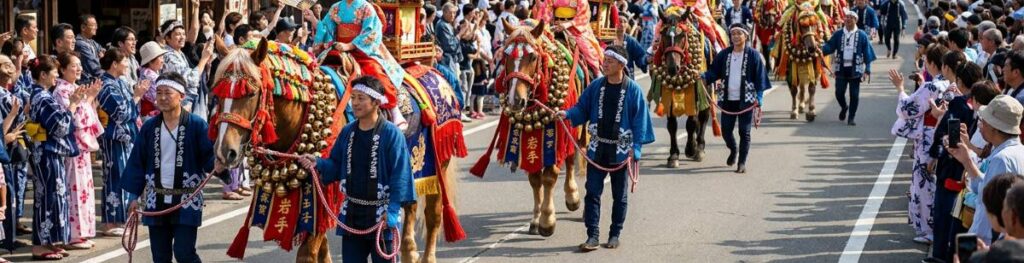
この馬への深い敬意は、農耕の記憶から「神の使い」という信仰へと昇華される。滝沢市に伝わる「蒼前(そうぜん)信仰」は、馬の健康と安全を守る神への祈りである。かつて農作業のパートナーであった馬たちは、歴史の彼方へ消えゆく存在ではない。毎年6月に響く「チャグチャグ馬コ」の鈴の音は、その記憶を現在に繋ぎ止めるための儀式なのだ。色鮮やかな装束を纏い、滝沢から盛岡までを行進する馬たちの姿は、この地に根付いた感謝の念を体現している。
Sosen Faith and Chagu Chagu Umako: Bells Linking Memories
This deep reverence for the horse transcended practical labor, elevating the animal to the status of a “divine messenger.” The “Sosen Faith” preserved in Takizawa City is a prayer to the deities who protect the health and safety of horses. The horses that were once partners in labor are not fading into the abyss of history. The sound of the bells during the “Chagu Chagu Umako” festival, held every June, is a ritual that anchors that memory firmly in the present. The sight of these horses, adorned in colorful traditional costumes and parading from Takizawa to Morioka, embodies the gratitude deeply rooted in this land.
歴史のパズルを解く旅
みちのく民俗村で見た静かな厩の記憶と、チャグチャグ馬コの動的な鈴の音は、岩手の歴史という巨大なパズルのピースとして互いに共鳴している。歴史を紐解くことは、過去を回顧することではない。岩手の馬文化に触れることは、人間が自然や動物といかにして共に生きるかという、現代にも通じる普遍的な問いへの答えを探す旅なのである。
A Journey to Solve the Puzzle of History
The silent memory of the stables seen in the Michinoku Folklore Village and the dynamic, rhythmic ringing of the Chagu Chagu Umako bells resonate together as essential pieces of the vast, intricate puzzle of Iwate’s history. Unraveling history is not merely about looking back. Engaging with the horse culture of Iwate is a journey to find answers to universal questions that remain relevant today: how can humanity live in harmony with nature and animals?
📍 アクセス / Access
JR盛岡駅から岩手県交通バス「滝沢駅前」行きまたは「巣子」行きで「蒼前神社前」下車。車の場合は東北自動車道盛岡ICから約10分。 / From JR Morioka Station, take Iwate Kotsu bus bound for “Takizawa Station” or “Sugo” and get off at