未来を刻む、北上の「極限」の技術
岩手県北上市は、今や「北のシリコンバレー」として世界的な注目を集めている。超微細な回路を描く半導体製造は、極限まで突き詰められた現代の錬金術である。シリコンという素材を操り、目に見えないほどの緻密さで未来の基盤を築くその姿は、一見すると伝統的な手仕事とは対極にあるように思えるかもしれない。しかし、この精密なモノづくりが、かつてこの地で育まれた鉄の文化と無縁であるはずがない。岩手という土地には、素材の性質を極限まで理解し、それを制御しようとする職人魂が、時代を超えて深く根付いているのだ。
The “Limit” of Technology: Carving the Future in Kitakami
Kitakami City in Iwate Prefecture is now attracting global attention as the “Silicon Valley of the North.” Semiconductor manufacturing, which etches ultra-fine circuits, is a form of modern alchemy pushed to its absolute limits. The way it manipulates silicon to build the foundations of the future with invisible precision might seem, at first glance, to be at the opposite end of the spectrum from traditional handicrafts. However, this precision manufacturing cannot be unrelated to the iron culture nurtured in this region for centuries. In the land of Iwate, the artisan spirit—that which seeks to deeply understand and control the properties of materials—is rooted deeply, transcending the boundaries of time.
奥州水沢:炎と鉄が織りなす「南部鉄器」の哲学
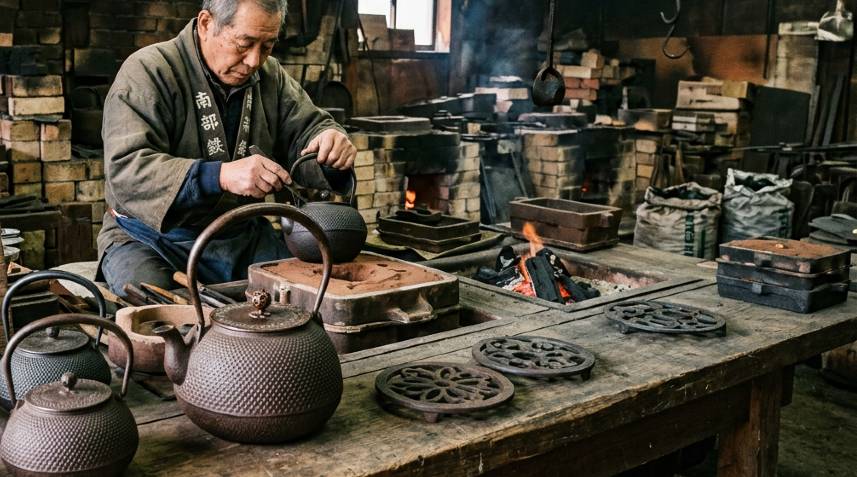
北上の工場から車を走らせれば、ほどなくして奥州市水沢へ辿り着く。ここには、平安時代から続く砂鉄の文化が息づいている。水沢の「南部鉄器」は、単なる工芸品の枠を超え、生活と芸術が溶け合う歴史の証人だ。伊達藩の庇護を受け、かつては鍋や釜、そして茶の湯の道具として洗練されたその技術は、素材の「収縮」や「冷却速度」を計算し尽くすという、ある種の科学的なアプローチを内包している。職人が鋳型に鉄を流し込む瞬間、そこには千年の歴史が凝縮された緊張感が漂う。この「鉄を扱う」という行為の連続性は、北上の半導体工場でウェハーを焼く技術者たちの姿勢と、驚くほど重なり合うものがある。
Oshu Mizusawa: The Philosophy of “Nanbu Tekki” Woven by Fire and Iron
A short drive from the factories of Kitakami brings one to Mizusawa, Oshu City, where the culture of iron sand, dating back to the Heian period, still breathes. The “Nanbu Tekki” of Mizusawa transcends the boundaries of mere crafts; it is a witness to history where life and art converge. Patronized by the Date clan and refined into pots, kettles, and tea ceremony utensils, its techniques contain a certain scientific approach, calculating the “shrinkage” and “cooling rate” of the material. The moment an artisan pours iron into a mold, a tension condensed with a thousand years of history fills the air. This continuity in the act of “handling iron” overlaps surprisingly well with the attitude of the technicians firing wafers in the semiconductor factories of Kitakami.
モノづくりの原点:岩手が示す創造の真価
鉄を溶かし、型に流し込み、冷やす。この単純な工程の中に、職人は数千度の炎と対話し、素材の微細な変化を読み取る。半導体という「見えない回路」を創る科学者も、鉄器という「手触りのある美」を創る職人も、彼らが目指しているのは同じ「極致」である。岩手を訪れることは、単なる観光ではない。未来を創る最先端の技術と、古から受け継がれる職人の魂が交差するこの地で、私たちは「人間の創造力」の真価を目撃することになるのだ。北上と奥州、この二つの拠点は、岩手が誇る「モノづくりの精神」の両輪として、これからも世界を驚かせ続けるだろう。
The Origin of Craftsmanship: The True Value of Creation in Iwate
Melting iron, pouring it into molds, cooling it. In this simple process, the artisan dialogues with fire reaching thousands of degrees and reads the minute changes in the material. Whether it is the scientist creating “invisible circuits” like semiconductors, or the artisan creating “tangible beauty” like ironware, both are aiming for the same “pinnacle.” Visiting Iwate is more than just tourism. In this land where cutting-edge technology that builds the future intersects with the soul of artisans passed down from ancient times, we witness the true value of human creativity. Kitakami and Oshu, as the two wheels of the “spirit of craftsmanship” that Iwate boasts, will surely continue to surprise the world.
📍 アクセス / Access
日本語の交通アクセス:
【電車】JR東北本線「水沢駅」からタクシーで約10~15分(南部鉄器伝統工芸館など南部鉄器関連施設への目安)。
【車】東北自動車道「水沢IC」から約15分。
English access info:
【By Train】From JR Tohoku Main Line