岩手の地層が語る悠久の記憶:北上の里芋から久慈の琥珀へ / The Eternal Memory of Iwate’s Strata: From Kitakami’s Taro to Kuji’s Amber

岩手の土壌が内包する二つの時間軸

岩手という土地は、単なる地理的な広がりではない。それは数十億年にわたる地球の記憶が重なり合った、巨大な地質学的な図書館である。北上盆地の肥沃な土壌が育む食文化と、久慈の地層に眠る白亜紀の遺産。これらは一見無関係に見えて、実は「岩手の土」という同じ文脈で結ばれている。我々が享受する現在の恵みと、地層深くで静止した太古の記憶。これら二つの視点を行き来することは、岩手の本質的な豊かさを理解するための鍵となる。

Two Timelines Encapsulated in Iwate’s Soil

Iwate is more than just a geographical location; it is a colossal geological library where memories of the Earth, spanning billions of years, are layered upon one another. The culinary culture nurtured by the fertile soil of the Kitakami Basin and the Cretaceous legacy sleeping within the strata of Kuji may seem unrelated at first glance, yet they are intrinsically linked by the very context of “Iwate’s soil.” Moving between these two perspectives—the bounty we enjoy today and the ancient memories frozen deep within the strata—is the key to understanding the essential richness of Iwate.

北上の恵み:二子さといもが繋ぐ農耕の歴史

北上川の恩恵を受ける北上市二子町は、古くから「二子さといも」の産地として知られている。この里芋は、単なる農作物ではない。その粘り気と独特の風味は、この地特有の土壌と気候が長い年月をかけて作り上げた「地質の恵み」である。地域ブランドとして確立された「北上コロッケ」の主役として、この里芋は現代の食卓に彩りを与えるが、その根底には、北上川が運んできた堆積物と、先人たちが守り続けてきた農耕の歴史という、地表の記憶が刻まれている。土壌の質が作物の個性を決定づけるという事実は、我々が大地と共に生きていることの証明に他ならない。

The Bounty of Kitakami: The Agricultural History Linked by “Futago Satoimo”

Futago-machi in Kitakami City, blessed by the Kitakami River, has long been renowned for the “Futago Satoimo” (taro). This taro is far more than a mere agricultural product. Its characteristic stickiness and unique flavor are a “blessing of the geology,” crafted over eons by the specific soil and climate of this region. As the centerpiece of the regional brand “Kitakami Croquette,” this taro brightens modern dining tables. Yet, at its core, it embodies the memory of the surface: the sediments carried by the Kitakami River and the history of cultivation preserved by generations of ancestors. The fact that the quality of the soil determines the character of the crops is nothing less than proof that we live in harmony with the land.

久慈の琥珀:白亜紀から届いた静止した時間

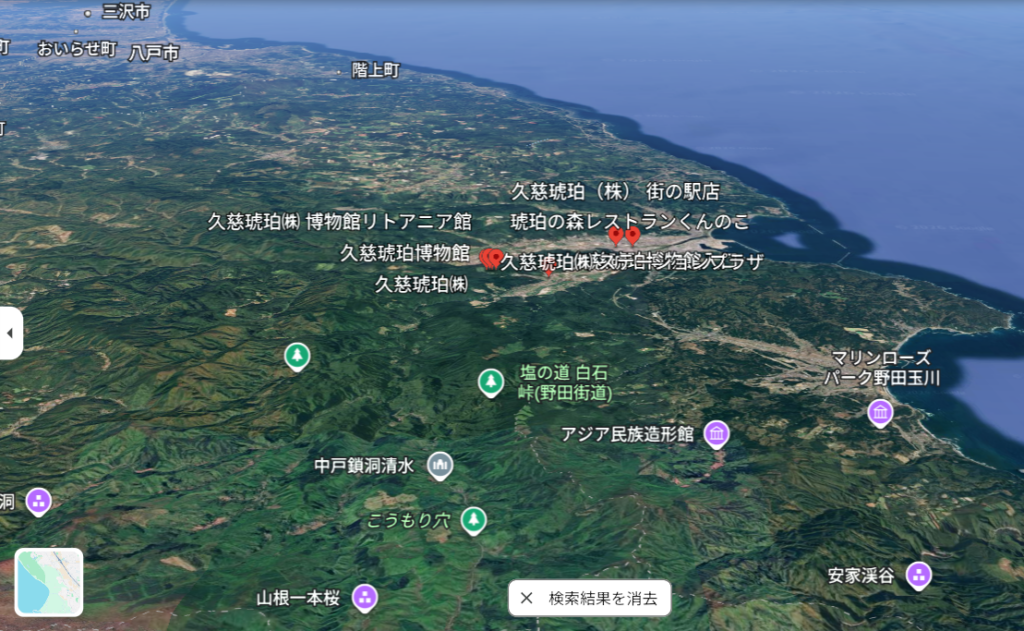
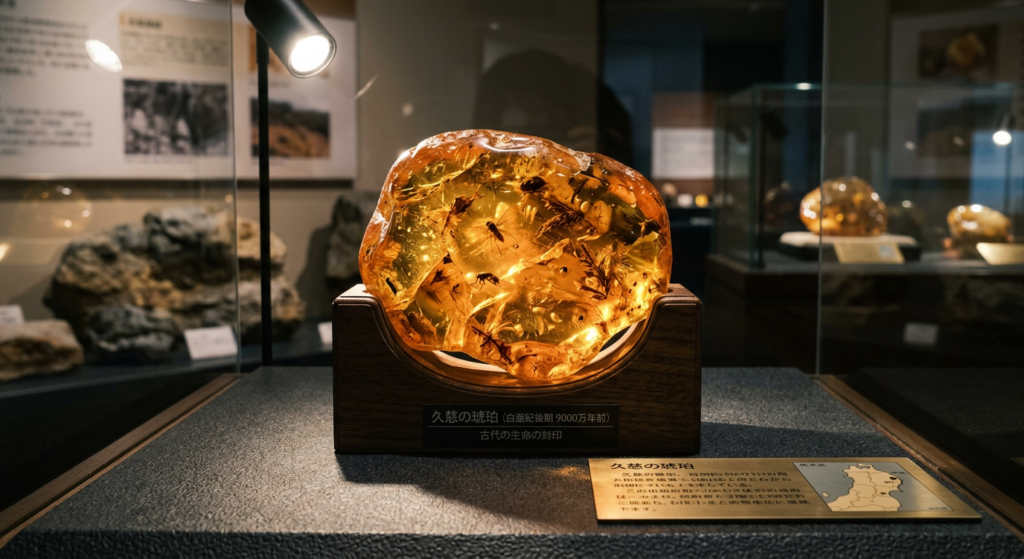
一方、県北の久慈市に目を向けると、そこには時間軸を大きく遡った「土中の宝」が存在する。約8500万年前の白亜紀、この地は恐竜たちが闊歩する緑豊かな森であった。久慈の地層から発見される琥珀は、当時の植物の樹脂が長い年月を経て宝石へと昇華したものであり、その中には太古の昆虫が閉じ込められていることもある。さらに、この地層からは恐竜の化石も発掘されており、岩手の土は、私たちが食べる作物だけでなく、地球の創生期の記憶をも抱き続けているのである。久慈の琥珀は、いわば地球の呼吸が止まった瞬間の「静止した時間」そのものである。

Kuji Amber: Frozen Time Arriving from the Cretaceous Period

Turning our gaze to Kuji City in the north, we encounter “treasures in the earth” that reach back to a vastly different timeline. Roughly 85 million years ago, during the Cretaceous period, this land was a lush forest where dinosaurs roamed. The amber discovered in Kuji’s strata is the result of ancient plant resin transforming into gemstones over vast eras, sometimes trapping prehistoric insects within. Furthermore, dinosaur fossils unearthed from these same strata reveal that Iwate’s soil holds not only the food we consume today but also the memories of our planet’s genesis. Kuji’s amber is, in a sense, “frozen time”—capturing the very moment the Earth’s breath paused.

土壌が描く岩手の輪郭

北上の里芋が現在の生命を養う「生きた土」であるならば、久慈の琥珀は遠い過去を語る「記憶の土」である。岩手という土地を歩くことは、この豊かな土層を横断する旅に他ならない。私たちは、日々の糧を享受する時、足元の土壌が持つ二つの顔――恵みと記憶――に想いを馳せるべきではないだろうか。岩手の地層には、まだ解き明かされていない物語が幾重にも重なっている。それを紐解くことは、我々自身のルーツを知る行為に繋がるのである。

The Silhouette of Iwate Drawn by the Soil

If the taro of Kitakami is “living soil” that sustains current life, then the amber of Kuji is “memory soil” that speaks of the distant past. Walking through the land of Iwate is nothing less than a journey across these rich strata. As we enjoy our daily sustenance, perhaps we should reflect upon the two faces of the soil beneath our feet: that of bounty and that of memory. Within the strata of Iwate, countless untold stories are layered upon one another. Unraveling them is an act that leads us to understand our own roots.

📍 アクセス / Access

日本語:
【電車・バス】JR八戸線・三陸鉄道リアス線「久慈駅」から岩手県北バス「琥珀博物館」行きで約10分、「琥珀博物館」下車すぐ。
【車】八戸自動車道「九戸IC」から国道340号経由で約40分。

English:
By Train/Bus: From Kuji Station (JR Hachinohe Line / Sanriku Railway Rias Line), take an Iwate Kenpoku Bus bound for “Kohaku Hakubutsukan (Amber Museum)” for about 10 minutes, then get off at “Kohaku Hakubutsukan” and it is just a short walk.
By Car: About 40 minutes from Kunohe IC on the Hachinohe Expressway via National Route 340.

カテゴリー: 【県北 Northern Iwate】
タグ: [久慈, 琥珀, 白亜紀, 堆積と侵食, タイムカプセル]
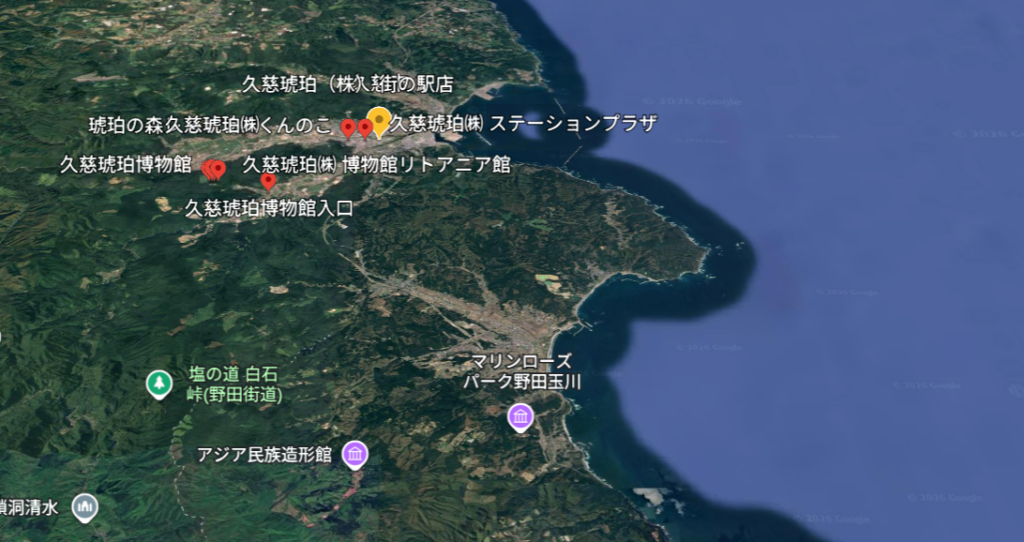
アクセスポイント(座標): 39.1764, 141.7611
 

9000万年の時を封印した久慈の琥珀と恐竜の記憶 / The Memory of Amber and Dinosaurs: 90 Million Years Sealed in Kuji

Discover the 90-million-year-old secrets of Kuji, where amber and dinosaur fossils bridge the gap between ancient Earth and the present. A journey through deep time, inspired by Kenji Miyazawa’s geological wonder. #VisitIwate #Morioka

宮沢賢治が見た地層の記憶

岩手という土地は、宮沢賢治が愛した鉱物や地質学の知的好奇心を刺激する宝庫である。詩人であり農業指導者でもあった賢治は、大地を単なる土壌ではなく、時間の層が積み重なった「歴史の書物」として読んでいた。その視点を借りて岩手県北部の久慈を眺めれば、そこには9000万年前、白亜紀の息吹が現代と交差する特異な空間が広がっている。

The Geological Memory of Kenji Miyazawa

Iwate is a treasure trove for the geological curiosity that Kenji Miyazawa, the renowned poet and agronomist, held so dear. Miyazawa did not view the land simply as soil; he read it as a “book of history,” with layers of time stacked upon one another. Through his lens, one can perceive Kuji, in northern Iwate, as a unique space where the breath of the 90-million-year-old Cretaceous period intersects with the present day.

琥珀:地球が閉じ込めたタイムカプセル

久慈の地層は、日本国内でも極めて稀な琥珀の一大産地として知られている。琥珀とは、太古の樹木の樹脂が化石化したものだ。久慈の琥珀は、9000万年前の樹液が地中で熱と圧力を受け、硬質な宝石へと変貌を遂げた産物である。顕微鏡を覗けば、そこには古代の空気や昆虫が閉じ込められていることもある。それは単なる装飾品ではなく、地球の記憶を物理的に保存した「タイムカプセル」なのである。

Amber: A Time Capsule Sealed by the Earth

The strata of Kuji are known as one of the few major amber production areas in Japan. Amber is the fossilized resin of ancient trees. The amber of Kuji is the result of resin from 90 million years ago subjected to heat and pressure deep underground, transforming into a hard gemstone. Under a microscope, one might find ancient air or insects trapped within. These are not merely ornaments; they are “time capsules” that physically preserve the memories of Earth.

恐竜たちが歩いた湿地帯の残照

さらに、久慈の地層からは恐竜化石も発見されている。かつてこの地は、恐竜たちが闊歩する湿地帯や河川の氾濫原であった。発掘された歯や骨の化石は、この地がかつて多様な生物が共存する豊かな生態系であったことを物語る。賢治が『銀河鉄道の夜』で描いたような宇宙的な時間感覚を、久慈の地層に触れることで、我々は足元の土壌において体験することができる。

The Afterglow of the Dinosaur Age

Furthermore, dinosaur fossils have been excavated from the Kuji strata. This region was once a wetland and floodplain where dinosaurs roamed. The fossilized teeth and bones discovered here tell the story of a rich ecosystem where diverse life forms once coexisted. By engaging with the strata of Kuji, we can experience the cosmic sense of time that Miyazawa depicted in “Night on the Galactic Railroad”—not in the stars, but right here in the soil beneath our feet.

永遠を巡る巡礼

久慈という場所は、観光地としての消費対象ではなく、地球史という壮大な物語の一部を体感するための巡礼地である。賢治がかつて地層に感じた「永遠」という概念は、久慈の琥珀と化石の中に今もなお静かに眠っている。

何千万年もの時をかけて深く堆積した生命の記憶は、荒々しい太平洋の波風による絶え間ない侵食と、大地に向き合うひたむきな人々の手によって、いま再び太陽の下へと引き出される。地層に沈みゆくものと、削り出され姿を現すもの。その静と動の境界線に立つとき、私たちは自らもまた、悠久の時の流れに漂う一粒の砂に過ぎないことを悟るのだ。三陸の海鳴りを聴きながら、手の中の琥珀が放つ透き通った光を見つめれば、そこにはただの冷たい石ではなく、確かに脈打つ地球の鼓動が息づいている。

■ English Version

A Pilgrimage to Eternity

Kuji is not merely a destination for tourism; it is a pilgrimage site for experiencing a chapter of the grand narrative of Earth’s history. The concept of “eternity” that Miyazawa Kenji once perceived in the strata still sleeps quietly within the amber and fossils of Kuji.

The memories of ancient life, deeply accumulated and deposited over tens of millions of years, are now brought back into the sun’s embrace through relentless erosion by the rough Pacific winds and waves, alongside the earnest hands of those who face the earth. As we stand on the boundary between what is forever etched into the strata and what is carved out to reveal itself, we realize that we, too, are but singular grains of sand drifting within the eternal river of time. Listening to the roaring sea of Sanriku and gazing into the translucent light radiating from the amber in our hands, we do not feel a cold stone, but unmistakably hear the beating heart of the Earth.


■ WordPress設定データ

カテゴリー: 【県北 Northern Iwate】
タグ: 久慈市, 琥珀, 宮沢賢治, 地層, 地球史
アクセスポイント(座標): 40.1694, 141.7375 (久慈琥珀博物館付近)

「石っこ賢さん」の眼差しが見た永遠――久慈の琥珀と白亜紀の記憶 / The Eternal Gaze of “Ishi-kko Ken-san”: Kuji Amber and the Memories of the Cretaceous

石の言葉を聴く――宮沢賢治と地質学への情熱

岩手県が誇る詩人、宮沢賢治は、幼少期から「石っこ賢さん」と呼ばれ、鉱物や地層に対して並々ならぬ愛情を注いでいた。彼にとって石は単なる無機物ではなく、地球の壮大な歴史を刻んだ「記憶の媒体」であった。賢治が地質学に求めたものは、単なる科学的知識を超えた、宇宙的な時間軸との対話である。その眼差しは、岩手の大地が秘める太古の真実を見透かそうとしていた。

Listening to the Language of Stones: Kenji Miyazawa and the Passion for Geology

Kenji Miyazawa, the poet who remains the pride of Iwate Prefecture, was affectionately known as “Ishi-kko Ken-san” (Ken the Stone-lover) from his childhood. He possessed an extraordinary affection for minerals and geological strata. To him, stones were not merely inorganic matter, but “media of memory” that recorded the grand history of the Earth. What Kenji sought in geology was a dialogue with a cosmic timeline, transcending mere scientific knowledge. His gaze sought to pierce through to the ancient truths concealed within the land of Iwate.

8500万年のタイムカプセル――久慈の琥珀が語るもの

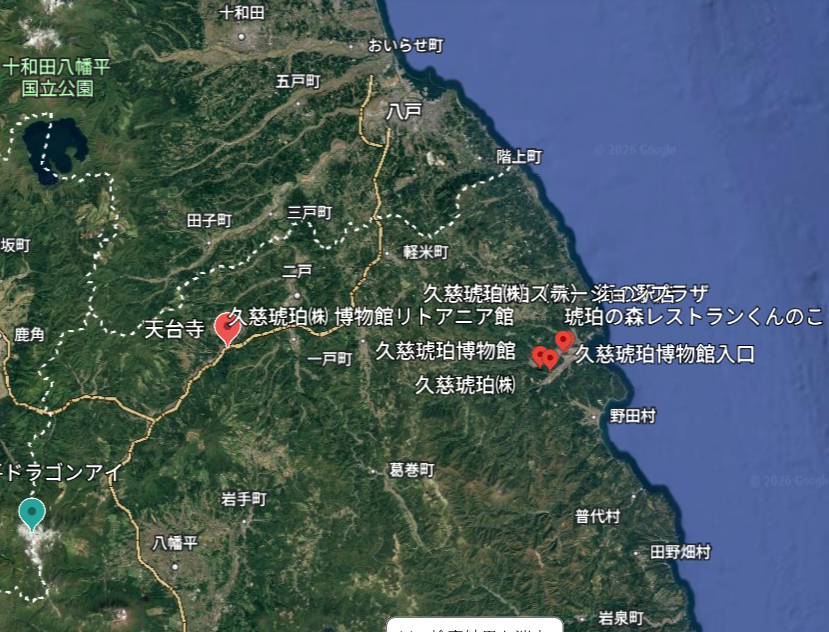
岩手県久慈市。この地は、日本有数の琥珀の産地として知られる。久慈の琥珀は、約8500万年前、白亜紀後期の樹液が長い年月をかけて化石化したものだ。賢治が愛した鉱物たちが、この地では「生命の息吹」をそのまま封じ込めている。琥珀の中に閉じ込められた昆虫や植物の断片は、当時の生態系を鮮明に現代へと伝えるタイムカプセルである。それは、賢治が詩の中で描こうとした「過去と現在が交錯する世界」が、この地の土壌に実在していることを証明している。

An 85-Million-Year Time Capsule: What Kuji Amber Reveals

Kuji City in Iwate Prefecture is renowned as one of Japan’s premier locations for amber. Kuji amber is fossilized tree resin from the Late Cretaceous period, approximately 85 million years ago. The minerals that Kenji so cherished have, in this land, sealed the very “breath of life.” The fragments of insects and plants trapped within the amber serve as time capsules, vividly conveying the ecosystem of that era to the present day. This stands as proof that the “world where the past and present intersect,” which Kenji sought to depict in his poetry, truly exists within the soil of this region.

地層に刻まれた白亜紀の記憶――恐竜と琥珀の共存

近年、久慈層群からは琥珀だけでなく、貴重な恐竜の化石が次々と発見されている。かつてこの地は、豊かな植物が生い茂り、恐竜たちが闊歩する湿地帯であった。琥珀という「宝石」と、恐竜という「巨獣」の化石が同じ地層から見つかることは、この地が白亜紀の生命の営みを多角的に保存していることを示唆する。賢治が地質調査で歩いた岩手の山野には、私たちが想像するよりも遥かに濃密な、太古の生命の物語が埋もれているのである。

Cretaceous Memories Engraved in the Strata: The Coexistence of Dinosaurs and Amber

In recent years, not only amber but also precious dinosaur fossils have been discovered one after another from the Kuji Group. This land was once a wetland, lush with vegetation, where dinosaurs roamed. The fact that the “gemstone” of amber and the fossils of “giant beasts” (dinosaurs) are found in the same strata suggests that this region preserves the activities of Cretaceous life from multiple perspectives. Beneath the mountains and fields of Iwate, where Kenji once walked during his geological surveys, lies a story of ancient life far denser than we could ever imagine.

岩手の大地を読み解く――賢治の遺志を継ぐ探求

久慈の琥珀と白亜紀の化石は、私たちに「時間とは何か」を問いかける。賢治が石を見つめることで得た知的好奇心は、現代の私たちがこの地の地層を観察する際にも不可欠な姿勢である。岩手の風景を単なる観光地としてではなく、地球の歴史が重層的に積み重なった「歴史の書物」として読み解くこと。それこそが、「石っこ賢さん」が遺した、もっとも深遠な遺産なのかもしれない。

Deciphering the Land of Iwate: A Quest Inheriting Kenji’s Will

Kuji’s amber and Cretaceous fossils challenge us with the question, “What is time?” The intellectual curiosity Kenji gained by gazing at stones is an essential mindset for us today as we observe the strata of this region. To read the landscapes of Iwate not merely as tourist destinations, but as a “book of history” where the history of the Earth is layered and accumulated—that, perhaps, is the most profound legacy left behind by “Ishikko Ken-san” (Kenji the Pebble Child). By learning to see the eternal universe within a single pebble, we inherit his vision—a way of life that seeks to harmonize our brief existence with the majestic, slow-moving narrative of the stars and the soil. This is the true “Ihatov” of the mind, where science and poetry intersect to illuminate the path toward our future.

海と地底の時空旅:久慈の海女と琥珀採掘 / Time Travel in Kuji: Ama Divers and Amber

青い海から恐竜時代が眠る地底へ

荒波のなか笑顔でウニを獲る「北限の海女」。素潜りの息遣いと伝統の海を体感した後は、地底へ向かいましょう。久慈は日本最大の琥珀産地です。白亜紀の地層を自らの手で削れば、恐竜時代の記憶を封じ込めた黄金色の化石が現れます。伝統が息づく海辺から、8500万年前の森が眠る地底へ。岩手・久慈でしか味わえない、究極のタイムスリップに出かけませんか。

From the Blue Sea to the Dinosaur Era

Witness the traditional free-diving of the “Ama” (northernmost divers), harvesting sea urchins with resilient smiles amidst the crashing waves. After immersing yourself in the rhythmic breath of the ancient sea, journey beneath the earth. Kuji stands as Japan’s premier amber-producing region. Here, as you personally excavate the Cretaceous strata, you may uncover golden fossils—pristine vessels preserving the memories of the dinosaur era. From a coast where tradition breathes to the subterranean realm where an 85-million-year-old forest lies in silence—will you join us on the ultimate temporal odyssey found only in Kuji, Iwate?

彫刻家・高村光太郎と久慈の太古:岩手が刻む「永遠」への旅 / Sculptor Kotaro Takamura and the Prehistoric Kuji: A Journey into Iwate’s Eternal Time

岩手県は、ただ美しい景色が広がるだけの場所ではありません。そこには、詩人であり彫刻家であった高村光太郎が追い求めた「真実の形」と、久慈の大地が数千万年の時を超えて提示する「生命の断片」が同居しています。人の手による芸術と、地球が自ら彫り上げた歴史。この二つの視点を行き来することで、岩手の旅は単なる観光を超え、時空を旅する深い思索へと変わります。

Sculptor Kotaro Takamura and the Prehistoric Kuji: A Journey into Iwate’s Eternal Time

Iwate is more than just a place of scenic beauty. It is a land where the “form of truth” pursued by the poet and sculptor Kotaro Takamura coexists with the “fragments of life” presented by the land of Kuji across tens of millions of years.

Art created by human hands and history carved by the Earth itself—by moving between these two perspectives, a journey through Iwate transcends mere sightseeing and transforms into deep contemplation, traveling through time and space.