Beyond the Milky Way of Kenji Miyazawa: A Journey to Hashino
Beyond the Milky Way of Kenji Miyazawa: A Journey to Hashino
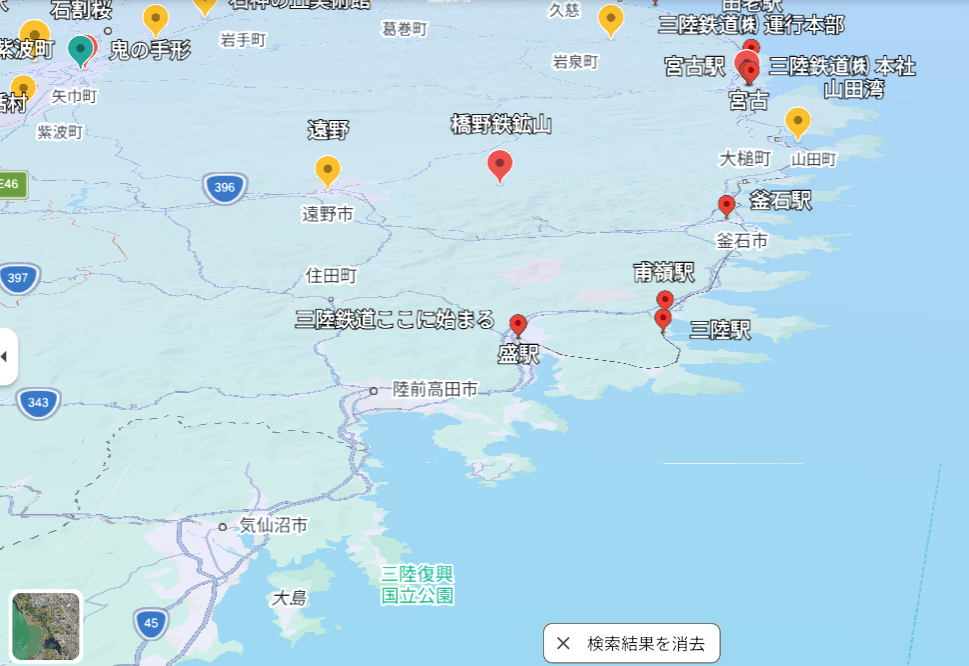
The Kamaishi Line, evocative of the celestial landscapes in Kenji Miyazawa’s “Night on the Galactic Railroad,” weaves through the verdant mountains of Tono, serving as a profound corridor that travels through both time and space. As the train moves from the mystical realm of ancient folklore toward the sea-scented port of Kamaishi, it reveals a hidden, primal landscape at its heart: the Hashino Iron Mining and Smelting Site.
Nestled silently in the deep forest, this was once a sacred industrial ground where Japan’s first Western-style blast furnace roared to life, sparking the massive tide of national modernization. The stark contrast between the quiet, legend-filled woods and the intense, heat-driven technology of molten iron powerfully stirs the observer’s imagination. Though the ruins of the furnace are now slowly being reclaimed by the relentless force of nature, they continue to echo the passionate breath of the pioneers who once carved out a path for Japan’s future, whispering their legacy to us in the present day.
The Sanriku Railway offers breathtaking views of the sparkling Pacific Ocean and the rugged ria coastline. After witnessing the magnificent art of “erosion”—where relentless waves have sculpted the earth over eons—the iron road carries you west, inland toward Hanamaki.
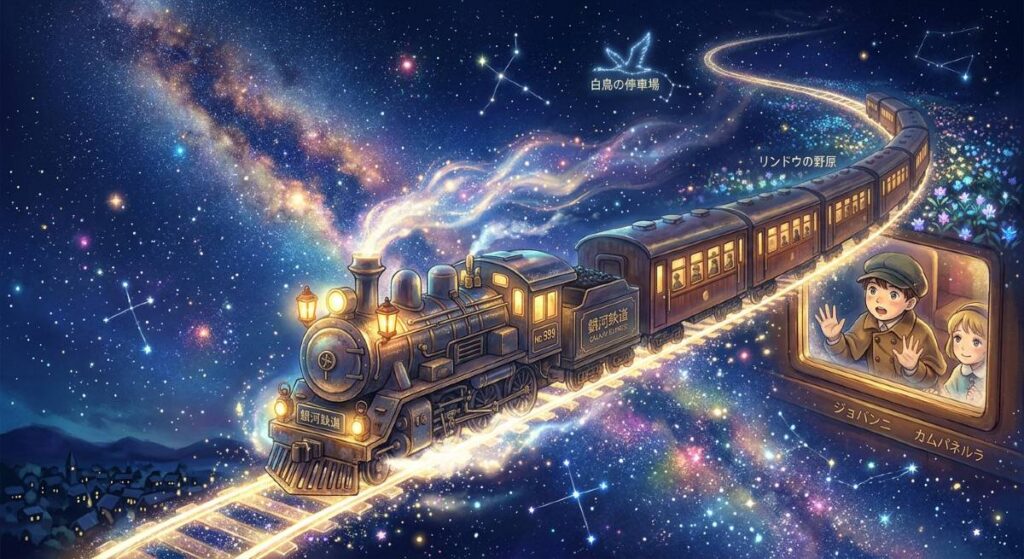
In this land deeply loved by Kenji Miyazawa, gazing at the night sky invites you directly into the world of his masterpiece, Night on the Galactic Railroad. Countless stars, traveling across millennia, pile up in a luminous “accumulation” of ancient light, illuminating phantom rails that stretch across the heavens.
From the earthly memories carved by the ocean to the celestial memories woven by the stars. The terminal of the crashing waves is merely the departure station for the cosmos. Why not embark on this romantic, time-transcending railway journey—a poetic odyssey that can only be truly felt here in Iwate.
The Night in Ihatov Where the Earth and the Galaxy Intersect
As dusk descends upon Hanamaki, the rhythmic clatter of wheels from the distant Kamaishi Line vibrates through the dew-kissed, crisp air, almost compelling one to hallucinate an invisible railway tracing its way across the night sky. Hanamaki, a quiet city in Iwate Prefecture, is the very heartbeat of “Ihatov”—the visionary mental utopia conceived by Kenji Miyazawa, a solitary poet, fairy-tale author, and agricultural teacher who burned brightly through his brief, incandescent life in this land.
The majestic cosmic view depicted in his magnum opus, *Night on the Galactic Railroad*, was not born merely from gazing up at the heavens. Surprisingly, his cosmos begins in the very “mud” beneath his feet. Miyazawa was a devoted geologist, affectionately known as “Ken the Pebble Child.” At the “English Coast,” a name he gave to the white banks of tertiary tuffaceous mudstone exposed along the Kitakami River, he passionately excavated ancient walnut fossils and footprints of prehistoric ungulates. For him, the act of tracing the unimaginable epochs hidden within the dark, cold geological strata was synonymous with gazing into the infinite expanse of space—the fourth-dimensional universe. His geological eye, which sought to touch the bare skeleton of the earth, elevated the constellations—the red eye of Scorpius, the Northern Cross—from mere mythological symbols into palpable, glowing “minerals” with raw, physical mass.
Furthermore, the profound force driving that beautiful yet sorrowful galactic journey is the memory of deep loss and a requiem for a harsh natural environment. In 1922, leaving behind the heart-rending prayer “ame yuju tote chite kenja” (bring me some rain-snow) recorded in his poem *Morning of Last Farewell*, his beloved younger sister, Toshi, succumbed to tuberculosis at the age of 24. Miyazawa’s desperate quest to trace the whereabouts of her soul in the darkness, intertwined with his fierce spiritual struggle to embody the altruistic, self-sacrificing teachings of the Lotus Sutra amidst his grief, forged the heartbreaking odyssey of Giovanni and Campanella. We must also remember the harsh historical context of Iwate at the time; repeated cold-weather damage (reigai) left local farmers suffering from starvation and severe poverty. Miyazawa’s establishment of the Rasuchijin Society, where he covered himself in soil to analyze fertilizers and aid the farmers, was a painstakingly earnest attempt to graft a cosmos-scaled ideal onto a mud-spattered, unforgiving reality.
When you stand in Hanamaki, looking up at the stars while embraced by the cool night wind, a realization will dawn upon you. The galaxy Miyazawa depicted is not some remote, sweet fantasy in the sky. It is the very luminescence of life itself—a seamless amalgamation of the austere Tohoku climate, the inescapable human fate of mortal loss, and the eternal time slumbering in the bedrock beneath. “What is true happiness?”—Anyone who sets foot on the soil of Hanamaki finds themselves secretly clutching that “ticket that can take you anywhere,” setting sail on a voyage toward an endless, wordless inquiry: “What is true happiness?” The galaxy Kenji depicted is not a mere sweet fantasy in the distant sky; it is the crystalline luminescence of a soul that confronted the harshness of nature and the sorrow of loss. In the silence of the Hanamaki night, where the mudstone beneath your feet and the stars above your head become one, you will surely feel the warmth of that eternal ticket glowing within your own heart.
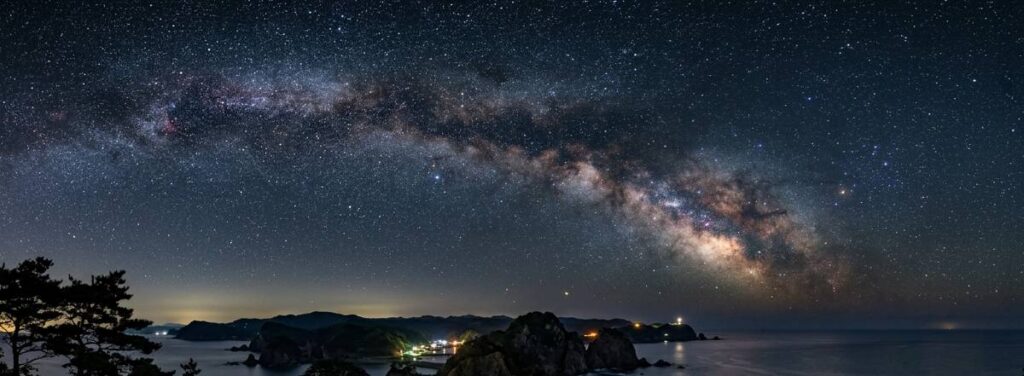
Kenji Miyazawa’s timeless masterpiece, *Night on the Galactic Railroad*, is often perceived by readers as a mere product of fantasy. However, when standing on the coastline of Hirono Town in Iwate, that perception is fundamentally overturned. In the darkness, the boundary between the sea and the sky dissolves, and the sight of the Milky Way arching from the horizon to the zenith is the very abyss of the cosmos that Kenji sought to depict. This is one of the few “sacred sites of the stars” in Japan, where literature and astronomy intersect.
The Sanriku Cliffs: An Invitation to Cosmic Immersion
The topography of the Sanriku Coast narrates the rugged history of our planet. The cliffs of Hirono are the “skin of the Earth,” layered with ancient strata, while the Pacific Ocean laps at its feet—sometimes silently, sometimes violently. Looking up at the night sky in this place, far removed from artificial light, is not merely astronomical observation. It is a rare experience where hundreds of millions of years of geological time and tens of thousands of light-years of astronomical time synchronize within one’s consciousness. Here, the stars do not just shine; they possess a gravity that captures the heart of the observer.
“True Happiness” in the Absence of Light Pollution
In modern society, we are constantly bathed in information and exposed to artificial light. However, the night sky of Hirono mercilessly strips away such excessive stimuli. In the absence of streetlights, human eyes regain their original sensitivity, coming to perceive the complex density of the Milky Way with the naked eye. Perhaps the “true happiness” that Kenji sought refers to these very moments—surrendering oneself to the movement of the cosmos in the silence, undisturbed by anyone. The act of looking up at the starry sky is a philosophical ritual: it is the recognition of one’s own smallness, and simultaneously, the reclamation of the sense of solidarity that comes from knowing we are a part of the universe.
The night sky of Hirono weaves a different story with each season: the constellations shining in the clear air of spring, the overwhelming density of the Milky Way in summer, the crisp, deepening stars of autumn, and the diamond-like brilliance floating in the frozen sky of winter. Visiting this place is not merely tourism; it is a journey to walk the corridor of the galaxy that Kenji once saw, using one’s own feet. Here in Iwate, we can become passengers on the “Galactic Railroad” ourselves, leaving behind the clamor of daily life to resonate with the profound depths of eternal time. In the silence of this sacred site of stars, we find our own “true happiness” etched into the boundless dark.
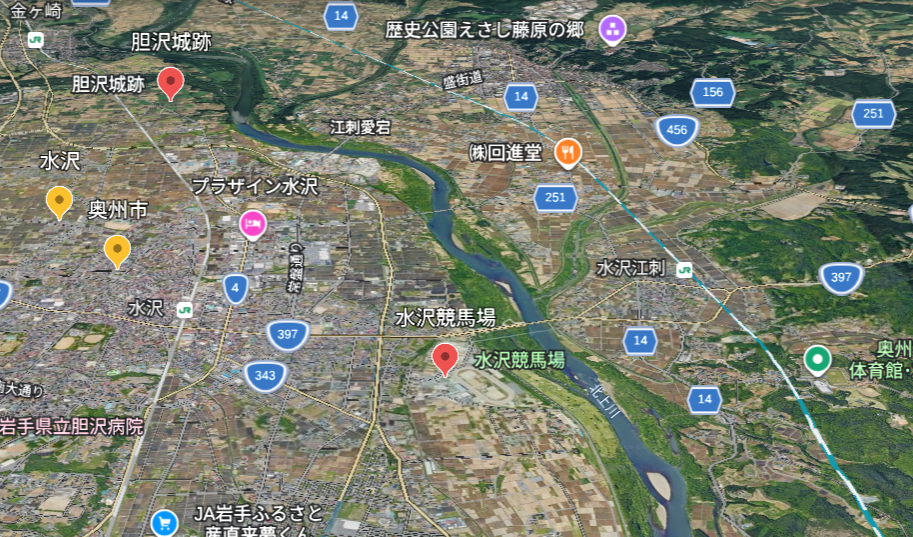
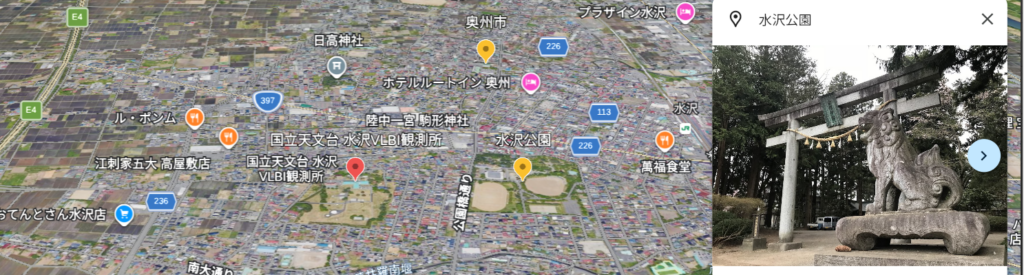
Gazing up at the night sky in Iwate, one can easily fall under the illusion that the world of Kenji Miyazawa’s “Night on the Galactic Railroad” is about to unfold overhead. Yet, beneath this crystal-clear atmosphere lies more than just literary romance; there exists a “scientific eye” that has been observing the truths of the universe for over 120 years. In Oshu City’s Mizusawa district stands the frontline of humanity’s quest to solve the vast puzzle of the universe: the National Astronomical Observatory of Japan (NAOJ) Mizusawa VLBI Observatory.
Just as Miyazawa once traveled the galaxy clutching a ticket forged from pure imagination, modern astronomers board their own galactic railroad—in the form of massive parabolic antennas—to capture the very contours of invisible black holes. In these serene woods, swept by the crisp winds of Ihatov, a poet’s dream and scientific inquiry gracefully intersect. The “sedimentation of romance” woven by the twinkling of visible stars, and the “erosion of truth” where unseen radio waves break down old paradigms; these two contrasting gazes are both cast into the boundless, pitch-black void, quietly continuing to delineate the profound mysteries of the cosmos from the soil of Iwate.
From the Scars of the Boshin War to “Ihatov”: The Sublimation of the Soul Woven by Kenji Miyazawa
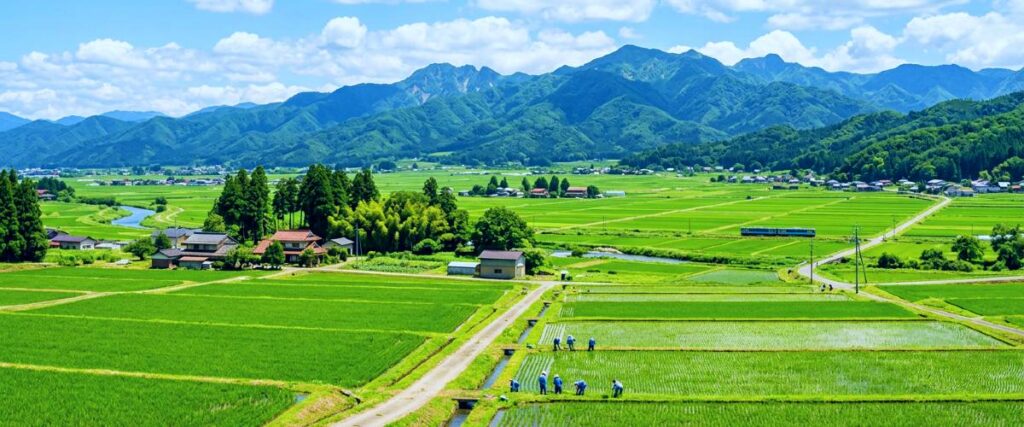
Hanamaki City in Iwate Prefecture. As you walk through this tranquil regional city, you can sense the presence of the utopia known as “Ihatov,” left behind by the legendary poet Kenji Miyazawa. However, behind this beautiful world of fantasy lies a harsh history imposed upon the north during the massive turning point of the Meiji Restoration. We will unravel the intellectual puzzle of how the “history of the losers” was sublimated into universal literature, exploring the profound resilience of the spirit that blossomed from the scars of conflict.
Shohei Ohtani continues to make the impossible possible in the world of modern baseball. His roots lie in Hanamaki City, Iwate Prefecture. The three years he spent at Hanamaki Higashi High School were more than just a period of technical training. It was a process of embodying, in a modern form, the spirit of "Ihatov"—the utopia once envisioned by Kenji Miyazawa on this very land—a noble ambition to align one's dreams with the happiness of the entire world, free from conventional constraints.
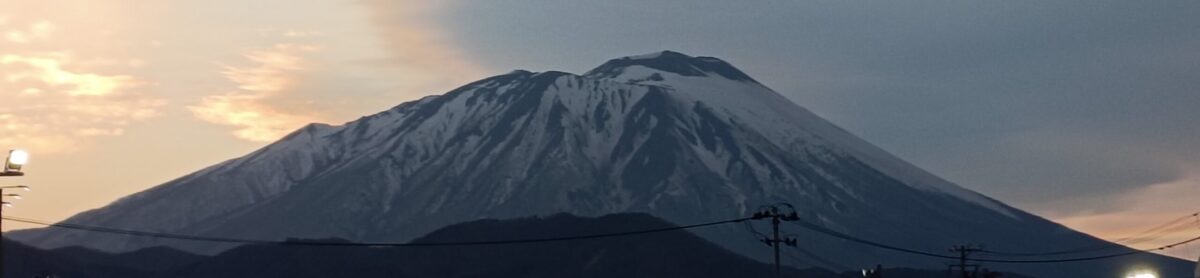
Hanamaki Higashi High School: Challenges Beginning with Questioning Common Sense Days spent enduring the harsh winters of Hanamaki and looking up at the majestic Mt. Iwate. Ohtani’s unprecedented "two-way" challenge was born from the "indomitable spirit" inherent in this land and the philosophy of Hanamaki Higashi High School: "Preconceptions turn the possible into the impossible."
Kenji’s Ideals and Ohtani’s Trajectory Kenji Miyazawa taught that "unless the entire world is happy, individual happiness is impossible." Ohtani’s habit of picking up trash on the field and his humble yet relentless pursuit of greatness can be seen as a modern evolution of the "Dekunobo"—the selfless figure Kenji aspired to be, who works for others without regard for personal gain. The land of Hanamaki still possesses a special power to nurture "pure dreams" that astonish the world.
From “The Tales of Tono” to Ihatov: The Boundary Between Fantasy and Reality Woven by Iwate
Iwate Prefecture is more than just a geographical location; it is a place where “narratives” rooted in the deep psyche of Japan breathe and thrive. From the ancient folklore whispered by the mountains of Tono to the utopia of “Ihatov” envisioned by Kenji Miyazawa in the skies of Hanamaki—these two perspectives act as the “dots and lines” that define Iwate’s spiritual landscape. In this article, we journey through Tono, the sacred land of folklore, and Hanamaki, the poet’s ideal world, to unravel the unique narrative universe that Iwate holds.