A Crystallization of Sanriku in a Milk Bottle: The Innovation of Bin-Don
The famous “Bin-Don” of Miyako City is a culinary masterpiece that transcends the boundaries of a simple seafood bowl. Its roots lie in the ingenious tradition of local fishermen, who once used sterilized milk bottles filled with seawater to preserve the delicate freshness of sea urchins. Today, this “art of preservation” has been reimagined as a luxurious feast, where vibrant layers of seafood are packed into a single vessel. The moment you invert the bottle, a glittering cascade of sea urchin, salmon roe, and mekabu seaweed spills onto your rice like a treasure chest being opened. It is a sensory experience where the wild, bountiful essence of the Sanriku coast leaps directly onto your dining table. By repurposing the nostalgic milk bottle, this innovation offers a fresh surprise and proves that Iwate’s spirit is not just about guarding the past, but gracefully evolving with the times.
The rugged history of the fishermen, once quietly “accumulated” within these silent glass walls, has now been “eroded” and reshaped by modern sensibilities, radiating a brilliant new light. When we unravel this miniature universe of oceanic memories upon our bowls, we do more than simply taste the sea. We deeply swallow the eternal heartbeat of Sanriku and the very essence of Iwate’s landscape, polished over countless generations. This primordial scenery, captured behind glass, will continue to breathe quietly yet powerfully upon our tables for years to come.
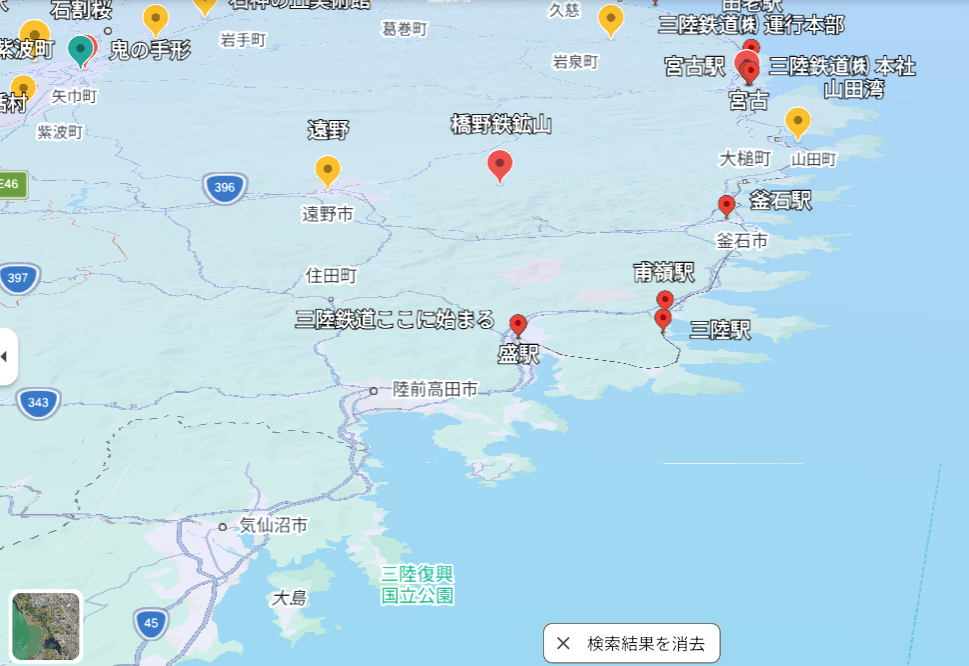
The Sanriku Railway offers breathtaking views of the sparkling Pacific Ocean and the rugged ria coastline. After witnessing the magnificent art of “erosion”—where relentless waves have sculpted the earth over eons—the iron road carries you west, inland toward Hanamaki.
In this land deeply loved by Kenji Miyazawa, gazing at the night sky invites you directly into the world of his masterpiece, Night on the Galactic Railroad. Countless stars, traveling across millennia, pile up in a luminous “accumulation” of ancient light, illuminating phantom rails that stretch across the heavens.
From the earthly memories carved by the ocean to the celestial memories woven by the stars. The terminal of the crashing waves is merely the departure station for the cosmos. Why not embark on this romantic, time-transcending railway journey—a poetic odyssey that can only be truly felt here in Iwate.
The summers along the Sanriku coast are sometimes shrouded in a profound melancholy. This is brought upon by the yamase, a cold, damp easterly wind blowing from the Sea of Okhotsk high-pressure system from early to mid-summer. Blocking the sun with thick fog and stripping the warmth from the earth, this wind has long subjected the coastal people to the cruel ordeal of cold-weather crop damage. How, then, did the people sustain their lives in a land where rice would not ripen adequately? The answer lay in the untamed ocean of Noda Village.
To survive, they boiled the sea. Unlike the salt terraces of western Japan, which rely on the sun and wind to evaporate water naturally, this cool region with scarce sunlight necessitated a primitive and painstakingly laborious method known as Jikini (direct boiling). In massive iron cauldrons, seawater was relentlessly boiled down over roaring wood fires. Facing the flames through the night, the coastal dwellers extracted pure white crystals from tens of thousands of drops of seawater. Noda salt was not merely a seasoning; it was the flesh and blood of the coastal people, the very “crystals of survival.”
However, tasting salt alone could not fill their stomachs. To exchange this precious commodity for inland grains, they had to cross the colossal barrier of the Kitakami Massif. It is here that the men known as ushikata (cattle drivers) and their robust Nambu cattle step onto the stage of history.
From a geological perspective, the Kitakami Massif is a formidable mountain block formed by the uplifting of some of the Japanese archipelago’s oldest strata (dating back to the Paleozoic and Mesozoic eras), characterized by deeply eroded V-shaped valleys and steep, unforgiving ridges. The ushikata would load each cow with about 60 kilograms of salt in straw bags, leading a small herd on a grueling trek of over 100 kilometers to Morioka, or even further to Kazuno in Akita Prefecture—a journey that took nearly a week.
Through deep primeval forests of beech and Mongolian oak, stepping over muddy trails, and sometimes fearing the presence of bears and wolves, they pressed westward in silence. The only solace on their harsh journey was likely the dull clanking of bells swaying on the cattle’s necks and the melancholic melody of the Nambu Ushioi Uta (Nambu cattle-herding song) echoing through the ravines. Their singing voices were absorbed by the dampness of the solitary woods.
Upon reaching the inland villages, the ushikata traded their salt for rice, foxtail millet, and barnyard millet. Loading these life-saving grains onto the cattle, they crossed the treacherous mountains once again to return to their starving, waiting families. This “Salt Trail” stretching from Noda to the inland was not merely an artery for the distribution of goods. It was an essential spiritual lifeline that bound the sea and the mountains, a testament to the indomitable tenacity of those who dared to cross the steep peaks to ensure the survival of their kin.
Today, if you step onto the old trail leading from Noda Village to the Hiraniwa Plateau, you will find deep hollows carved into the moss-covered rocks. These are the traces of sheer willpower, where the hooves of tens of thousands of cattle and the straw sandals of the ushikata steadily “eroded” the hard strata over an eternity. Just as harsh nature carves mountains and pierces valleys, their relentless footsteps etched a profound path into the earth. Yet, at the end of this grueling history of erosion, a prayer remained that could never be scraped away. The crystals of the roaring sea, carried inland, became the sustenance of life—flesh and blood—thickly “depositing” layers of Iwate’s resilient history and culture across generations. Stand still in the silent forest, close your eyes, and listen closely. From beyond the ancient yamase fog, can you not hear the faint ringing of bells from those who kept walking, simply to live?
Witness the traditional free-diving of the “Ama” (northernmost divers), harvesting sea urchins with resilient smiles amidst the crashing waves. After immersing yourself in the rhythmic breath of the ancient sea, journey beneath the earth. Kuji stands as Japan’s premier amber-producing region. Here, as you personally excavate the Cretaceous strata, you may uncover golden fossils—pristine vessels preserving the memories of the dinosaur era. From a coast where tradition breathes to the subterranean realm where an 85-million-year-old forest lies in silence—will you join us on the ultimate temporal odyssey found only in Kuji, Iwate?
Cape Todogasaki, Honshu’s easternmost point, welcomes the first majestic dawn. This light reaches Mt. Hayachine, a sacred peak founded by a legendary hunter guided by a mystical beast. This mountain worship lives on through Hayachine Kagura, a UNESCO Intangible Cultural Heritage dance. Experience the rugged, beautiful rhythm of Iwate’s enduring soul.
📍 アクセス / Access
宮古駅からバスと徒歩で魹ヶ崎灯台へ / Bus and hike from Miyako Sta. to Todogasaki Lighthouse.
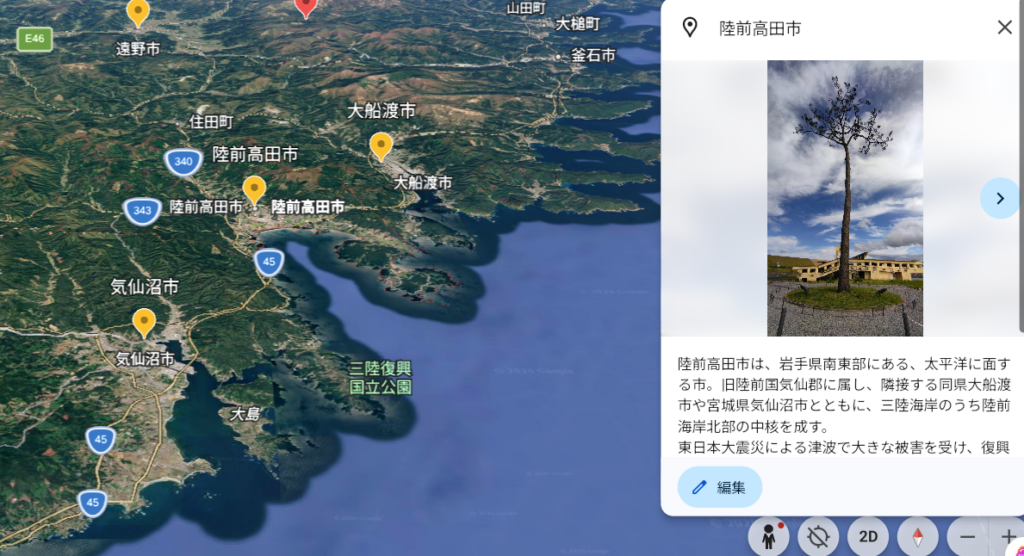
Discover the true roots of Marco Polo’s “Zipangu” in the ruins of Tamayama Gold Mine, Rikuzentakata. A journey back to the golden era of the Oshu Fujiwara. #VisitIwate #Morioka #History #GoldMine
The “Zipangu,” the Land of Gold, described by Marco Polo in his Travels, is deeply intertwined with the history of Iwate, where the Oshu Fujiwara clan once flourished. The Tamayama Gold Mine ruins, nestled in the mountains of Rikuzentakata, are far more than mere abandoned shafts; they are pieces of a historical puzzle, suggesting that the gold which once captivated the world originated here. We must now unravel the multi-layered story of this land, which influenced world history through the trade routes of the Middle Ages.
In the 12th century, the Oshu Fujiwara clan, based in Hiraizumi, wielded immense economic power fueled by abundant alluvial and vein gold. Tamayama was a primary source supporting this golden culture. The resplendent Chuson-ji Golden Hall was made possible only through the gold extracted from this land. History tells us that these mountains were not merely resource extraction sites, but the bedrock of Tohoku’s independence and cultural identity—the very lifeline of their economy.
The rumors of Zipangu, which Marco Polo never actually witnessed, echoed through trade routes to China and eventually the world. One cannot help but wonder: what path did the gold from Rikuzentakata travel to ignite the myth of the “Land of Gold”? Standing in the silence of the Tamayama ruins, one can almost hear the footsteps of ancient merchants and feel the fervor of those who were captivated by the allure of this precious metal. This site stands as a witness, proving that Iwate was once at the center of the world’s economic map.
Today, the Tamayama Gold Mine ruins are slowly returning to nature. Yet, the soil remains etched with the weight of past prosperity and the toil of countless laborers. The “Golden Story,” which became a turning point in world history, still flows through the land of Iwate. Visiting this site is not merely sightseeing; it is an intellectual pilgrimage to touch the depths of history and resurrect the memories of the golden age for the modern world.
Located along the northernmost coast of Iwate Prefecture, Hirono Town is home to a world-exclusive “Sea Urchin Farm.” Here, human ingenuity and the power of the ocean intersect in an extraordinary display of symbiosis. Long trenches have been carved directly into the vast bedrock along the Pacific shore, creating a sheltered environment where sea urchins thrive on abundant, naturally grown kelp.
A Sustainable Wisdom in Harmony with Nature Leaving behind the quiet mornings of Morioka and arriving at this rugged coast, you are greeted by the magnificent roar of the Pacific. These man-made “breeding trenches” utilize the natural tides to provide fresh nutrients, resulting in sea urchins of exceptional sweetness and quality. This landscape is a symbol of Iwate’s “sustainable frontier,” where humans do not conquer nature but instead move in harmony with its rhythms.
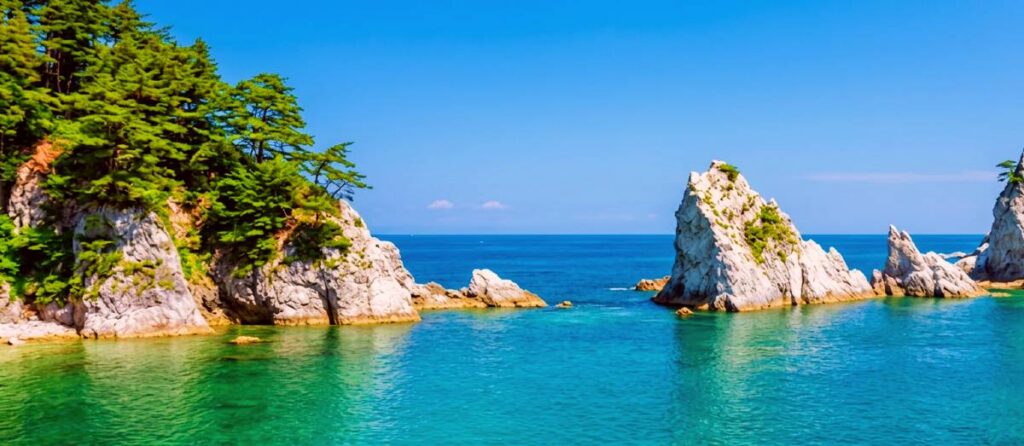
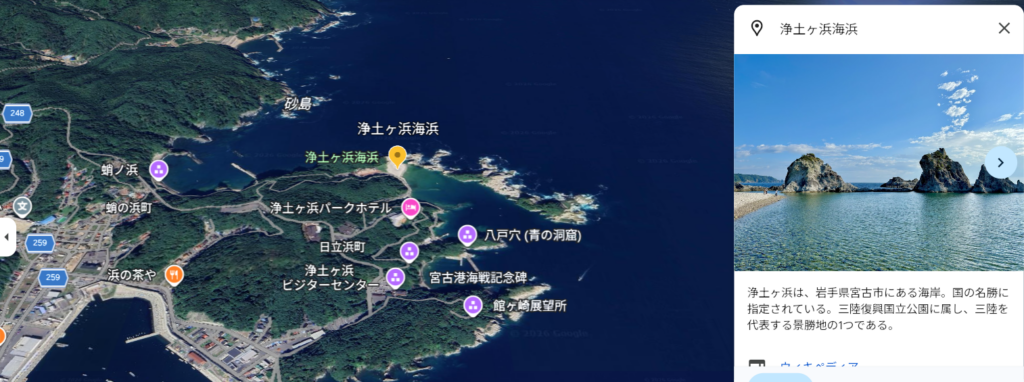
Jodogahama in Miyako City, Iwate, is a breathtaking vista of white rock that emerges suddenly along the rugged Sanriku coastline. The contrast between the deep, azure sea and the sharp, white rhyolite crags creates a serene beauty, as if a traditional ink wash painting had suddenly come to life with color. Just as a crescent moon waxes into fullness over time, this landscape feels as though it was sculpted by eons of nature, creating a space where mystery and Buddhist devotion intersect.
The White Sanctuary Carved by 52 Million Years of Geology
The jagged, white rock that defines Jodogahama is rhyolite, formed by volcanic activity approximately 52 million years ago. Sculpted by the relentless waves and wind over vast eons, these formations are nothing short of natural sculptures.
When these white rocks catch the sunlight, the sea reflects the sky like a mirror, drawing visitors into a world apart from the mundane. The whiteness of the rock possesses a purity that seems to strip away impurities, bringing a profound silence to the observer’s heart. This duality—geological ruggedness juxtaposed with visual serenity—is the true essence of Jodogahama’s charm.
The stark contrast between the jagged white rocks and the deep blue sea creates a space where one can truly feel the intersection of geological history and spiritual devotion. Visiting Jodogahama is not just a sightseeing trip; it is an encounter with the eternal “Pure Land” that exists within the rugged beauty of the Sanriku coast.
Iwate’s culinary journey begins in the deep forests of Hachimantai, one of the prefecture’s leading mushroom-producing regions. The umami of the sophisticated mushrooms cultivated there is merely the prelude to a story that resonates across the land. In this entry, we trace the “Mushroom Pedigree,” shifting our gaze from the mountains to the sea, and introduce a stunning “marriage” where the thick, log-grown shiitake nurtured by Yamada Town’s sea breeze meets the treasure of the Sanriku coast: oysters.
The Depths of Iwate’s Mushroom Culture and the Role of Hachimantai Iwate Prefecture takes pride in its status as one of Japan’s top mushroom producers, backed by its vast forest areas. The Hachimantai area, in particular, delivers the highest quality mushrooms through advanced temperature control, pristine water, and the passion of its craftsmen. This “commitment to quality” is a shared DNA among mushroom growers throughout Iwate. While the refined aroma and delicate texture of these mushrooms make them an excellent base for Western cuisine, taking them as a starting point reveals a more wild and powerful world of fungi: the “log-grown shiitake” of Yamada Town on the Sanriku coast.
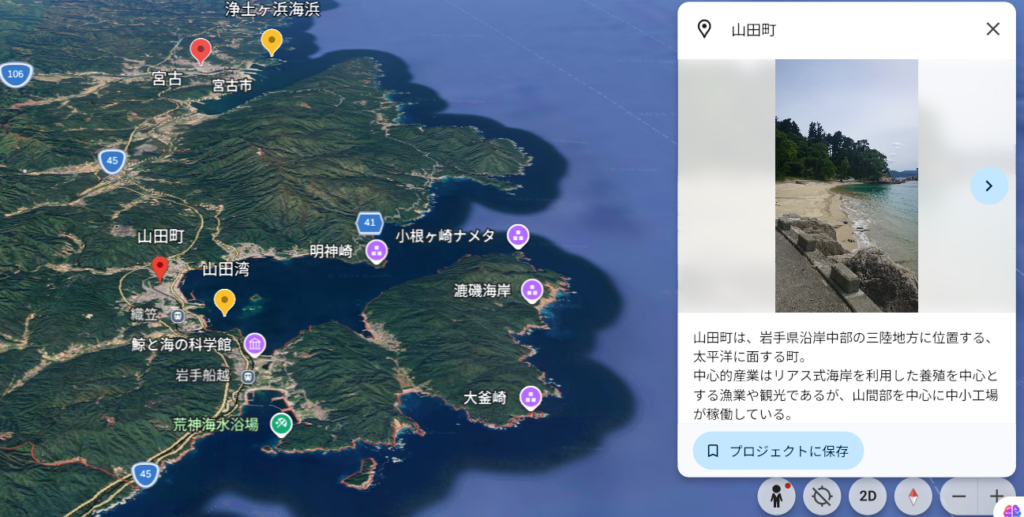
Another “Jewel of the Forest” Nurtured by Yamada’s Tide Located in the center of the Sanriku coast, Yamada Town is blessed with a complex rias coastline and a rich environment where minerals from the mountains flow into the sea. The log-grown shiitake cultivated here, in contrast to Hachimantai’s mushrooms, are characterized by a thick flesh and a deep, overflowing umami that seems to encapsulate the raw power of the forest. The secret to this shiitake lies in the sea breeze blowing from the Pacific. The ocean air, containing moderate salt and minerals, permeates the logs, tightening the cells of the shiitake. This creates a unique flavor profile, an environment that can truly be called “Sea Breeze Terroir.”
A Marriage Beyond Dimensions: Oysters and Log-Grown Shiitake There is a moment when these Yamada shiitake shine brightest: their encounter with “Sanriku Oysters” raised in the same Yamada Bay. Scientifically speaking, the fusion of guanylic acid in the shiitake with the succinic and glutamic acids in the oysters dramatically enhances the synergistic effect of umami. However, the true essence of this marriage lies beyond reason. The thick shiitake catches the dripping essence of oysters grilled over charcoal. Or, as they mingle in oil like an ajillo, the heavy forest aroma and the transparent saltiness of the sea play a perfect harmony within a single dish.
This is not merely a combination of ingredients; it is a “Natural Resonance” nurtured by Iwate’s mountains and sea over many years. This experience is the essential charm of Iwate’s food culture, and the reason it never ceases to fascinate those who visit.
Ever wondered how Japan’s industrial revolution began? It started with the bond between humans and horses in the Nanbu region. Discover the history of the Hashino Iron Mine and the legacy of the Magariya. A must-see in Iwate! #VisitIwate #Morioka #Kamaishi #History
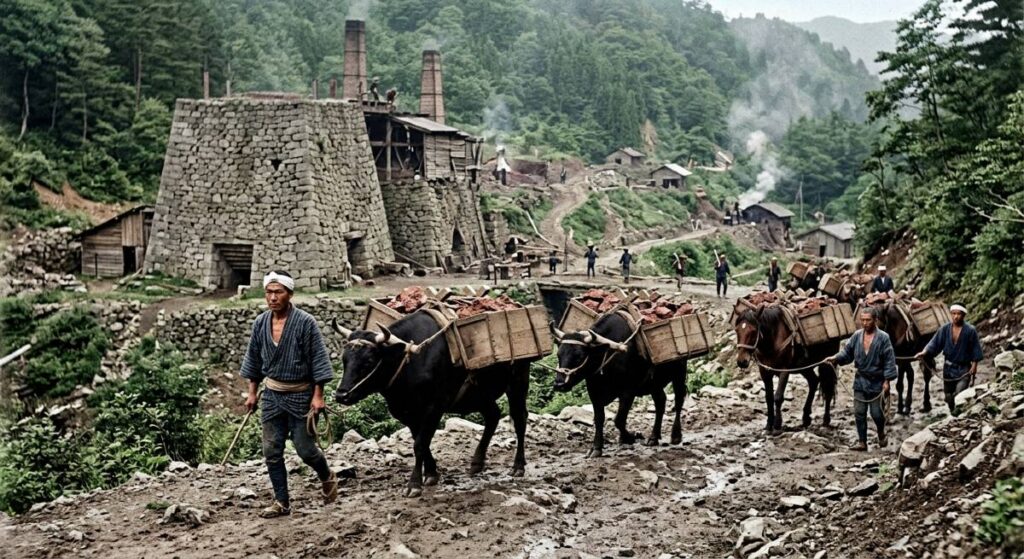
The Bond of the Nanbu Magariya: How Horsepower Powered the Modernization of Kamaishi’s Hashino Iron Mine
The “Nanbu Magariya” is an iconic symbol of the Iwate landscape. These L-shaped farmhouses are more than just an architectural style; they represent a deep, symbiotic relationship unique to this land, where humans and horses lived together as family. It is a little-known fact that this culture of “loving and living with horses” in the Nanbu region actually served as a powerful engine supporting Japan’s modernization during the Meiji era. In this article, we unravel the historical “dots and lines” that lead up to the World Heritage site, the Hashino Iron Mine.