海と山の最高傑作:アワビと前沢牛 / Sea & Land Masterpieces: Abalone & Maesawa Beef

献上級の美食を巡る旅

荒波が育む三陸の肉厚アワビと、豊かな大地が育む極上の霜降り「前沢牛」。岩手が誇る海と山の最高傑作は、かつて朝廷などに献上された歴史を持つ至高の食材です。磯の香りと奥深い旨味が弾けるアワビ、舌の上でとろける甘い脂の前沢牛。沿岸から内陸へ車を走らせれば、この二大グルメを一度の旅で堪能できます。究極の美食体験をぜひ岩手で。

A Journey of Imperial Gastronomy

Sanriku’s premium abalone, nurtured by rough seas, and Maesawa Beef, offering ultimate marbled perfection. These coastal and inland masterpieces boast a history of being presented to emperors. Experience the ocean’s deep umami and the melting sweetness of premium beef on a single road trip across Iwate.

📍 アクセス / Access

盛岡駅から新幹線で一ノ関駅へ、そこから在来線で前沢駅へ / Access via Shinkansen from Morioka to Ichinoseki, then local train to Maesawa.

銀河の記憶を辿る:奥州水沢と宇宙への挑戦 / Tracing Galactic Memories: Oshu Mizusawa and the Quest to the Cosmos

銀河鉄道が駆け抜ける空の、科学的な真実

岩手の夜空を見上げると、宮沢賢治が描いた「銀河鉄道の夜」の世界が、今にも頭上に広がりそうな錯覚に陥る。しかし、この澄み渡る大気の下には、単なる文学的なロマンだけではない、宇宙の真理を解き明かすための「科学の目」が百二十年以上にわたり開かれ続けている。奥州市水沢。この地には、人類が宇宙という広大なパズルに挑むための最前線、国立天文台水沢VLBI観測所が存在する。

The Scientific Reality Beneath the Galactic Skies

Gazing up at the night sky in Iwate, one can easily fall under the illusion that the world of Kenji Miyazawa’s “Night on the Galactic Railroad” is about to unfold overhead. Yet, beneath this crystal-clear atmosphere lies more than just literary romance; there exists a “scientific eye” that has been observing the truths of the universe for over 120 years. In Oshu City

鉄の系譜:盛岡の南部鉄器から釜石の近代製鉄への架け橋 / The Iron Lineage: From Morioka’s Nambu Tekki to the Dawn of Modern Steelmaking in Kamaishi

岩手の歴史を語る上で、決して欠かすことのできない「鉄」。それは単なる資源ではなく、盛岡の伝統工芸「南部鉄器」の繊細な美意識と、釜石の「橋野鉄鉱山」が切り拓いた近代産業の力強さという、二つの大きな潮流を繋ぐ物語です。岩手が歩んできた鉄の歴史を紐解くことは、日本のものづくりの精神を探求する旅でもあります。

The Iron Lineage: From Morioka’s Nambu Tekki to the Dawn of Modern Steelmaking in Kamaishi

Iron is inseparable from the history of Iwate. It is not merely a resource, but a narrative that connects two major currents: the delicate aesthetic of Morioka’s traditional craftsmanship in “Nambu Tekki” and the robust industrial strength pioneered at Kamaishi’s “Hashino Iron Mine.” To unravel the history of iron in Iwate is to embark on a journey that explores the very soul of Japanese manufacturing spirit.

時を遡る地質学の旅:北上山地の深淵と龍泉洞「ドラゴンブルー」の神秘 / A Geological Journey Through Time: The Abyss of the Kitakami Mountains and the Mystery of Ryusendo’s “Dragon Blue”

地球の記憶が眠る場所:北上山地というタイムカプセル

岩手県の中央から東部を占める北上山地は、単なる山塊ではありません。それは、日本列島の形成史を紐解くための鍵となる巨大なタイムカプセルです。この地層の一部は、約4億年前の古生代にまで遡ります。大陸プレートの衝突と分離、そして気の遠くなるような長い時間をかけた隆起と侵食。私たちが今日目にするこの雄大な景観は、地球という惑星が繰り返してきた激しい営みの「結果」に過ぎません。北上山地を歩くことは、地質学的な時間軸において、人類の歴史がいかに瞬きのような短さであるかを痛感する、知的な巡礼の旅なのです。

A Place Where Earth’s Memory Sleeps: The Time Capsule of the Kitakami Mountains

The Kitakami Mountains, covering the central and eastern parts of Iwate Prefecture, are far more than a mere mountain range. They are a colossal time capsule, holding the keys to unlocking the formation history of the Japanese archipelago. Parts of these strata date back to the Paleozoic Era, some 400 million years ago. Through the collision and separation of tectonic plates, followed by eons of uplift and erosion, the majestic landscape we see today is merely the “result” of the planet’s violent, repetitive labor. Walking through the Kitakami Mountains is an intellectual pilgrimage—one that makes us acutely aware of how fleeting human history is when measured against the geological timeline.

石灰岩の迷宮:龍泉洞が語る水の彫刻

北上山地の懐深く、岩泉町に位置する「龍泉洞」は、この古生代の地層が作り出した芸術作品です。かつて海底にあった石灰岩層が隆起し、長い年月をかけて雨水や地下水によって溶かされたことで、この巨大な洞窟群は形成されました。洞内に入ると、そこは外界とは異なる時間軸が流れる空間です。鍾乳石が数センチ伸びるのに数百年を要するという事実は、私たちがこの空間で直面しているのが、人間的なスケールを遥かに超越した「永遠」に近い時間であることを物語っています。

数億年という果てしない時をかけて海の底に「堆積」した命の記憶は、今度は暗闇を流れる澄み切った地下水によって静かに「侵食」され、底なしの青を湛える地底湖へと生まれ変わりました。堆積という過去の蓄積と、侵食という現在進行形の彫刻。その果てしない破壊と創造の狭間で、一滴の水が水面を叩く澄んだ音が響くとき。私たちは、岩手の大地が内包する大いなる自然の循環と、地球の静かな呼吸を、自らの魂の底に聴くのです。

■ English Version

The Labyrinth of Limestone: Water’s Sculpture in Ryusendo

Deep within the embrace of the Kitakami Mountains, in Iwaizumi Town, lies “Ryusendo Cave”—a work of art crafted by these Paleozoic strata. This vast cavern system was formed when limestone layers, once resting at the bottom of the ancient sea, uplifted and were slowly dissolved by rainwater and groundwater over eons. Stepping inside, one enters a realm where an entirely different axis of time prevails. The fact that a stalactite requires centuries to grow mere centimeters tells us that we are confronting a time akin to “eternity,” far transcending any human scale.

The memories of life, patiently “deposited” at the ocean floor over hundreds of millions of years, are now being quietly “eroded” by crystal-clear groundwater flowing through the dark, reborn into subterranean lakes filled with a bottomless, mesmerizing blue. Between the past accumulation of deposition and the ongoing sculpture of erosion—within this endless cycle of destruction and creation—a single drop of water echoes as it strikes the pristine surface. In that resonance, we hear the profound circulation of nature embraced by the land of Iwate, feeling the quiet breathing of the earth deep within our own souls.


■ メタデータ

カテゴリー: 沿岸 Coastal Iwate
タグ: 龍泉洞, 地底湖, 北上山地, 石灰岩, 自然の循環

武家社会の境界で響く異界の足音:遠野物語と土着信仰の深層 / Footsteps from the Otherworld at the Border of Samurai Society: The Depths of Tono Monogatari and Indigenous Beliefs

岩手県遠野市。この地は、日本の歴史において「中心」と「境界」が激しく交錯する特異な場所です。江戸時代、この地は南部藩の統治下で、厳格な武家社会の秩序が敷かれていました。しかし、その行政的な「中央集権」の網目の下には、山々に囲まれた閉鎖的な地形が生んだ、全く別の時間の流れが存在していました。本稿では、武家社会の合理主義と、そこに息づく土着の民俗学がいかにして衝突し、そして共存したのか。柳田國男の『遠野物語』を鍵として、その精神的な深層を探ります。

Footsteps from the Otherworld at the Border of Samurai Society: The Depths of Tono Monogatari and Indigenous Beliefs

The city of Tono in Iwate Prefecture is a unique place where the concepts of “center” and “periphery” have historically intersected with great intensity. During the Edo period, while the strict social order of the samurai class was enforced under the rule of the Nambu clan, a distinct flow of time existed beneath this centralized network, born from the isolated geography of the basin surrounded by mountains. In this article, we explore how the rationalism of samurai society collided and eventually coexisted with the deep-rooted indigenous folklore of the region, using Kunio Yanagita’s “The Tales of Tono” as a key to unlock these profound spiritual depths.

春の息吹と空飛ぶだんご:厳美渓の絶景散歩 / The Breath of Spring and Flying Dango: A Scenic Stroll at Genbikei Gorge

4月初旬、岩手県一関市の厳美渓(げんびけい)は、冬の眠りから覚め、春の活気に満ち溢れています。雪解け水がエメラルドグリーンの川面を勢いよく流れ、川辺では桜のつぼみがほころび始めました。新生活の始まりを祝うかのような爽やかな風が吹き抜けるこの季節、岩手の自然が織りなす絶景体験に出かけませんか。

In early April, Genbikei Gorge in Ichinoseki, Iwate, awakens from its winter slumber, bursting with the energy of spring. Snowmelt rushes through the emerald green waters, and cherry blossom buds begin to bloom along the riverbanks. As a fresh breeze signals the start of new beginnings, why not embark on a scenic journey through the natural beauty of Iwate?

厳美渓で体験する「空飛ぶだんご」 / The “Flying Dango” Experience at Genbikei Gorge


厳美渓の散策で欠かせない名物が、通称「空飛ぶだんご」として親しまれる郭公(かっこう)だんごです。渓谷の対岸にある茶屋から、ワイヤーロープに吊るされた籠が滑り降りてくるユニークな注文スタイルは、訪れる人々を驚かせ、笑顔にします。

籠に代金を入れて板を叩くと、籠が引き上げられ、代わりにお茶とだんごがシュッと飛んでくる——。この粋な演出と、もちもちとしただんごの甘みは、岩手の旅の忘れられない1ページとなるはずです。エメラルドグリーンの水面を眺めながら味わうだんごは、まさに絶品です。


The highlight of any visit to Genbikei Gorge is undoubtedly the “Kakkou Dango,” famously known as the “Flying Dango.” This unique ordering style, where a basket suspended on a wire rope glides down from a teahouse on the opposite bank, never fails to surprise and delight visitors.

Simply place your money in the basket and strike a wooden board with a mallet to signal your order. Before you know it, the basket is whisked away and returns “flying” back to you with fresh dango and hot green tea. This ingenious display of hospitality, combined with the sweet, chewy texture of the dango, creates an unforgettable memory of Iwate. Savoring this local treat while gazing at the emerald-green waters is a truly exquisite experience.


カテゴリー: 【県南 Southern Iwate】
タグ: 厳美渓, 郭公だんご, 磐井川, 食文化, 侵食と堆積
アクセスポイント(座標): 38.9458, 141.0478

黄金の夢、藤原氏の祈り ― 世界遺産・中尊寺の深淵へ / The Golden Dream and the Fujiwara Prayer: A Journey into the Depths of World Heritage Chuson-ji

岩手県平泉町にある中尊寺。ここは単なる寺院ではありません。12世紀、東北の地に築かれた「仏教の理想郷」です。なぜ奥州藤原氏は、辺境とも呼ばれたこの地に黄金の都を築こうとしたのか。その歴史の点と線を紐解くことは、現代を生きる我々にとって、平和の本質を問い直す旅となります。

The Golden Dream and the Fujiwara Prayer: A Journey into the Depths of World Heritage Chuson-ji

Chuson-ji Temple in Hiraizumi, Iwate, is far more than a temple. It is the “Buddhist Utopia” established in the Tohoku region during the 12th century. Why did the Oshu Fujiwara clan strive to build a golden capital in this land, once considered a remote frontier? Unraveling the historical “dots and lines” of this site offers us, in the modern era, a profound journey to reconsider the true essence of peace.

カテゴリー: 県南 Southern Iwate
タグ: 中尊寺, 奥州藤原氏, 平泉, 金色堂, 世界遺産
アクセスポイント(座標): 39.0016, 141.1008

星々の深淵を覗く場所:奥州・水沢と銀河鉄道の夜空

Explore the cosmic connection in Oshu

岩手県奥州市、水沢。ここは単なる地方都市ではなく、地球の自転を測り、宇宙への扉を開く観測の聖地です。賢治が描いた銀河鉄道が駆け抜ける夜空の下、私たちは何を想うのでしょうか。

Oshu, Mizusawa in Iwate Prefecture is more than just a regional city; it is a sanctuary of observation, where the rotation of the Earth is measured and the doors to the universe are opened. Beneath the night sky through which Kenji Miyazawa’s Galaxy Railroad travels, what thoughts stir within us?

地球の揺らぎを観測する聖地
A Sacred Site for Measuring the Earth’s Wobble

1899年、世界に6つ設置された緯度観測所のひとつが、この水沢に築かれました。天文学者たちは、星の光を頼りに、地球が微妙に揺らぐ「極運動」を観測し続けてきました。この場所で空を見上げると、ただ美しいだけでなく、科学的な知的好奇心と宇宙の深遠さが交差する不思議な感覚に包まれます。澄み渡る岩手の夜空には、賢治が愛した星々が、今も変わらぬ輝きを放っています。

In 1899, one of the world’s six latitude observatories was established here in Mizusawa. Astronomers have long used the light of stars to observe the subtle wobbling of the Earth, known as “polar motion.” Gazing up at the sky from this site evokes a mysterious sensation where scientific curiosity intersects with the profound depths of the cosmos. In the clear night skies of Iwate, the very stars that Kenji Miyazawa so dearly loved continue to shine with an eternal radiance.

カテゴリー: 県南 Southern Iwate
タグ: 国立天文台水沢, 極運動, Z項, 宮沢賢治, 宇宙
アクセスポイント(座標): 39.1348, 141.1332

獣の鼓動と山の記憶—鹿踊りからマタギの深淵、遠野の妖怪譚へ / The Pulse of the Beast and the Memory of the Mountains: From Shishi-odori to the Matagi and the Tales of Tono

岩手県は、単なる観光地ではありません。ここは、現代社会が忘れ去った「自然への畏怖」と「精霊との共生」が、今なお色濃く残る場所です。胸に太鼓を抱き、獣の魂を憑依させて舞う鹿踊り(ししおどり)。険しき山々で命のやり取りを神聖な儀式として昇華させたマタギの狩猟術。そして、柳田國男の『遠野物語』が描き出した、境界線上の妖怪たち。これらはバラバラの民俗芸能ではなく、岩手の山々が紡いできた一つの壮大な物語の断片なのです。

The Pulse of the Beast and the Memory of the Mountains: From Shishi-odori to the Matagi and the Tales of Tono

Iwate Prefecture is not merely a tourist destination; it is a place where the “awe of nature” and “coexistence with spirits”—elements often forgotten by modern society—still breathe with vivid intensity.

There is the Shishi-odori (Deer Dance), where dancers clutch drums to their chests and dance as if possessed by the souls of beasts. There are the hunting traditions of the Matagi, who transformed the life-and-death struggle in the rugged mountains into a sacred ritual. And then, there are the yokai (supernatural beings) dwelling on the threshold of reality, as immortalized in Kunio Yanagita’s “The Tales of Tono.” These are not isolated pieces of folklore, but fragments of a single, grand epic woven over centuries by the mountains of Iwate.

伝承園から御所野へ:時を超えて繋がる岩手の原風景 / From Denshoen to Goshono: An Odyssey Through Iwate’s Timeless Landscapes

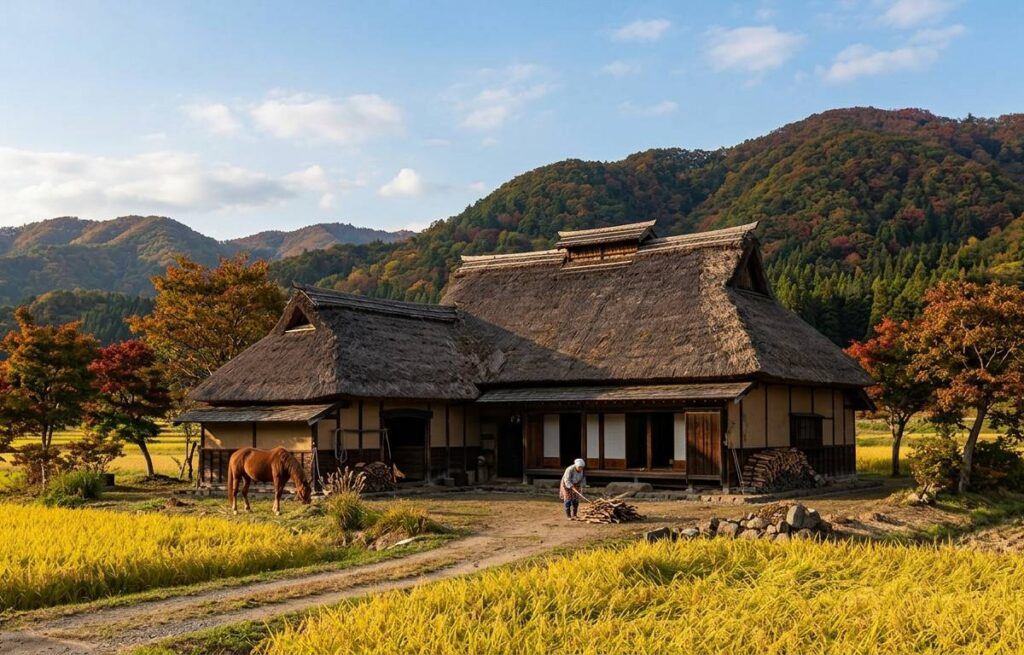
岩手の地を旅することは、単なる観光ではなく、時間という層を掘り下げる考古学的な体験に似ています。遠野の伝承園で目にする曲り家(まがりや)の温もりから、一戸町の御所野遺跡で触れる縄文の息吹まで。この二つの場所を繋ぐのは、厳しい自然と共に生き抜いてきた岩手の人々の「暮らし」の記憶です。今回は、日本の原風景を辿り、私たちが忘れてしまった「定住」の意味を紐解く旅へご案内します。

From Denshoen to Goshono: An Odyssey Through Iwate’s Timeless Landscapes

Traveling through Iwate is more than just sightseeing; it is an archaeological experience that delves into layers of time. From the warmth of the Magariya (L-shaped farmhouse) at Tono’s Denshoen to the ancient breath of the Jomon period at the Goshono Site in Ichinohe, these two locations are connected by the memory of “daily life” (kurashi) lived by the people of Iwate who survived alongside a harsh yet beautiful nature. Join us as we trace the original landscapes of Japan and rediscover the profound meaning of “settlement” that modern society has long forgotten.