Witness the traditional free-diving of the “Ama” (northernmost divers), harvesting sea urchins with resilient smiles amidst the crashing waves. After immersing yourself in the rhythmic breath of the ancient sea, journey beneath the earth. Kuji stands as Japan’s premier amber-producing region. Here, as you personally excavate the Cretaceous strata, you may uncover golden fossils—pristine vessels preserving the memories of the dinosaur era. From a coast where tradition breathes to the subterranean realm where an 85-million-year-old forest lies in silence—will you join us on the ultimate temporal odyssey found only in Kuji, Iwate?
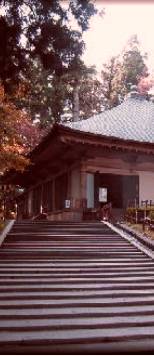
Iwate’s coastal prayers for recovery echo a 900-year-old wish. The Fujiwara clan built Chuson-ji Temple to console all souls equally. The Golden Hall embodies their dream of a peaceful Pure Land. Experience this eternal prayer for peace yourself. [Access] 10 mins by bus from JR Hiraizumi Station.
📍 アクセス / Access
JR平泉駅からバス約10分 / 10 mins by bus from JR Hiraizumi Sta.
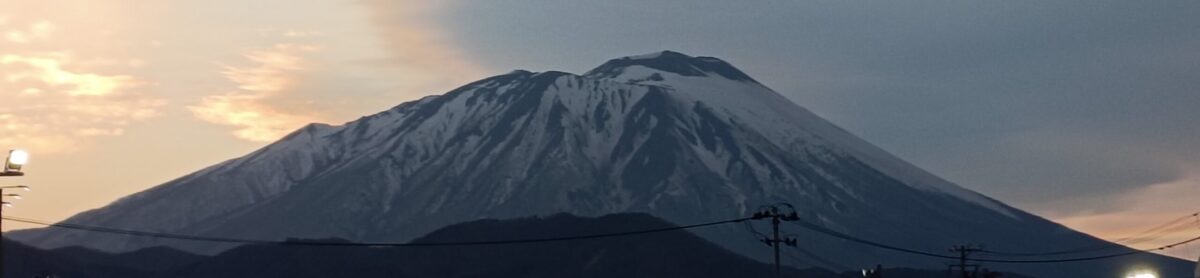
Cape Todogasaki, Honshu’s easternmost point, welcomes the first majestic dawn. This light reaches Mt. Hayachine, a sacred peak founded by a legendary hunter guided by a mystical beast. This mountain worship lives on through Hayachine Kagura, a UNESCO Intangible Cultural Heritage dance. Experience the rugged, beautiful rhythm of Iwate’s enduring soul.
📍 アクセス / Access
宮古駅からバスと徒歩で魹ヶ崎灯台へ / Bus and hike from Miyako Sta. to Todogasaki Lighthouse.
Sanriku’s premium abalone, nurtured by rough seas, and Maesawa Beef, offering ultimate marbled perfection. These coastal and inland masterpieces boast a history of being presented to emperors. Experience the ocean’s deep umami and the melting sweetness of premium beef on a single road trip across Iwate.
📍 アクセス / Access
盛岡駅から新幹線で一ノ関駅へ、そこから在来線で前沢駅へ / Access via Shinkansen from Morioka to Ichinoseki, then local train to Maesawa.
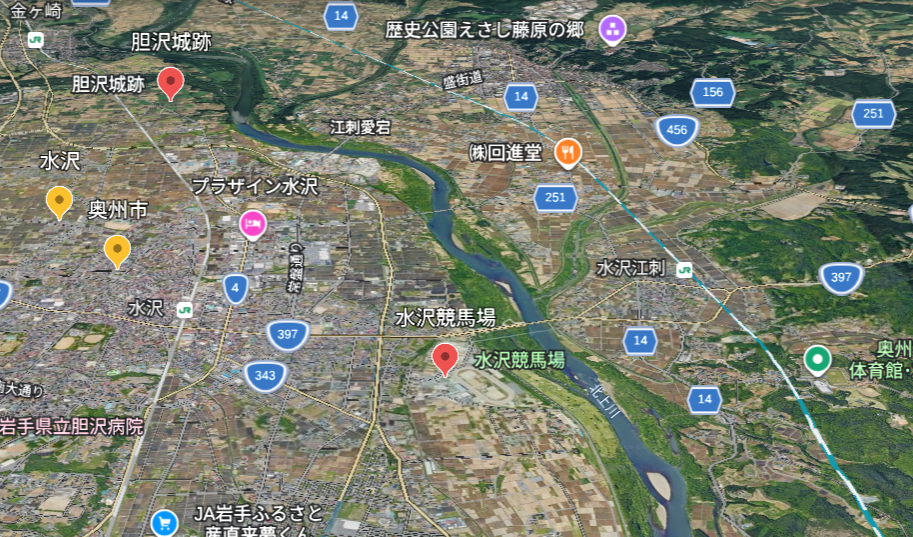
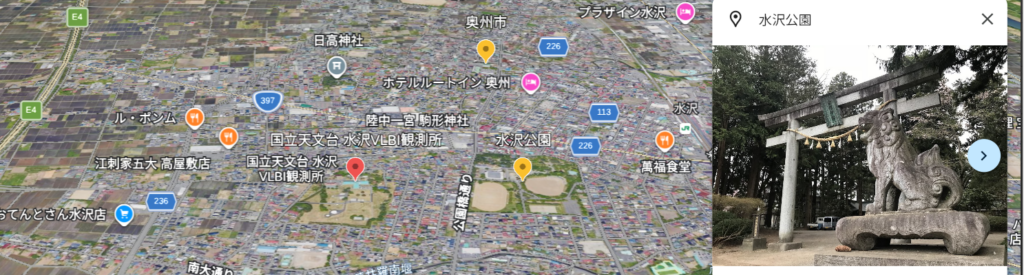
Gazing up at the night sky in Iwate, one can easily fall under the illusion that the world of Kenji Miyazawa’s “Night on the Galactic Railroad” is about to unfold overhead. Yet, beneath this crystal-clear atmosphere lies more than just literary romance; there exists a “scientific eye” that has been observing the truths of the universe for over 120 years. In Oshu City’s Mizusawa district stands the frontline of humanity’s quest to solve the vast puzzle of the universe: the National Astronomical Observatory of Japan (NAOJ) Mizusawa VLBI Observatory.
Just as Miyazawa once traveled the galaxy clutching a ticket forged from pure imagination, modern astronomers board their own galactic railroad—in the form of massive parabolic antennas—to capture the very contours of invisible black holes. In these serene woods, swept by the crisp winds of Ihatov, a poet’s dream and scientific inquiry gracefully intersect. The “sedimentation of romance” woven by the twinkling of visible stars, and the “erosion of truth” where unseen radio waves break down old paradigms; these two contrasting gazes are both cast into the boundless, pitch-black void, quietly continuing to delineate the profound mysteries of the cosmos from the soil of Iwate.
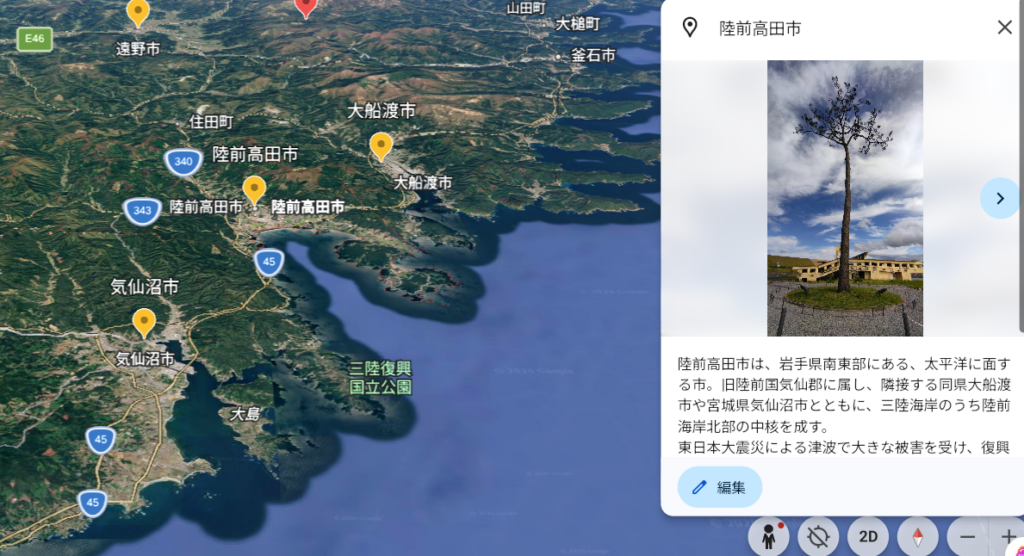
Discover the true roots of Marco Polo’s “Zipangu” in the ruins of Tamayama Gold Mine, Rikuzentakata. A journey back to the golden era of the Oshu Fujiwara. #VisitIwate #Morioka #History #GoldMine
The “Zipangu,” the Land of Gold, described by Marco Polo in his Travels, is deeply intertwined with the history of Iwate, where the Oshu Fujiwara clan once flourished. The Tamayama Gold Mine ruins, nestled in the mountains of Rikuzentakata, are far more than mere abandoned shafts; they are pieces of a historical puzzle, suggesting that the gold which once captivated the world originated here. We must now unravel the multi-layered story of this land, which influenced world history through the trade routes of the Middle Ages.
In the 12th century, the Oshu Fujiwara clan, based in Hiraizumi, wielded immense economic power fueled by abundant alluvial and vein gold. Tamayama was a primary source supporting this golden culture. The resplendent Chuson-ji Golden Hall was made possible only through the gold extracted from this land. History tells us that these mountains were not merely resource extraction sites, but the bedrock of Tohoku’s independence and cultural identity—the very lifeline of their economy.
The rumors of Zipangu, which Marco Polo never actually witnessed, echoed through trade routes to China and eventually the world. One cannot help but wonder: what path did the gold from Rikuzentakata travel to ignite the myth of the “Land of Gold”? Standing in the silence of the Tamayama ruins, one can almost hear the footsteps of ancient merchants and feel the fervor of those who were captivated by the allure of this precious metal. This site stands as a witness, proving that Iwate was once at the center of the world’s economic map.
Today, the Tamayama Gold Mine ruins are slowly returning to nature. Yet, the soil remains etched with the weight of past prosperity and the toil of countless laborers. The “Golden Story,” which became a turning point in world history, still flows through the land of Iwate. Visiting this site is not merely sightseeing; it is an intellectual pilgrimage to touch the depths of history and resurrect the memories of the golden age for the modern world.
Joboji Urushi: The Black Treasure Supporting Japan’s Golden Heritage
Nestled in the northern mountains of Iwate Prefecture, Ninohe City is the heart of Japan’s lacquer production, accounting for approximately 70% of the nation’s supply. Joboji Urushi is far more than a simple craft material; it is a vital lifeline used to restore and preserve the very fabric of Japanese history. This tradition, nurtured under the protection and encouragement of the Nambu lords centuries ago, continues to play a crucial role in maintaining National Treasures today. In this story, we unravel the narrative of this “black treasure,” woven by history and the indomitable spirit of the lacquer tappers.
The Pulse of the Earth in the Stone Walls: The Pride of the Nambu Clan
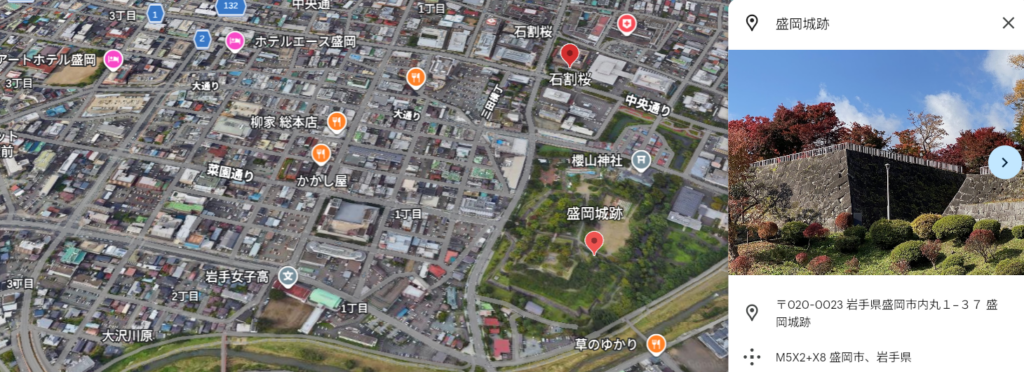
When you step into the Morioka Castle Ruins (Iwate Park), the first thing that overwhelms you is the imposing stone walls. These walls are constructed primarily from granite quarried in the vicinity of Morioka. Granite is an igneous rock formed when magma cools slowly deep underground. These “stones” were stacked with the prestige of the Nambu clan and have watched over the city of Morioka for centuries. The rugged yet refined masonry is a culmination of the skills of the craftsmen of that era. When you touch the mossy surface of the stones, you feel as if you are hearing the heartbeat of the Earth from tens of millions of years ago when this granite cooled and solidified. Morioka’s history is built upon this solid stone foundation.
Located along the northernmost coast of Iwate Prefecture, Hirono Town is home to a world-exclusive “Sea Urchin Farm.” Here, human ingenuity and the power of the ocean intersect in an extraordinary display of symbiosis. Long trenches have been carved directly into the vast bedrock along the Pacific shore, creating a sheltered environment where sea urchins thrive on abundant, naturally grown kelp.
A Sustainable Wisdom in Harmony with Nature Leaving behind the quiet mornings of Morioka and arriving at this rugged coast, you are greeted by the magnificent roar of the Pacific. These man-made “breeding trenches” utilize the natural tides to provide fresh nutrients, resulting in sea urchins of exceptional sweetness and quality. This landscape is a symbol of Iwate’s “sustainable frontier,” where humans do not conquer nature but instead move in harmony with its rhythms.
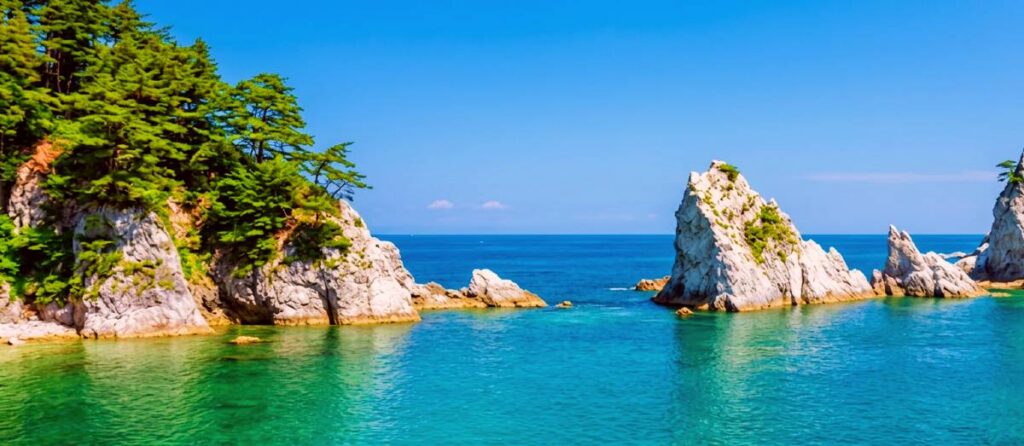
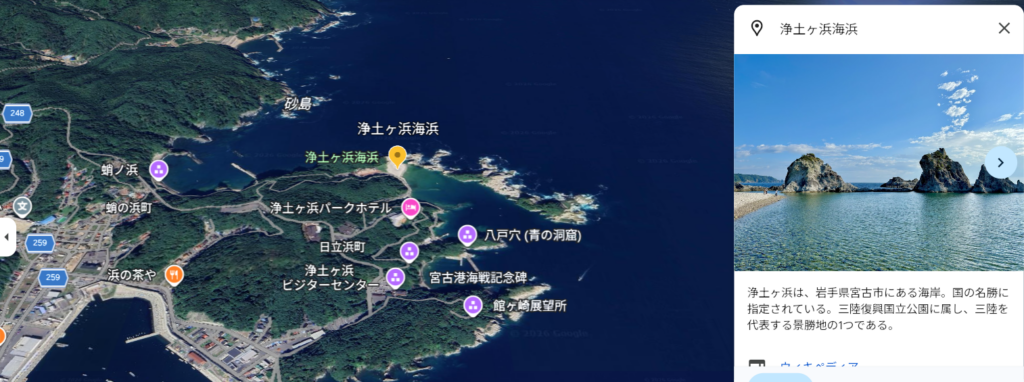
Jodogahama in Miyako City, Iwate, is a breathtaking vista of white rock that emerges suddenly along the rugged Sanriku coastline. The contrast between the deep, azure sea and the sharp, white rhyolite crags creates a serene beauty, as if a traditional ink wash painting had suddenly come to life with color. Just as a crescent moon waxes into fullness over time, this landscape feels as though it was sculpted by eons of nature, creating a space where mystery and Buddhist devotion intersect.
The White Sanctuary Carved by 52 Million Years of Geology
The jagged, white rock that defines Jodogahama is rhyolite, formed by volcanic activity approximately 52 million years ago. Sculpted by the relentless waves and wind over vast eons, these formations are nothing short of natural sculptures.
When these white rocks catch the sunlight, the sea reflects the sky like a mirror, drawing visitors into a world apart from the mundane. The whiteness of the rock possesses a purity that seems to strip away impurities, bringing a profound silence to the observer’s heart. This duality—geological ruggedness juxtaposed with visual serenity—is the true essence of Jodogahama’s charm.
The stark contrast between the jagged white rocks and the deep blue sea creates a space where one can truly feel the intersection of geological history and spiritual devotion. Visiting Jodogahama is not just a sightseeing trip; it is an encounter with the eternal “Pure Land” that exists within the rugged beauty of the Sanriku coast.




重厚な石垣.jpg)