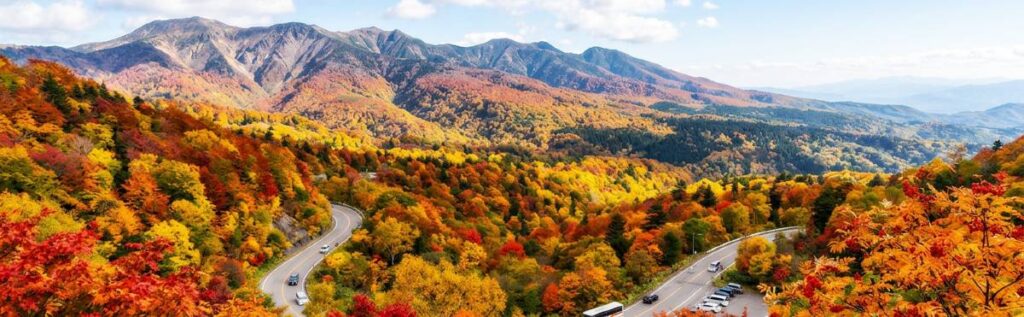
English Text (Completion): Iwate’s autumn begins with a breathtaking parade of colors. When the mountains of Hachimantai ignite in shades of fiery red and brilliant gold, the scenery captures the soul of every observer. Yet, as we shift our perspective slightly south, a completely different world of color awaits. Today, we invite you on a sensory journey that transitions from the vivid autumn leaves of nature to the noble, deep hues of “Shikon-zome” (purple root dye) passed down in Shiwa Town, and the exquisite sake brewed in that same land. Join us as we explore a sensory path that traverses through nature’s brilliance and the sophisticated heights of human craftsmanship.
Journey of Colors: From Hachimantai’s Alpine Blooms to the Azaleas of Mount Murone
Iwate Prefecture is a vast land embraced by two major mountain ranges: the Kitakami Highlands and the Ou Mountains. From north to south, the mountains transform with the passing of the seasons, teaching visitors about the resilience of life. In this article, we invite you on a “Journey of Colors” that connects two breathtaking landscapes: the delicate alpine plants blooming in the harsh environment of Hachimantai, and the clusters of azaleas that dye Ichinoseki’s Mount Murone in a fiery red. Let us explore the profound contrast between delicacy and boldness woven into the fabric of Iwate’s mountainous scenery.
Iwate’s culinary journey begins in the deep forests of Hachimantai, one of the prefecture’s leading mushroom-producing regions. The umami of the sophisticated mushrooms cultivated there is merely the prelude to a story that resonates across the land. In this entry, we trace the “Mushroom Pedigree,” shifting our gaze from the mountains to the sea, and introduce a stunning “marriage” where the thick, log-grown shiitake nurtured by Yamada Town’s sea breeze meets the treasure of the Sanriku coast: oysters.
The Depths of Iwate’s Mushroom Culture and the Role of Hachimantai Iwate Prefecture takes pride in its status as one of Japan’s top mushroom producers, backed by its vast forest areas. The Hachimantai area, in particular, delivers the highest quality mushrooms through advanced temperature control, pristine water, and the passion of its craftsmen. This “commitment to quality” is a shared DNA among mushroom growers throughout Iwate. While the refined aroma and delicate texture of these mushrooms make them an excellent base for Western cuisine, taking them as a starting point reveals a more wild and powerful world of fungi: the “log-grown shiitake” of Yamada Town on the Sanriku coast.
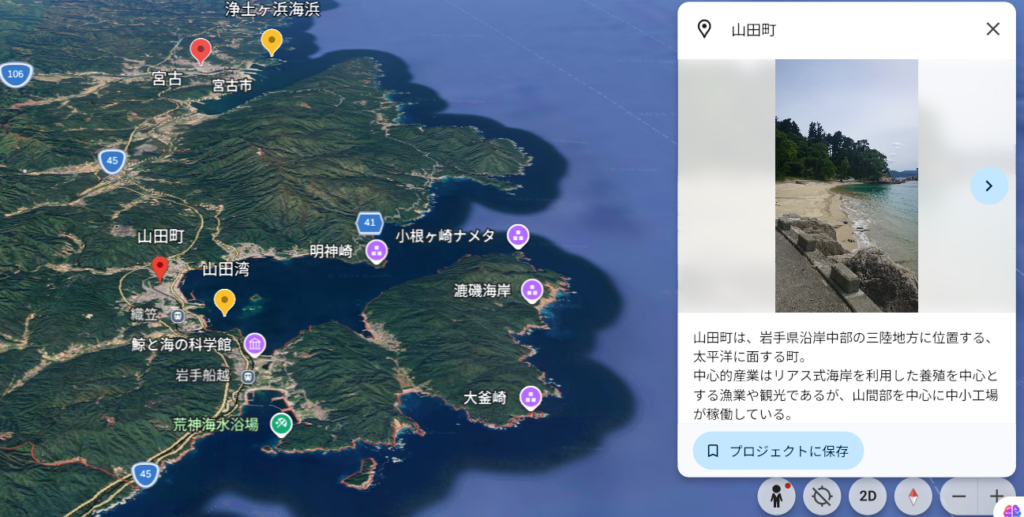
Another “Jewel of the Forest” Nurtured by Yamada’s Tide Located in the center of the Sanriku coast, Yamada Town is blessed with a complex rias coastline and a rich environment where minerals from the mountains flow into the sea. The log-grown shiitake cultivated here, in contrast to Hachimantai’s mushrooms, are characterized by a thick flesh and a deep, overflowing umami that seems to encapsulate the raw power of the forest. The secret to this shiitake lies in the sea breeze blowing from the Pacific. The ocean air, containing moderate salt and minerals, permeates the logs, tightening the cells of the shiitake. This creates a unique flavor profile, an environment that can truly be called “Sea Breeze Terroir.”
A Marriage Beyond Dimensions: Oysters and Log-Grown Shiitake There is a moment when these Yamada shiitake shine brightest: their encounter with “Sanriku Oysters” raised in the same Yamada Bay. Scientifically speaking, the fusion of guanylic acid in the shiitake with the succinic and glutamic acids in the oysters dramatically enhances the synergistic effect of umami. However, the true essence of this marriage lies beyond reason. The thick shiitake catches the dripping essence of oysters grilled over charcoal. Or, as they mingle in oil like an ajillo, the heavy forest aroma and the transparent saltiness of the sea play a perfect harmony within a single dish.
This is not merely a combination of ingredients; it is a “Natural Resonance” nurtured by Iwate’s mountains and sea over many years. This experience is the essential charm of Iwate’s food culture, and the reason it never ceases to fascinate those who visit.
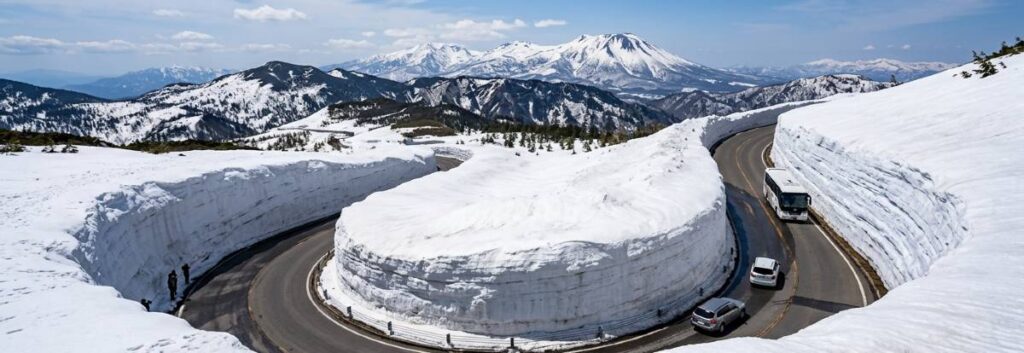
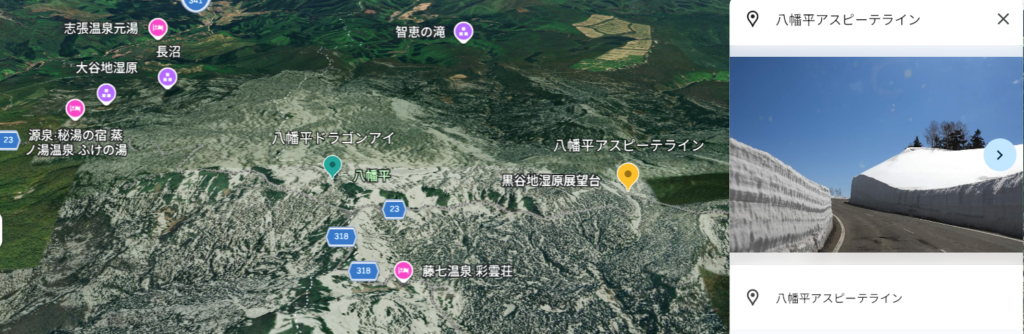
The Hachimantai Aspite Line, cutting through the northern mountains of Iwate, offers a spectacular driving experience, famous for its walls of snow and panoramic alpine views. Yet, if we set aside the modern convenience of this route for a moment and turn our gaze slightly south, we encounter a forgotten path that stands in stark contrast to the paved roads of today: the Akita Kaido (Akita Highway) leading from Shizukuishi to Akita. This mountain trail was once a vital artery for trade, but during the turbulent final years of the Edo period, it became a stage for a fierce conflict that would shape the course of history.
The Akita Kaido: A Vital Artery for Trade and War
Connecting Morioka and Akita, the Akita Kaido was a crucial route that supported the economy of the Nambu Domain. Crossing the rugged Ou Mountains via the Kunimi Pass after leaving the Shizukuishi Basin, this path held a significance far beyond mere trade. It served as a strategic military defensive line. During the Edo period, this road facilitated not only the movement of people and goods but also the flow of culture and information, and at times, it functioned as the frontline upon which the fate of the domain rested.
The Battle of Kunimi Pass: A Turning Point in History
In 1868, when the flames of the Boshin War reached the Tohoku region, the Kunimi Pass stood at a historical crossroads. Faced with the advance of the Imperial Army, the Morioka Domain—part of the Northern Alliance—marked the Kunimi Pass as their final defensive stronghold. The battle that unfolded within this steep, rugged terrain was a desperate struggle. Gunfire echoed through the mountains, and many young lives were lost on this pass. Along this path, which modern hikers might traverse casually today, the regrets of samurai who fought for their lives and the lingering spirits of those caught in the tides of a changing era remain buried deep within the earth.
Echoes Remaining in the Present
Today, the area around Kunimi Pass is wrapped in silence. In contrast to the vibrancy of the Aspite Line, the remnants of the old highway are being reclaimed by trees and returning to nature. However, the town of Shizukuishi still holds scattered monuments and traces of the old battlefield that tell this history. Visiting this place is more than just sightseeing; it is a journey to step off the convenient “lines” of our modern transportation network and touch the “points” of history. If you stand still in the quiet forest, you might just hear the whisper of the wind from 150 years ago.
Time mercilessly “erodes” human memory, weathering the raw scars of fierce battles into the deep green abyss. Yet, the young blood shed upon this earth and the fervent prayers for peace never truly vanish; they continue to silently “accumulate” as the profound memory of the soil. The shining modern roads paved with asphalt and the moss-covered ancient trails buried under fallen leaves—when we turn our gaze to both, tracing the layers of light and shadow, the true mandala woven by the land of Iwate will vividly emerge across the expanse of time.
The Iron Lineage: From Morioka’s Nambu Tekki to the Dawn of Modern Steelmaking in Kamaishi
Iron is inseparable from the history of Iwate. It is not merely a resource, but a narrative that connects two major currents: the delicate aesthetic of Morioka’s traditional craftsmanship in “Nambu Tekki” and the robust industrial strength pioneered at Kamaishi’s “Hashino Iron Mine.” To unravel the history of iron in Iwate is to embark on a journey that explores the very soul of Japanese manufacturing spirit.
The intense heat exhaled by blazing blast furnaces into Iwate’s deep forests has, over the ages, heavily “accumulated” within the bedrock of Japan’s modernization. Conversely, the soothing murmurs of a boiling Nambu iron kettle echoing in the quietude of a tea room have quietly accompanied people’s daily lives, gracefully “eroding” the superfluous over time to carve out a pure, functional beauty.
The crimson, dynamic iron of Kamaishi, and the deep-black, static iron of Morioka. Though these two lineages of iron may seem contradictory, both were forged from the prayers of those who confronted the harsh nature of Michinoku and mastered its primal fire. In the profound, dark warmth of the iron resting in our palms, we can still unmistakably feel the fervent, pulsing heartbeat of Iwate’s earth.
The rhythmic “chagu-chagu” sound of the bells, echoing as nearly a hundred brightly decorated horses march from Takizawa to Morioka, is a soulful prayer of gratitude. This festival celebrates the profound bond between humans and horses, a connection that has defined Iwate’s history as a legendary horse-breeding region. It is a living symphony of tradition, echoing into the future.
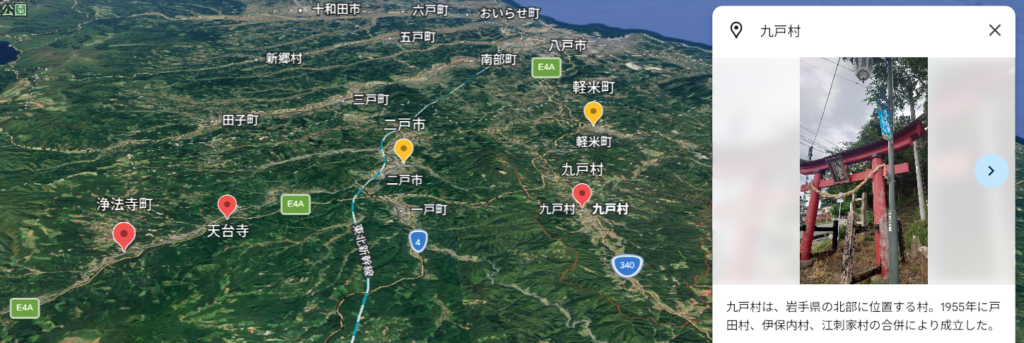
The “Kunohe Rebellion,” etched into the land of Ninohe in northern Iwate, remains in history as the “final battle” of Toyotomi Hideyoshi’s unification of Japan. In 1591, the regret of the soldiers who perished at Kunohe Castle before an overwhelming army lingered in this land for centuries. Yet, as if to quietly heal the memories of war, a mysterious plant called “Amacha” (sweet hydrangea tea) has long grown wild in the mountains of Kunohe.
The Pride of the Samurai Who Remained True to Himself Masazane Kunohe stands as a symbol of the samurai spirit, fighting for regional independence and self-respect amidst the turbulent waves of centralization. His indomitable spirit can be seen as the prototype for the “inner strength” that the people of Iwate possess today.
A “Natural Nectar” Rising from the Earth The Kunohe and Ninohe areas, once the stage of fierce combat, are now Japan’s leading producers of Amacha. This tea, which has provided comfort to people since times when sugar was a rare luxury, possesses an astonishing natural sweetness despite being calorie-free. The earth’s gentle nectar embraces the memories of a brutal warring era. In this article, we unravel the hidden narrative of Kunohe, where the “dot” of a bloodstained history intersects with the “line” of modern-day healing.
A Place Where Earth’s Memory Sleeps: The Time Capsule of the Kitakami Mountains
The Kitakami Mountains, covering the central and eastern parts of Iwate Prefecture, are far more than a mere mountain range. They are a colossal time capsule, holding the keys to unlocking the formation history of the Japanese archipelago. Parts of these strata date back to the Paleozoic Era, some 400 million years ago. Through the collision and separation of tectonic plates, followed by eons of uplift and erosion, the majestic landscape we see today is merely the “result” of the planet’s violent, repetitive labor. Walking through the Kitakami Mountains is an intellectual pilgrimage—one that makes us acutely aware of how fleeting human history is when measured against the geological timeline.
The Labyrinth of Limestone: Water’s Sculpture in Ryusendo
Deep within the embrace of the Kitakami Mountains, in Iwaizumi Town, lies “Ryusendo Cave”—a work of art crafted by these Paleozoic strata. This vast cavern system was formed when limestone layers, once resting at the bottom of the ancient sea, uplifted and were slowly dissolved by rainwater and groundwater over eons. Stepping inside, one enters a realm where an entirely different axis of time prevails. The fact that a stalactite requires centuries to grow mere centimeters tells us that we are confronting a time akin to “eternity,” far transcending any human scale.
The memories of life, patiently “deposited” at the ocean floor over hundreds of millions of years, are now being quietly “eroded” by crystal-clear groundwater flowing through the dark, reborn into subterranean lakes filled with a bottomless, mesmerizing blue. Between the past accumulation of deposition and the ongoing sculpture of erosion—within this endless cycle of destruction and creation—a single drop of water echoes as it strikes the pristine surface. In that resonance, we hear the profound circulation of nature embraced by the land of Iwate, feeling the quiet breathing of the earth deep within our own souls.
From the Scars of the Boshin War to “Ihatov”: The Sublimation of the Soul Woven by Kenji Miyazawa
Hanamaki City in Iwate Prefecture. As you walk through this tranquil regional city, you can sense the presence of the utopia known as “Ihatov,” left behind by the legendary poet Kenji Miyazawa. However, behind this beautiful world of fantasy lies a harsh history imposed upon the north during the massive turning point of the Meiji Restoration. We will unravel the intellectual puzzle of how the “history of the losers” was sublimated into universal literature, exploring the profound resilience of the spirit that blossomed from the scars of conflict.
Footsteps from the Otherworld at the Border of Samurai Society: The Depths of Tono Monogatari and Indigenous Beliefs
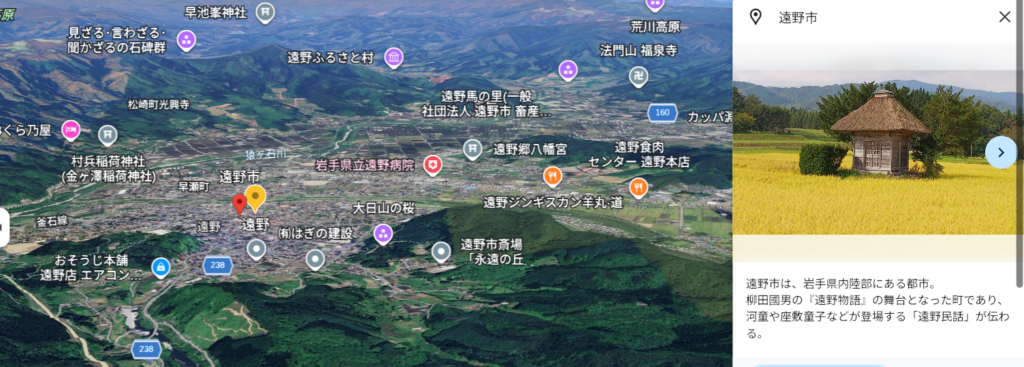
The city of Tono in Iwate Prefecture is a unique place where the concepts of “center” and “periphery” have historically intersected with great intensity. During the Edo period, while the strict social order of the samurai class was enforced under the rule of the Nambu clan, a distinct flow of time existed beneath this centralized network, born from the isolated geography of the basin surrounded by mountains. In this article, we explore how the rationalism of samurai society collided and eventually coexisted with the deep-rooted indigenous folklore of the region, using Kunio Yanagita’s The Tales of Tono as a key to unlock these profound spiritual depths.
Against the superficial logic “deposited” by the ruling power, the shadows of the Otherworld—the lingering presence of mountain dwellers and tales of spiriting away—continued to coldly and quietly “erode” the crevices of daily life, much like spring water welling up from the bottom of a deep ravine. Even as the sunlight of modernization sought to uniformly illuminate the villages, the memories of awe and prayer absorbed into the soil of Tono have never dried up; instead, they continue to shroud the basin as a thick, enigmatic mist. When we stand upon this earth, where the visible strata of governance and the invisible veins of spirituality intertwine, we encounter another primordial landscape of Japan, quietly pulsating right beneath our very feet.